Strange Reflections a new serial on Patreon


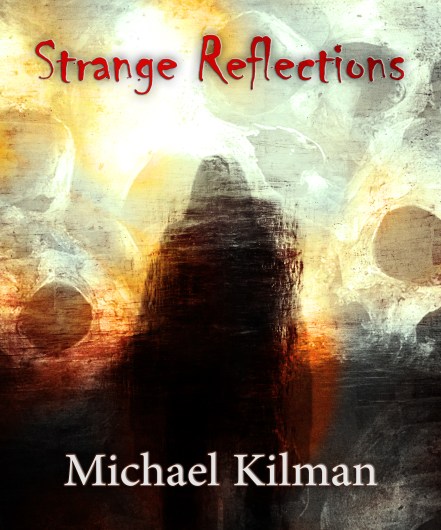
Strange Reflections Cover

I just launched a new serial story on my Patreon page.  For those of you who don’t know already, some of my stories are either exclusive to Patreon or early access for Patreon Subscribers.

My new serial, titled Strange Reflections, departs a bit from science fiction and delves into a world of horror and mystery.

A short blurb:

A reoccurring nightmare, a library full of occult books, and a strange underground passage, for Amanda it’s only the beginning.

Check out my Patreon Page where you can find this story and one other from the world of the Chronicles of the Great Migration! 

World Building Part 1: Using Anthropology to consider important elements of ‘Worlds’

fantasy-2925250_960_720Want a much expanded book on worldbuilding and anthropology? Check out Build Better Worlds: An Introduction to Anthropology for Game Designers, Fiction Writers, and Filmmakers, now available on Kindle!

There are many blogs and books out there on world building. I thought maybe injecting a little anthropology in this process might help you with some of your writing process. After all, anthropology is about studying culture. But if you really want to know more about anthropology I have a page for that. I also sometimes answer questions on a variety of topics on Quora on anthropology and culture.

In particular, though, check out the episodes from Anthropology in 10 minutes or Less on ‘What the F*** is Anthropology’ and Understanding Culture. in order to get a picture of some of the basic elements of understanding cultures and how we study it.

Before I get into anything though, It is definitely possible to overthink things when you are writing. This is not stuff for your first draft, but rather it’s stuff for you to have stewing in the back of your brain while you are writing and for that second draft… or seventeenth draft… You might be useful to think a little about how worlds actually hang together.

Personally, I don’t plan anything. I am a pantser. Once in a while, a note occurs to me, but I can’t even be bothered to write stuff in order. Right now, in fact, I am writing parts of the 5th book of my series before book 4 is even done.

That being said, if you are one of those writers who wants to outline a world, this blog, and some future ones I have planned, might be helpful for you. Even if you don’t write science fiction or fantasy, it might be helpful to understand how cultures function for your writing process.

1. Worlds/Cultures are Integrated, Holistic and Ever Changing. 

We hear that term Holistic thrown around all the time. But when it comes to understanding how a culture is structured, it means this: Everything about a culture is connected. That means, Politics, History, Art, Language, Economics, Religion, Family, Technology, Gender, Education and every other element interacts with one another constantly. No one single part of culture isolated.

It’s like the butterfly effect. You change one thing, you change everything.

Look around you. You can see examples everywhere. One right now is the thing you are reading this on. It could be a tablet, or a phone or a computer. It doesn’t matter which. How much has this technology changed the world? Consider how it’s influenced family relationships. Social media, for example, allows us to annoy the crap out of relatives with our political posts all the time right? Businesses, elections, religious organizations and so much more all use these technologies and are impacted by them.

If you are world-building, and something in that world changes, remember that everything is going to change. If for example, some kind of new magic is introduced, or some new technology comes around, you have to account for how that impacts the entire culture, not just one part of it.

Further, if your story takes place on a trade outpost in deep space, recognize that multiple cultures are going to influence other and cause culture change. Language and terminology will also change. Things like Pigeon Languages Appear.  Religious practices change. Catholicism in Central America is different than Catholicism in Australia. Why? Because the local cultures influence even the most powerful of institutions and cause change.

2. Cultures/Worlds are not Monolithic 

Think about your neighbor. How alike are you? How different are you? Now think about your siblings, your friends, your parents, your coworkers, or whoever is around you. Do you all have the same ideas? Do you all share the same political views? Religion? Sexual Preferences? Are they a cat person? Dog Person? Do they eat Sushi?

No culture/religion/political group/gender/race/class of people are all the same. People are variable.  That’s because people have different experiences and preferences. So if your universe has a group of cultist nutjobs who want to blow everything up, remember that amongst that group there will be people who have different opinions and ideas. Some of those followers might question what the leadership is doing. Some might be more devout than others. Hell, maybe this causes a major rift in the organization, opening the way for your hero to swoop in and pit two sides against one another or gain some valuable intelligence.

Trust me when I say this, with a history of doing research with people in the field, I know that getting people to agree on any one topic is difficult. Getting people to collaborate on a project, even when they actually do agree is difficult. There’s infighting, different political agendas, different expectations and perceptions as well as different communication styles. And that’s just within a single unified group. Throw in some diversity and you get lots of misunderstandings.

At the same time, people can only know and understand what they experience. So, even though individuals aren’t monolithic, neither are they free from cultural context. People are influenced by the history they are taught growing up, their religion, ideas of gender norms, class expectations, and so much more. I grew up Catholic and then left the Catholic church as an adult. That doesn’t mean that some of my thinking and experiences weren’t heavily influenced by the upbringing but it also doesn’t entirely limit my ability to make choices. It does, however, provide a frame of reference for how I understand the world. Certain characters of yours may have the ability to be critical of their past and their cultural context and enact changes, but not all of them will be able to do that.

Lastly, there is no such thing a monolithic evil group of people. Even within the Nazi regime, people tried to assassinate Hitler. Some worked to hide Jews or spied for the Allies. In the death camps, some of the administrators smuggled people out and resisted in other ways, Think Schindler’s List.

Which leads me to my next point…

3. Power and Resistance are really important 

When we think of power, we have a tendency to think big. But power and resistance operate every single moment of every day.  Yes, this can happen in big, overarching, world-shattering ways. Or it can be as simple as an argument over who pays for a check at the end of a date.

In fact, in the classroom when we discuss power relationships, I ask the students to brainstorm the power dynamics involved on a first date. At first, students might have a tough time understanding what I mean, but the moment they realize that there are power dynamics in just about everything you do during that date, (Who pays? Who drives? Who orders? Who decides where you are going? Will there be a second date? ect.) hilarity ensues and the students inevitably bring up funny personal examples.

Within a culture, two things are constantly happening. People and systems are trying to either keep things as they are, or change them. An overly simplistic way of looking at this is Conservatives vs Progressives (I say overly simplistic because no one is 100% conservative or 100% progressive and people have complicated views on a variety of issues). At the very least, you should have forces in your world that are trying to maintain the established way of doing things, and forces that are trying to change them. So, in building your world, what are those things? And remember our lesson from #2, those forces are not monolithic.

But the forces of conservation vs change brings up another really important point…

4. Cultures spend a lot of time concerning themselves with ‘Purity’. 

If you think about it, you’ll realize that most things you do are wrapped up in some kind of concept of purity. Take off your shoes before you go into the house? Purity. Wash your hands after using the bathroom? Purity.  Resisting eating that donut I found in the dumpster? Purity. On a more serious note, things like Immigration, Crime, Religion, Traditions and so much more are all debates about purity.

In fact, Law is a form of purity. It is the idea that in order to maintain society, we must have certain laws in place to protect ourselves. Anthropologist Mary Douglas wrote a book on this back in the 1960s called Purity and Danger. It looked at just how cultures construct and maintain these ideas. She analyzed the Book of Leviticus and the Hindu Vedas for her insights. You don’t have to read the entire book, in fact, the core concepts are in this nice brief video Summary of Anthropologist Mary Douglas Danger and Purity

5. Pacing your World 

Be wary the info dumping. It’s really easy to do. Introduce your concepts and ideas slowly throughout your dialogue and through your character’s experiences.  Take your time in introducing your world. A field researcher doesn’t see the entire country in one go, they travel across the landscape trying to make sense of how things are connected and why people do the things they do. If you overload your reader, they will, like a field researcher, go into culture shock and run away screaming.

One key thing I have noticed in worlds that are built well is that they start small and work their way out. For example, in Harry Potter, you are first introduced to Diagon Alley and Hogwarts. Each subsequent book introduces you to more of the Wizarding World so that by the time you get to the final book you know there is an entire planet full of Wizards, political organizations protecting Wizard Identity, Schools in other Countries and so on. If you’re writing a series, consider starting small, in one or two locations and then working your way out. This allows you to build slowly focusing on character and plot development rather than getting bogged down by World Building.

Alright, for now, this is enough but one last thing. Study worlds that work! (Read Read Read) I cannot stress this enough. Why does the world of Harry Potter work so well? Think of the concepts above. How about the World of the Dark Tower? The Hyperion Cantos? Hunger Games? Dune? (Can you tell my genre yet?) All of these worlds incorporate these particular kinds of ideas. Go back and really think about how these things are implemented in some of those famous stories. Then take a critical look at your draft version #566 and see how each of the four above concepts function.

I am going to write a bit more on Worldbuilding in the coming weeks but for now, here are a few links to some videos and articles on Worldbuilding that I have found helpful.

Common Worldbuilding Mistakes

Worldbuilding Basics

The Seven Deadly Sins of Worldbuilding

The Perils of World Building

Also, if you like this blog, maybe, just possibly, check out my own unique world, about Giant Walking Cities. 

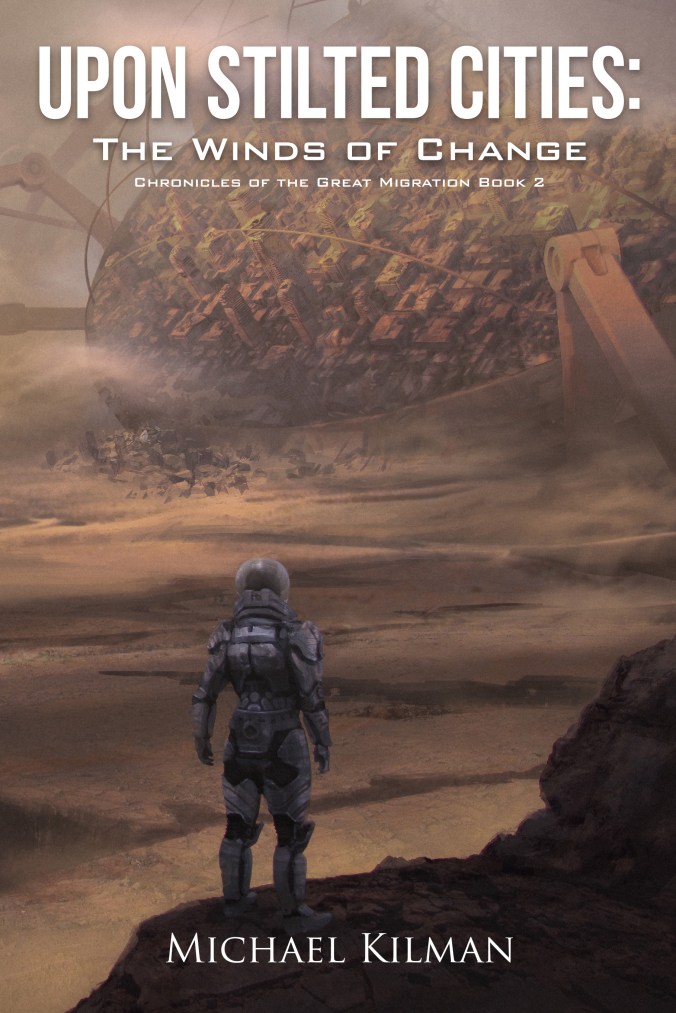
Upon Stilted Cities is here!

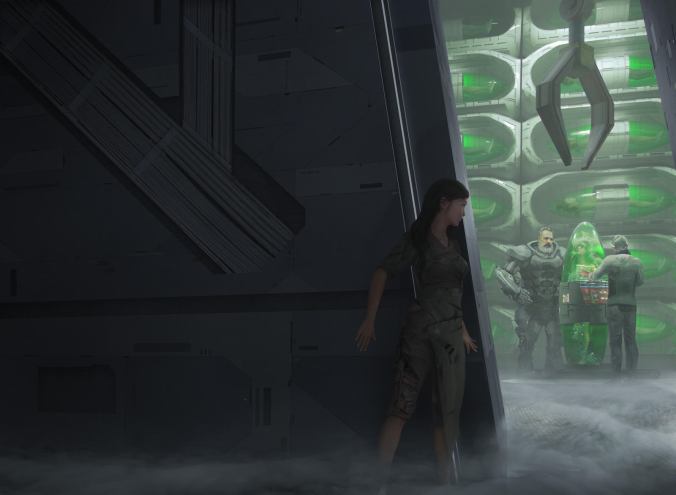
My second book in the Chronicles of the Great Migration has arrived! This book has been a long time coming for me. In 2011 I woke from a strange dream about a man overlooking a giant walking city, and another imprisoned in some kind of green pod. Through those scribbled notes, the very first chapters of this novel were born.

At the time I was a graduate student and had to put the story aside, but as I wrapped up my thesis the story became a thorn in my brain. I couldn’t stop thinking of it. Some nights I would even toss and turn until I got up and wrote some of it down.

I hope you enjoy reading it as much as I did writing it!

You can get your ebook here! Paperbacks will be up in a few days!

USC Front Cover Graphic

Your book idea probably isn’t original, here’s why that doesn’t matter.

pexels-photo-771322

My book series, the Chronicles of the Great Migration are about giant walking cities in a dystopian future. When I first started writing about this idea, I thought I was the most original person in the world. Arrogant as hell right? It’s okay, go on and laugh at me. I completely understand. I laugh at myself all the time now.

You know what made it really funny? I started writing this series in 2011, thinking, wow, no one has ever thought of an idea quite like this before. I was completely oblivious to the award-winning and very wonderful books by Philip Reeve who wrote the series ‘The Mortal Engines’, which is coming out in film form this year. When I discovered this two years ago, it made my heart ache a little and it certainly humbled me. But I loved my characters so much that I decided to resume writing.

Then, I had to laugh some more when earlier this year, this article came out. Imagine a World of Walking Cities and references a man who came up with the idea in 1964, twenty years before I was even born.

But here’s the thing. It actually doesn’t matter. Now I want to note here, that as a University Professor, plagiarism is wrong and immoral, and you should never ever steal the work of another human being. But, when it comes to grand ideas, overarching themes and concepts, there is, and has always been a lot of borrowing going on. Even Ursula K LeGuin (who is arguably one of the greatest writers of the 20th century) grappled with this in her article Art, Information, Theft, and Confusion

A great example of this is the sci-fi novel Dune vs Star Wars. Now Dune was published in 1965 and George Lucas did admit that the text heavily influenced him. In fact, here’s a short YouTube video, on just how much Star Wars pulled from Dune (Hint: It’s a lot… like a lot.)

But, are Dune and Star Wars the same thing? Certainly not. Yes, a lot of borrowing went on, but the Universes of each story are very different and explored different questions. (Star Wars Fans don’t hate me but I think Dune is the superior of the two).

Similarly is there anything super unique about a boy going through a Wizarding school? No of course not, that theme has been done to death, but JK Rowling made it her own and built a unique and interesting world and the characters that go with it.

So, does your story share common elements with another? So what if it does. Here is a short list of the things that actually matter in crafting a good story.

  1. You have taken a concept and played with it in a unique way 

What makes a story a part of a fantasy genre? Things like magic, warriors, rogues, special objects or locations? Fantasy might be the genre with the most overlap because some of it’s core characteristics require that overlap. But what makes a series like the King Killer Chronicles  or Mistborn standout? Both these use magic systems, but both have taken the concept of magic and added some interesting and unique elements to it. In return, the goals and experiences of the characters are necessarily also unique.

For example, Allomancy (one of the three systems of magic from Mistborn) has the magic wielders consuming and then using certain metals for their powers. Some people can burn certain metals, and others cannot, while some people can burn all the metals. This unique form of magic will necessitate a specific kind of problem-solving and character conflicts. For example, two Mistborn (people who can burn all the metals) fight with the knowledge that each opponent probably has a limited supply of each metal. This creates certain plot points and influences thinking in each character.

Science Fiction might be the genre that has the most arena of play and thus allow for all kinds of variation. Do you have aliens? AI? Superhumans? Genetic Engineering? Alternative history? It’s a very broad genre and there are endless things to explore.

So for example in my series, yes there are giant migrating cities (they are really more moving mountains because of their size) but you also have telepathy, artificial intelligence, life-extension, superstorms and a variety of undead creatures called ‘Recycled’. All of these various elements work together to create a unique world.

By themselves, none of those elements are unique and can be found in a hundred different science fiction novels.

Make your world unique and colorful. Small changes to world building can create some really interesting results. Why? Because cultures and worlds are holistic. A change in a political sphere will change economics, kinship, religion, gender, class, ect. Trust me on this, I’m an anthropologist and we see it all the time. A small change in your world building can create some pretty significant results.

2. Are your characters unique or can they have a unique experience? 

Certainly, if the universe you are writing in is unique then unique character experiences are too difficult to manage. But what if you write something like romance or thrillers that are limited to the current reality in which we reside?

Your characters are your strength regardless of the genre. Ultimately, what people are reading your book for is the characters. If they don’t give a shit about your characters, then they aren’t going to keep reading. Empathy with characters is really important. Check out this YouTube Video on this topic for more.

But beyond empathy what makes your characters unique? Or perhaps their particular interactions are unique. What makes your characters one of a kind and unforgettable? Are they funny? Do they have an interesting internal struggle? Do they have a really interesting talent or fatal flaw? Maybe they have all of these things? A unique and/or interesting character will change the story for the better.

Think of it this way. If you put a character in a situation where someone tries to run them off a road in an act of road rage, not all characters (or people) are going to behave equally right? How they interact with a stressful situation can tell a lot about whether your character is interesting or not. And, life is pretty stressful, even without an evil robot from the 29th century coming to kill you.

3. What’s the change agent?

It’s not true that all characters change. In fact, having a character stay the same while the rest of the world changes around them, can also be a fascinating story element. One thing that makes a story unique is whatever is causing the change.

It could be as simple as that new woman in the characters life, or perhaps someone stole their wallet and the next they know, they end up in a parallel universe where humans are extinct and ruled by a telepath race of snails… sorry I go on tangents a lot in real life too haha.

The point is though, what is causing things to change? Stephen King in his book ‘On Writing’ talks about how most of the time, he likes to put a character in a particular situation and see if they can work their way out of it. So, in what ways would your character solve their issue? Or could they even? Maybe the whole point of your story is that they can’t solve anything and they are a bumbling idiot and it’s sheer luck that gets them through. Terry Pratchett and Douglas Adams played with this a lot. The results are pretty comedic.

4. At the end of the day, it’s about telling a compelling story, even if many of your elements have been done to death. 

So, to summarize it doesn’t matter if elements of your story have been done to death. I mean… time travel right? How many books and movies have explored that? But think of the ones you enjoy, what made you love them?

It is all about owning your story, about taking those old ideas and putting a fresh spin on them, that’s how you tell a great story. Consider some of these elements if you ever feel stuck or if your beta readers tell you they were bored.

Never forget, it’s okay to give up on a story if it’s not working. Sometimes putting something aside will make room for something even better. Life is too short to bang your head against the wall. If you aren’t excited about your story, the reader probably won’t be either.

Be A Better Writer? Some Resources and Tips to help you in your craft.

Like anything else, writing is a skill, one that must be cultivated and developed.writing-1209121_960_720

It is certainly true there are some writers who are born geniuses who probably came out of the womb with a pen in hand ready to write their first lines, but that’s not me.

I’ve spent a lot of time writing and learning and writing some more. I had the advantage of taking a few courses in college-level creative writing, but not everyone has that opportunity or experience. So here below I wanted to provide some tips and some resources about some of the things I have learned that have helped me along the way. There are a probably 1000 other blogs and a 1000 other books that do this (I am going to suggest some too), but I hope that some of what’s here is helpful to those of you reading this.

Resources are at the bottom.

A quick note before we dive in. Recently a colleague of mine (and fellow anthropologist) and myself published a book on worldbuilding. So if worldbuilding is something you are interested in, check out our book Build Better Worlds an Introduction to Anthropology for Game Designers, Fiction Writers, and Filmmakers on Amazon. This book has all the building blocks needed for building a more authentic and immersive world.

1. Read a lot. But read like a writer, not like a reader.

It’s pretty common advice. Read lots and lots of books and short stories in your genre and outside your genre. Get off social media and actually read, or listen to audiobooks during your commute, but for the love of god read! Yes, this is essential, no exceptions. If you can’t read consistently you cannot be a good writer.

But there’s another level to this that isn’t talked about quite as often. You aren’t just reading as a fan. What’s important is that you are reading as a writer. What does it mean to read as a writer? It means to read and once in a while stop and reflect. 

Didn’t like that particular passage? Stop right there. Why didn’t you like it? Think about it deeply. What didn’t work? Was it poorly worded? Did it mess with the flow of the plot? Dig deep and think about it. Part of learning to be a better writer is exploring what doesn’t work. It’s actually helpful to read stuff that sucks once in a while.

Loved a particular passage? Stop right there. Why was the line or passage powerful? What about it struck you? Did that line make you feel a connection to the character? Why did that work at that particular? I call these passages juicy morsels and always look for the ‘recipe’ for how they are crafted.

Are you bored with reading this book? Are you considering putting it down? Again, why? You might not always be able to put your finger on it, but there are powerful lessons if you can.

If you start doing this with every book you read, over time you will build up a solid idea of what makes writing potent and powerful and what makes it terrible. You can even do this with books you love that you’ve read before. Which passages are your favorite or least favorite, why?

A quick note here:

No, you don’t have to keep all of this shit in your head as your writing. Write and reflect, write and reflect and yes, you should do more writing and reflecting. No professional athlete ever became that way by reading about technique over and over again. They watch others play, and yes they might read, but they go out there and experiment with these things and find out what feels good to them and what works and what doesn’t. All of my thoughts here are just that, things for you to consider and try, if they don’t work discard them. I am just sharing with you what has helped me on my writing journey.

Which leads me to my next bit of advice:

2. Play play play

Why are you writing again? Seriously, think about it. Why are you writing? You like it, that’s why. If you don’t like it, stop. No one is making you write that novel. Do it because it’s fun and you enjoy it.

But here’s the other thing, experimentation is important. When I was learning guitar, I tried many different styles of music. Why? Well first because my teacher insisted, but then I started to realize that exploration made me better. It helped me to understand the things I favored in a new way. If you are a sculptor and you only ever use clay, how do you know what’s possible in other mediums?

Do you only like to read and write science fiction? Well, have you tried to write something else? Try writing a short-story in historical fiction, take a flash fiction workshop, read and write some horror, or try some romance on for size. Why? Because it will make you a better writer and you might learn something about yourself and your writing you didn’t know before. Hell, try to write some spoken word or lyrical poetry. Those things are really hard and if you can do them half effectively then you will have expanded your skill set and learned more about your own style.

Have fun, play and explore, remember to keep the joy of writing on your mind, because sometimes it is tedious. When it is, try something new or explore. Mix it up, people!

3. A large portion of what you write is going to be garbage

Seriously, accept this. Honesty about your own work is a really powerful tool. Notice I said honestly and not being overly critical.

How many times does a baseball player strike out, or hit fouls? How many hours do they spend in batting practice or batting cages? How many times do they swing and miss? Do you honestly believe that writing is any different? 

There is absolutely nothing wrong with writing garbage. There is nothing wrong with looking at those 5 pages you forced out of your brain for the last hour and saying, damn this sucks and deleting it. You have not lost anything by doing this! 

Shitty writing is part of the process. My first published book, Mimi of the Nowhere, was my fourth attempt at a book. The first 2 are complete garbage and the 3rd one, Upon Stilted Cities, required a lot of reworking to make it what it is today. They will never see the light of day. I’ve probably written several dozen short stories that are total shit. I would go so far as to say that a quarter of what I write is absolutely terrible.

And so what if it is? Does that mean I am wasting a quarter of my time? Hell no! The more bad writing you do, the quicker you get to the good stuff, that stuff that works, the stuff that makes readers root for your characters or cringe when something awful happens to them.

A pity party doesn’t help anyone and definitely doesn’t help you become a better writer. Give yourself permission to write garbage, to look at the page and laugh because it’s so terrible. I cannot tell you how freeing it was the day I finally accepted this.

4. Routine is really powerful, so are deadlines and goals. 

I belong to a Facebook Group called My 500 Words. It’s a group that seeks to get you to write at least 500 words a day every single day for at least 31 days. Why? To build a habit, to make writing a serious routine. It was not until I started building a writing routine that anything started to happen.

Here is where you are thinking, but I don’t have time for this? I work full time, or I am a parent, or I have other obligations. Sorry to blunt, but, bullshit. What you are saying when you make excuses is that writing isn’t that important to you right now. There’s nothing wrong with that, if it’s not a priority that’s fine, no judgment here sometimes life doesn’t allow for writing to be a priority. Believe me, I understand that more than you can know.

Otherwise though, suck it up and sit at that chair, cause this shit doesn’t happen by itself. Excuses are like assholes, everyone has one. Besides, someone usually says to me they don’t have time right now, after telling me how they just binged this amazing show on Netflix or played through this video game. If you want to write, you’re gonna have to cut some of that TV and gaming time out (again this was hard for me to accept at first too.)

When you’re ready to make writing a priority, do so. No one says you have to dedicate your free time to writing. Do it because you want to because that story is burning in the back of your mind and wants to come to life on a page. Prioritize writing because you love it, not because you feel like you have to. Writing can be a powerful act of creation and joy. If you create a writing routine, you can bring your dream of being a writer to life.

The last thing I want to add here is that setting deadlines is really helpful. Events like NaNoWriMo can be really helpful because it is a community of people who set a deadline and a goal. For me it was setting dates with an editor. This has proven to make sure that I am constantly working on something or else I will have to start staying up all night to finish. I cannot tell you how helpful that’s been for me.

Oh one more thing. Sitting there and telling yourself that your not good enough or that you suck, or that you will never be published isn’t useful at all. Just remember, it’s a skill, like everything else. You can do this. 

5. Resources

Note: No one is paying me for any of these recommendations (Though I will happily take a check if someone wants to give me one) These are all things I found sincerely useful in my writing journey.

When it comes to these resources I do not recommend binging these. No, you should not watch an entire YouTube channel on writing in one day! (You should be writing dammit!) Take your time, spend 10-30 minutes at once. Let your brain absorb these ideas and these thoughts so that they are in your subconscious while you are writing. I am a college professor, and what I can tell you is that it takes time to absorb no ideas and concepts. Cramming is only good for the short term, and if you truly want to be a writer, you’re in it for the long game. 

YouTube Channels for Writing
Just Write (Episodes Focus on what works and doesn’t in writing)

NerdWriter (Episodes on writing and critiques of what doesn’t work)

Jenna Moreci (A very helpful channel about Writing, Editing, Marketing and all things Writing)

Hello, Future Me (Focuses on particular Writing Elements such as villains, systems of magic and other key pieces) I particularly recommend the episode on Hard Magic Systems for the Fantasy Writers out there. If you are writing fantasy you may also want to consider Brandon Sanderson’s blog on Laws of Magic

Books on Writing That I found helpful: 

Self-Editing for Fiction Writers

For me, this was one of the most helpful books. It isn’t just about editing, in fact, I would argue that it is a critical look about what works in writing and what doesn’t. I can’t recommend this book enough.

On Writing

A lot of people don’t like Stephen King, that’s fine. But what is impossible to deny is that he consistently writes novels that sell millions of books. There is a reason for that, I have spent many hours critically reading Kings work and that’s largely because of this powerful book on what it means to be a writer. I highly recommend it.

Write Good Or Die 

This is a book that is filled with tips and advice on writing that will help you improve your craft. Again, another one I thought was very useful.

Grammar for Fiction Writers 

Yes, we all need reminders about grammar, unless of course, you are an editor already. This book is really helpful

Sin and Syntax: How to Craft Wicked Good Prose

Another good one for thinking about the flow of your writing and how to craft better sentences and paragraphs.

Zen and the Art of Writing

Bradbury’s book on Writing is a mixture of poetry and the passion he feels for writing. It’s another book that is worth contemplating as you type or scribble your prose.

That’s all Folks!

I sincerely hope this was all helpful. If you have further questions or thoughts or anything to add please feel free to comment below.

Also, shameless self-promotion here, but if you like Science Fiction check out my book Mimi of the Nowhere, the first book in my Science Fiction series, the Chronicles of the Great Migration.

Preorder Upon Stilted Cities: The Winds of Change Now!

Preorder for the digital edition of Upon Stilted Cities: The Winds of Change has begun on Amazon, Barnes and Noble and Itunes. Find at your favorite store at the link. books2read.com/u/4EyRvA


Don’t forget to check out Book 1 in the series, Mimi of the Nowhere and Sample Chapters from Upon Stilted Cities here

USC Front Cover GraphicSynopsis: The Children of Gaia won’t stop until every last walking city is destroyed.

The city of Langeles is rubble, resources are dwindling, and storm systems are larger than ever before. The people of Manhasten are in great danger, and they don’t even know it yet.

Life in the city hasn’t changed much in the forty years since Mimi joined her telepathic sisters of The Order of the Eye, but the winds of change are blowing, and their enemy, the Children of Gaia wait in the shadows to turn the city to ash. At the center of it all is one man, a man as ancient as the city of Manhasten itself, a man designated Runner 17. A man who is more then he knows, and maybe the only one who can save the city and the rest of humanity.

Chapter 3 of Upon Stilted Cities is here

Chapter 3: The Inspector is here! 

USC Front Cover Graphic


Alexa Turon, a young girl who works as the inspector in the docks has no idea Mimi is watching her. But the one person she can’t seem to stop thinking of, is Runner 17.

This chapter is Spoiler Free for Mimi of the Nowhere

Only 12 days left before Upon Stilted Cities is released on 7/17/18

Preorder has begun at some sites! 

Check out the Prologue and Chapter 1 Here 

Chapter 2 Here 


Chapter 3

The Inspector


Alexa Turon watched Runner 17 descend with the lift, sinking until he was out of sight. Her two-way mirror caught a flash of setting sun just before the dock bay door shut. The fluorescent lighting flickered across her face.

She ran out, picked up her dropped tablet, and then hurried back to her office.

There was a hotness in her. It surged up through her chest and settled in her throat. She sat down at her desk. Placing her hands on the ancient cracked keyboard, she felt the rough bumps against her fingers. She began typing up her report. Missing keys had already caused her fingers to callus. Slow work, many typos. Worse, the delete key was completely gone.

“Alexa Turon,” a high, obnoxious voice whined over the com line. It was Marty, her shadow, her boss. She still couldn’t remember his last name and when she called him by his first, it frustrated him. “You have a call from a man named Douglas Turon, who claims to be your father?”

Alexa groaned. “Great, here we go again.”

“Pardon?” asked her supervisor.

Alexa blinked, she hadn’t realized she had said it aloud. “Oh… um… put him through.”

Douglas Turon flashed on the view screen just above Alexa’s cluttered desk. He didn’t look much older than his daughter. The screen flickered for a moment and settled. At 193 years of age, his face was frozen in that of a man in his mid-30s. His chin-length blond hair, short pointed nose, and thin patchy beard made him look a brother, not a father. It was the alcoves.

“Alexa, how are you? Is everything all right? Your mother and I are worried about you, you know.”

She tried hard not to roll her eyes. Here she was, 23, and her parents were still calling her at work. Granted, she wasn’t legally an adult yet regarding voting and other privileges, but she would be in just two short years. Besides, so far as she knew, none of the other 23-year-olds had parents freak out if they didn’t hear from them for a few days. Even though the legal definition of an adult was 25, most parents still accepted that their children were adults at 18. An ancient habit.

“Oh, things are fine, how’s Mom?”

“Your mother is doing just fine. She landed another promotion in the library. She is going to be working almost directly with Senator Lightfoot on one of her artifact-cataloging projects. You know your mother, always the archivist and never much a people person. The prospect of spending days on end cataloging items from the last dig has got her so excited she can’t sleep. It’s all she talks about.”

“Oh, well that’s great news. Does that mean you could move to the Uppers?”

“You know Alexa, we just might. Your mother says that Senator Lightfoot has offered to sponsor us. I mean, Floor 39 is a wonderful level to live and all, but can you imagine the Turons making it to Floor 40? I mean, think of the benefits we would have as an Upper. Your mother and I have talked about having another child, and a move upward would make that possible. Speaking of which Alexa, I may have a job for you here in the IT department.”

Uh oh. Here it came. For the twelfth time since she took this job, her father was about to ask her to work for him, and then, of course, ask her to move back in with him and her mother. She knew the tired argument already. He would mention, again, some fantastic job opening (probably one that he made up just for her) and again, he would talk about the benefits of living at home as a young Upper Mid and saving to become a true Upper. Then he would talk about Alexa’s potential being wasted in the Runner Dock and how dangerous it was amongst all those criminals.

“Dad, I love you, but stop. I’m not interested.”

Her dad’s eyebrows shifted and one arched upward as if to say, whatever do you mean my sweet daughter.

“Dad, I don’t want to go through all this again. I’ve chosen to work down here, and I don’t want another lecture.”

“But Alexa—”

“No buts, Dad. I know you’re worried about me, but my new apartment in the Upper Lowers is in a safe area and working in the docks is as safe as anywhere else. You know damn well that they keep the Runners on a short leash. I have a button on my data tablet that I can press if I feel any threat at all.”

“Alexa. It… it’s not just your safety. Your mother and I are worried about your future too. You have so much potential. You scored the highest of any Mid on the Standard Placement Test; you were the top of your class. Supreme Justice Smith even offered you a position, and yet you chose the Runner docks. Why? If you could just explain to us why you made your choice, we could support you. We want to understand why our little girl is throwing her life away.”

Alexa felt a rush of anger. “First of all, Dad, we both know why Justice Smith offered me a position. You’ve heard the rumors about all his pretty young assistants and the after-hours ‘work’ they do for him.”

“Oh Alexa, those are just rumors. None of the allegations made against the Justice were ever proven.”

“Professor Claven told me that the rumors were true and to stay the hell away from him. So that’s what I am doing. For the last time, Dad, I’m not throwing my life away.”

Her father rallied, not dissuaded.

“Alexa, if you could explain why you chose the Runner docks when you could have chosen almost anywhere else in the city, then maybe your mother and I could be a bit more understanding.”

“It’s not any of your business, Dad. I’m done discussing it.”

Her father stared blankly at her, and Alexa felt a rush of guilt crest over her like a wave approaching the shore. She wanted to tell them, but she just couldn’t. They would never understand, and though they had been supportive of her alternative methods for dealing with her headaches… well, this was something else entirely.

She sighed. “I’m sorry, Dad. You have to trust me. I’m doing this because I feel it is the right thing to do. This is the right place for me to be. Can’t you just accept that?”

Her father frowned through the flickering glare of the view screen.

He sighed, “You are almost an adult now, Alexa, and of course we want you to do what you feel is right, but time so often has a way of revealing our mistakes.” He paused again. His head turned back away to acknowledge someone nearby. He nodded his head a few times and mouthed a few indistinct words before he turned his attention back to Alexa.

“I’m sorry Alexa, but the AI needs some routine maintenance, Joe Fisher told me it’s acting a bit strangely, so I have to go. But Alexa, I’ll make you a deal. Neither your mother nor I will mention anything else about your job if you promise to sit down and at least chat with Dr. Black in systems maintenance next week. He’s heard about you from one of your professors in scholar school and is interested in meeting with you.”

Alexa rolled her eyes. It was another deal. There would be more. Always more. She also knew that accepting the meeting would get them off her back for another week and would allow her to focus on… well… whatever it was she was supposed to be doing down in the docks. She wasn’t sure what it was yet, but she had some ideas.

“Alright Dad, I’ll meet with Dr. Black next Friday. How does that sound?”

A smile spread across her father’s face. She loved that smile. “Wonderful. Your mother will be so happy to hear it, and I just know that—”

“One thing, Dad. Don’t expect me to take the job. I will go to the meeting but please, no expectations, okay?”

“Of course, Alexa. Of course.” But his smile said otherwise. He expected her to take this other job, to get out of the Lowers and to move back in with them. She knew another argument was coming, probably even a yelling match this time. But for now, a temporary ceasefire.

“I have to get going; Joe Fisher needs me. Do me a favor and call your mother this evening, Alexa. I know she would be happy to hear from you. I love you.”

“Love you too, Dad.”

The screen went blank. She exhaled. She wished so much that she could tell them why she chose the docks, but she didn’t exactly know herself. She also knew that until she could give them some sort of concrete explanation, something that made sense to them, they would continue to pester her. She wished she was a better liar.

In truth, she didn’t much care for the job. The hours were long and mostly boring, the smell of the place was almost intolerable. And the Runners, despite her reassurances to her father, made her very nervous. Well, except for that Runner 17. He had made her feel something… different.

17’s beautiful dark skin. And his eyes, like gray-brown orbs, she couldn’t stop thinking about his eyes. Her mind’s eye wandered downward, recalling each muscle. His chest hairless, covered in scars. She wanted to run her hands across those scars and feel the muscle below. She wanted to run her hands further down his naked body and… She caught herself at the thought and put a stop to it. Those thoughts lead to trouble, and she was already worried she was in over her head, despite what she said to her parents.

Her mind wouldn’t shift. She began to type at the keyboard again but found it impossible to focus. Her supervisor, Marty, had warned her that 17 was entirely unpredictable. But maybe it wasn’t the bad kind of unpredictable. And his face… it was so familiar. Where had she seen it before?

17 had told her that his only crime was pissing off the wrong woman. But she wasn’t sure that she believed that. After all, Marty had told her that every Runner claimed to be innocent, that every single one of them would say that were framed or imprisoned for ridiculous reasons. Most of them, he had told her, were murderers or thieves or rapists. Most of them were the scum of the Lowers. Marty had told her that, even if a few of them were innocent, it didn’t matter, because most of them were guilty as hell. What were a few innocent lives if the scum was off the street; if the city was safer. She wasn’t sure just what to think about that. Safety seemed like a big price to pay if innocent people were having their lives destroyed.

But was there any truth to what 17 had told her?

She felt that warmth again. Alexa found herself wondering, what was 17’s real name? The thought had overtaken her so rapidly, that she hardly recognized she had it. By the time she began searching through her data tablet for the desired records, she had only just become conscious of what she was doing. It almost felt intuitive.

It was quick work to find 17’s listing. He was first on the list of active Runners. Of course he was. The list was in numerical order. She selected his profile and opened up the record. In it, she could see most of 17’s missions and their details. A few were marked with a restricted access symbol, a circle with a red x in the middle, but for the most part, she saw that he had been on hundreds, no thousands of missions. She wasn’t interested in most of the mission by mission details and scrolled downward, looking for what she desired. As Alexa reached the end of 17’s profile, she felt a wave of frustration. There was no name, but there was something else, something that almost took her breath away. At the very bottom of his profile, after the first mission was a ‘years active’ indicator. 17 had been active for one thousand, two hundred, and ninety-four years.

Quickly she thumbed the main menu button and returned to the screen to put in the search query.

“AI?” she asked.

“Yes Miss, how can I help you?” Alexa’s AI now sounded just like her third-grade teacher, Mrs. Feltcher. It hadn’t sounded like that before. Why the change? It occurred to her that she did have a lot of fond memories of Mrs. Feltcher. Had the AI analyzed her history and psychological profiles? It was a thought that she didn’t like, but her curiosity was getting the better of her, so she put it aside.

“AI, can you give me a complete list of current Runners in order of the longest active duty status to shortest?”

“Yes, Miss.”

Almost instantaneously the list appeared on her data tablet screen, and just as she had suspected, 17 was at the very top. The next Runner down had only had an active duty status for 674 years. She gasped and then caught her breath before it ventured too far from her lips.

“AI, are these active duty stats correct?”

“Yes Miss, they are current as of this morning.”

“So that would mean that Runner 17 has almost double the years of active duty of any other Runner?”

“Correct.”

“What does that mean?”

“I’m sorry Miss, but I am not fully sure I understand your query.”

“I guess… I mean… why is he still alive?”

“To quote Major John Daniels,” the AI’s voice switched to what was the imitation of a gruff old man’s voice that she assumed belonged to Major Daniels, “That bastard 17 is the toughest, luckiest son of a bitch on this whole worthless rock of a planet.”

The AI system was not without a sense of humor, and she almost burst out laughing. Before she could, however, one question burned. She could feel sweat beading on her brow, it had to be asked, or it might burst forth from her chest. There was that heat again. It was taking her.

“AI…” she paused for a moment, terrified of the answer. She didn’t know or wouldn’t learn for a while why she was so terrified of that question, but it caught in her throat, struggling its way upwards toward her lips.

“What was his initial crime? I mean, why was he sentenced to Running?”

“I am sorry Miss, but that information is restricted.”

“Restricted? To know someone’s crime? That seems odd. Aren’t those records supposed to be public knowledge?”

Alexa had studied both the current and ancient legal systems in scholar school and was certain that this information was supposed to be public record. It was one of the concessions that the first Senate had made when they had originally commissioned the Runnercore because so many people had been worried about transparency once they had abolished lawyers. In fact, after the sentencing of the first Runners, there were riots in the streets. It had not been lost on the people in the lower levels of the city that they would be the primary recruitment grounds for the Runnercore. They had known that those in the upper tiers of the city would rarely, if ever, become Runners.

One city, Sydney, had fallen to the mobs. No one had ever heard from Sydney again it had apparently vanished off the face of the earth.

But here was a man who lived those times. Only two years after migration began, this man had become a Runner. Not only had he been alive during the transition to migration, but it was also likely that he one of the first Runners if not the first Runner. Alexa felt a tinge of disappointment in herself. Here had been a great opportunity to learn about the ancient history of the city, of what life had been like in those early days from an actual living, breathing person. The only other person in the city who had been alive during the transition, from what she had read, was Major John Daniels, the head of security, and it was unlikely she would ever have a chance to ask him questions about ancient history.

“You are correct, Miss, all criminal records are supposed to be available to the public, but Runner 17 is a special case. His records had been marked off limits by an Architect.”

“An Architect? You mean one of the creators of the migration system?”

“Yes, Miss.”

“Which one?”

“I am sorry Miss, but that is also classified information.”

Something about all this was strange. Maybe her unknown task had something to do with Runner 17? She bit her lip.

“AI, can I have access to all the files on 17, including before migration?”

“I’m sorry Miss, but most of those files are restricted.”

She frowned, none of this made sense, why would anyone hide the files of one of the oldest Runners? There just really was no reason to restrict those files. Something in her flickered, that familiar feeling of knowing, but she dismissed it for now. This was neither the time nor the place; she would explore that feeling when she got home. She kept her breathing slow and steady to keep her from going under. Her head had begun to tingle, but it was subsiding.

“Just give me what you can, then.”

“I am transferring the files to your tablet now Miss. Is there anything else you need at this moment?”

“No thank you, AI, that will be all.”


At that same moment, on the other side of the city, an alert popped up on a data tablet indicating that someone was attempting to gain access to 17’s files. The eyes watching traced the source of the data inquiry and for a brief moment activated the camera on the tablet accessing the files. The tiny camera on the front of the data tablet snapped a picture and immediately an image of Alexa Turon’s face was captured and transmitted. Facial recognition software identified the face as Alexa Turon, and instantaneously every known file and record on Alexa Turon was accessed and reviewed.

The threat was considered.

For now, at least, there was no threat.

But he would watch this one closely, lest she put many lives at risk.


3.

Alexa sat down at her desk, utterly unaware of the surveillance. She scrolled through some paperwork, the part of the job she hated most. She marked a few boxes on her tablet and signed her name below, indicating that the inspection of 17 was complete. She submitted the data through the city’s server and after less than a second, the central AI confirmed receiving the packet.

There wasn’t much to inspection. Between the AI, the engineers, the Recycled Runners, and the alcoves, most Runners were ready to go with only the most basic inspection. Her main job was to do all the paperwork, double check vitals and put up a red flag if something psychological was wrong, whatever that meant. Most Runners were at least to some degree unstable. Otherwise, they wouldn’t be Runners. All she was, was a cog in the wheel of the Runnercore, akin to a mechanical arm in the never-ending assembly line that kept the city functioning. Her parents were right about that, and she knew it. The job was a dead end.

She was told from the get-go that most of the time she wouldn’t even see Runners, and it would be an extremely rare occasion to see more than one at a time. In fact, the security advisor who had briefed her on her duties had told that she might only see a Runner once or twice a month. She had asked, what then were her duties in those slow times? She was told that she was to stay vigilant and to do her part. But in the month she had been there, she had encountered not only a dozen or so Runners but now even one of the oldest Runners.

Despite her long battle with boredom and the overwhelming pressure from her family, Alexa knew she was in the right place. The pieces of the puzzle were beginning to take shape, though the picture still wasn’t clear.

“Alert, Runner 494 deployment.”

“Of course.”

Alexa grabbed her electronic tablet and searched for 494’s profile. She walked out of her office and toward the EnViro suit platform. 494 was emerging from the tunnels. He was, unlike 17, clothed from the waist down. Several tattoos of red lines of concentric circles painted around his nipples and cascaded outwards across his chest.

Alexa reviewed the profile as she walked. 494 had a warning label attached to his profile. “Convicted Serial Rapist” it stated. She shivered. There wasn’t any real danger to her since the dozen or so armed security guards would incapacitate 494 if he so much as breathed the wrong way, but she still disliked dealing with individuals like this. It was the thing she had dreaded most about the Runnercore.

Alexa approached with her clipboard, “Vitals are all looking good, 494, how are you feeling?” She tried to hide the quiver in her voice. She didn’t want this one to know that she was afraid, but it was too late.

494 turned and stared at Alexa, his face expressionless but his eyes hungry. He glanced up and down her body, “Fine.” It was a long, drawn-out word, and his lips spattered saliva just a little bit. He licked them to keep the moisture from becoming drool.

She felt his eyes consume her, and every part of her instinct told her to get away from this man. She felt that at any moment he would lunge for her. Her fingers drifted toward the emergency assistance button on her tablet, a button that would call every guard in the dock and potentially activate 494’s shock chip in the base of his neck if the AI felt he was too aggressive or out of line.

Her heart was racing. He kept staring at her. Now he was taking in every detail of her face, and she didn’t like it. She could tell by the way his eyebrows worked in concert with the slight changes in his eyes that he was considering something. Alexa hoped to the gods that he wasn’t considering what he should do to her. She decided to stay out of this one’s mind, it wouldn’t help any to skim him.

Even still, she felt exposed and even a little violated. She moved her feet a little closer together, narrowing the space between her legs. Her thumb moved to a hair’s breadth above the emergency button. One sudden movement and she would press it.

“Um… Your EnViro suit… It’s in station 12,” she said, forcing the words out.

She thought he was about to say something, but instead, 494 turned without further interaction and began walking toward the platform where his suit waited. She let out all of her breath, so hard in fact, that she worried he would turn and look back. But he didn’t.

Then she lost control of herself, and Alexa felt 494’s mind overwhelm her with images of violence, anger, and lust. She felt nauseous, dizzy, and had to stop herself from fainting. 494 was truly a terrible human being. She was glad to see him leaving.

Some of the Runners she had encountered so far had definitely deserved to be there but 494… he was exceptional. Sure, most of the Runners were slimy and could even be malicious at times, but 494’s mind was the very definition of insane. She hoped that the Barrens consumed him, that he disappeared in the winds forever.

Her mind returned to 17 as she watched 494 walked toward the lift that led out into the Barrens. What had 17 done to deserve his tenure? Were all Runners true criminals, or were some in the wrong place at the wrong time? She would have to do some more reading up on it. It’s not like she had much else to do while waiting for Runner deployments, and if her boss asked her, she could simply say she was learning about each Runner for her own protection. He would probably approve of that; it would probably fit into his narrow definition of “being vigilant.”