I was recently interviewed on the Boulder radio station KGNU for my book series and on the topic of diversity and climate change.

I was recently interviewed on the Boulder radio station KGNU for my book series and on the topic of diversity and climate change.
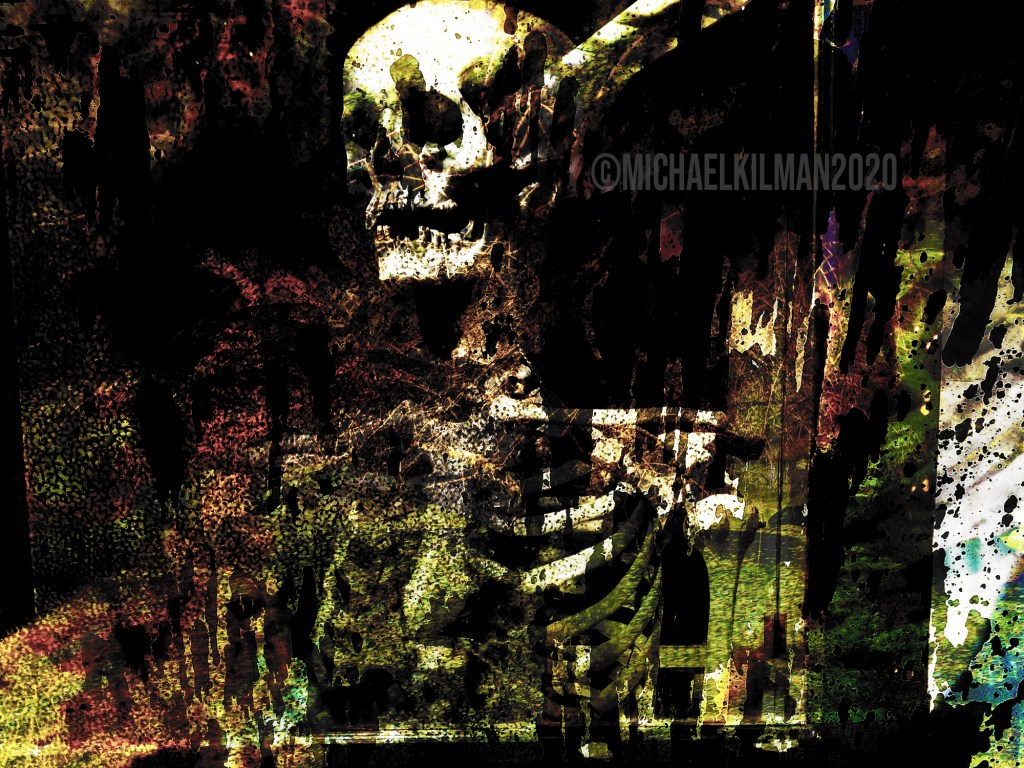
My short fiction written in the lyrical spirit of Edgar Allen Poe (strange rhymes and all) titled ‘Man in the Mirror’ is in the middle of a holiday horror contest (Vote if you enjoy). Some of you out there may have read part one, but I wrote a second verse not long ago that’s new and never read before now.

Happy Holidays!!!
Mimi of the Nowhere and Upon Stilted Cities: The Winds of Change are now only 1.99 each!
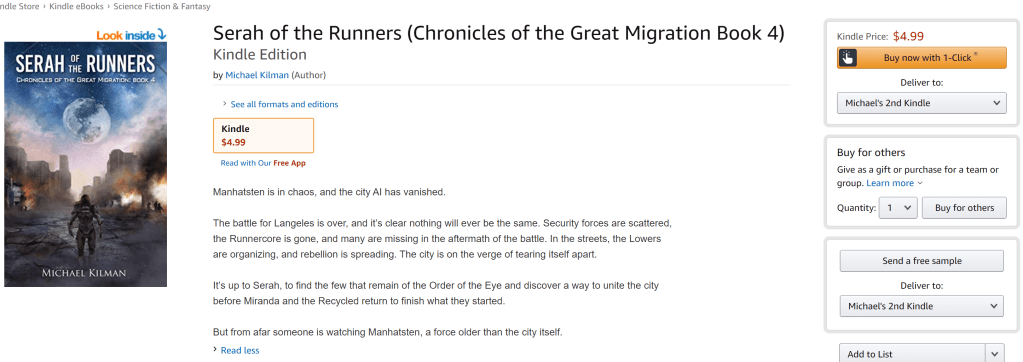
The Battle for Langeles is only 4.99. For a limited time only you can get the first 2 books for less than a trip to a coffee shop! Check out this Dystopian series!
One thing that can really make or break a piece of fiction (regardless of format) is the tension. It’s often is missing when something goes horribly wrong and (for me at least) it was the what was seriously wrong with the final two seasons of Game of Thrones. So, I thought I would throw together a few important things to consider in writing and building tension. A warning if you are sensitive to talking about sex, this is going to be an R-rated blog.
Tension in storytelling is a lot like really good sex. It’s really rare to have great sex that is just the, let’s stick it in variety. Instead, like fiction, there is teasing and touch and playing with the body (reader). You reveal just a little bit at a time, building anticipation and pleasure until your partner (reader) absolutely needs to go all in. You take your time, but you move with a kind flow and rhythm, you let things rise and then pull back, rise and then pull back and then there is a point in your story where it is, indeed time for full steam ahead and you go for it.
If you think about it, that’s what a master of storytelling does. They give you glimpses and foreshadowing of what’s to come. The set the frame of your mind and they control the narrative. This is particularly important in genres like horror. An example of really effective tension building is the film Paranormal activity.

Sorry… but it’s been quite long enough for spoilers! If you haven’t seen the film you can always leave now and come back later…
The great thing about this film is how each night is an event that ramps up the tension a little. Virtually no scene is wasted and there is a great interplay between what the characters experiencing each night, and then reliving it through the following day. Each day the tension builds just a little, until the shit hits the fan in the last fifteen minutes of the film.
The story itself offers almost nothing unique. It’s found footage, it’s dealing with a lineage demon, and of course ultimately there is a possession. But the writer and filmmakers give you just enough in each scene to slowly and gradually ramp up the tension and the creep factor. You aren’t bludgeoned over the head with something outrageous the moment it begins. Instead in the first few minutes of the film, you wonder to yourself where this could possibly get creepy. Half-way through the film, you can feel your heart rate increase every time you get some of the bedtime footage and ultimately the payoff is great. But without the tension, this film would have been slow and boring.
But what about films or books that have a lot of downtime, that take a bit of world building to get to that good tension building?
Jurassic Park is an excellent example.
Head over to YouTube for a moment and watch this scene if you aren’t familiar.
The scene itself foreshadows what’s coming. The first thing you see after the credits is something rustling through the trees. Just like later when the T-rex makes it’s first deadly appearance. In this scene you see the creature watching the man walk on top of the kennel (shipping container, whatever you call it) as they try to move the Raptor into position. The key to this scene, the great foreshadowing it does, is that you have dozens of men with guns, you have a number of precautions taken to prevent the dinosaur from hurting anyone, and yet, still, ‘life finds a way’ and things go horribly wrong. Notice the kinds of camera angels, the key dialogue, the set design, lighting, and everything else. All of it creates this perfect tension where you just know something is about to go wrong.

After this scene it takes some time to assemble the characters and get them all in the right place for the real story to begin. Mixed in there you have the science behind the story, the introduction to the wonders and beauty of the park itself and how the characters fall in love with the idea of meeting real dinosaurs. But in the back of your mind, that opening always looms, all that foreshadowing, frames your experience. And each piece of dialogue seeks to serve a contrast between wonder and terror.
If you know you are going to have a slow build, framing something big in the beginning can be a powerful way to start the tension rolling while giving the reader something to think about. Speaking of which…
One thing that I think many films and books struggle with is sustaining tension. One way to do that is, even in moments where this is no apparent tension in place, creating tension can be successfully done by leaving unanswered questions or creating a state if disequilibrium for the characters. Did you leave a character in real serious mortal danger at the end of a chapter? Did you drop a philosophical bomb on your audience and leave them pondering it while you diverge into another character or area of the book?

This happens a lot in books like The Light Bringer Series by Brent weeks. In moments where there won’t be tension and he has to get a character from point A to B, he often leaves off the previous chapter with some large revelation, some grand conflict, or some serious question that the character must address. This makes your reader turn that page, even if the current chapter isn’t as intense. Why? Because you’ve instilled a kind of artificial anxiety in your reader and that makes them want to know just what the hell happens.
This is actually why, despite some readers hating cliffhangers… I still use them all the time. All of my favorite books and series utilize these tools and it’s one of the reasons I love them. A good story keeps you on edge, keeps you anticipating all the time… but…
Okay, maybe not never, but if you always keep things predicable and similar, if the character always get’s out of danger, or their assumptions are confirmed, your boring the hell out of your reader and probably out of yourself writing it.
Cliffhangers don’t have to resolve in ways we might expect. You might leave your character surrounded by what they think is an enemy, but maybe they are allies in disguise? Maybe they are an enemy but they can’t recognize the main character? The point is, if you always use cliffhangers in the same way, if you foreshadow too much and make things obvious, it will kill the tension.
Tension is about keeping the reader on their toes, about giving them another reason to turn the page. But, if you use too much tension you also risk overwhelming your reader. Find the flow or rhythm, let your pages breath a little, not everything has to be constantly tense.
What are your favorite ways of building tension? What books do you think do it best? Comment and let me know.
Happy Halloween 2019!
The Veil is thin between worlds and it’s the best time to tell those terrifying tales!
A few months back one of my short horror pieces got featured on a podcast. You can find it Here
Warm Springs
David, Eric, and Betty just wanted a nice soak in a off the beaten path hot spring. But something was waiting for them on that old trail.

Myths are fascinating and interesting arenas within cultures. Every culture has some kind of myth story (but not all cultures have creation myths i.e. the Piraha) that helps us to understand what in the world we are supposed to be doing as human beings.
But here’s the thing. There are a lot of video games and fiction out there that just throw in cute myth story for no apparent reason. The myth is fascinating but doesn’t have any weight in the character’s lives. The culture gives it a nod here and there and it holds no real consequences in the society. This is a major problem. This is where many fictional worlds go wrong. So here is a list of things about myths that you should consider in order to create better cultures and better worlds.
Note: You may want to check out Worldbuilding parts 1-3 over here
Every country has a myth about it’s creation. In the United States we tell a story of the Founding Fathers, a group of men who fought for liberty against the tyranny of the King of England and ultimately won out. Upon the granting of our independence, a sacred document was penned to replace the faulty Articles of Confederation that tenuously held the colonies together. This document is called the Constitution.
Every American grows up hearing this. We interpret these stories and this document over and over when new ideas, technologies, court battles, as they come into our culture. That document and it’s amendments structure the values of our society and so, there are endless debates and interpretations of what those men wrote. This is a very active and powerful myth structure.
When you create your myth structure, be it religious or secular in nature, what impact does it have in society? How do people debate the meaning of those myths? Are their other myth structures at odds with the dominant one? For example, how do the Christian myth structures support or conflict with that of the Founding Fathers and the formation of our country? We see constant debates on laws and rights based on these two competing (and sometimes overlapping) myths. This is an arena in fiction that is rife with making authentic and interesting conversations that your characters and cultures have.
Mythology also tells us what good and bad things are in society. Not all myths are concerned with simple binaries (regardless of what structuralists might think). But many of them identify what things are good and bad to have in a culture or give prescriptions for the kind of mind, body, or spirit to cultivate.
Returning to the American example, the political myth of our country includes a number of concepts about what kinds of governments are good and bad. Who should have the right to vote (which has changed over time) and with the Bill of Rights, attempts to map out the rights of citizens that are required to keep maintain a working political system.
Myths may or may not include the following
You don’t have to include all of the above but you should at least consider them and their ramifications. Lots of tension and conflict in fiction can, like in the real world, arise for competing myth structures or provide interesting limitations that characters have to work with.
Myth often offers an explanation for why people have the life conditions they do. In Hinduism for example, the Hindu caste system, and the breakdown of wealth and poverty is addressed in numerous Hindu texts. People are born into certain conditions because of consequences of their past lives. In Christian Europe it became popular for Kings to claim that they had a Divine right to be in their throne. In China, an emperor was thought to have a “Mandate of Heaven.” These are a mix of religious and political myth structures that allow those in power to continue to consolidate their power and claim a legitimate right to their station. Similarly in the United States we have the bootstraps myth, the idea that with hard work, you too can one day be wealthy and that often, the poor are lazy and unworthy of success. This myth goes back to Benjamin Franklin. (Check out this podcast “Poverty Myths Busted” on why it’s more complicated than the bootstraps myth suggests and also as an interesting study in myth-making and consequences.)
Your fictional world should include myths that have consequences related to power. Manifest Destiny was the myth structure that justified the Europeans conquerors actions during the 15th – 19th century. It claimed that God wanted Europeans to civilize the world and spend Christianity far and wide. That had some really deep and pretty awful consequences for non-Christians and non-Europeans. Empires always spread their myths. Even the Mongol empire which had freedom of religion and a secular state, still spread it’s myth about the mighty Genghis Khan and the legitimacy of their power.
Myths can sometimes act as a kind of proto-science, that provides explanations for the state of reality. In the absence of scientific investigation (and even with it) Myths can provide us with the story of where we came from, why we are here, and where we are going. They can explain why man has two legs, why some creatures have different kinds of tales, what are good morals and values to have and provide limitations on what can/can’t do or can/can’t know. Myths can be flexible and empirical, based on the observation of individuals and experience, but they can also be fanciful and strange or even non-nonsensical to outsiders.
In writing your fiction, remember that even in a secular state, there are many competing myths. We still have creationists in the United States who argue the world is only 6,000 years old, along side scientific evidence that the world is 4.5 billion years old. Which leads me to…
Myths not only structure the way that people see the world and the elements above, but they also make clear cultural distinctions about who is a part of a group and who isn’t. Sometimes this can be as simple as, hey, I subscribe to that belief so I am part of the group. Sometimes, it can something like, in my mythology this particular group of people has different color skin because they are punished by god(s) (yes that’s a real myth story and has some obvious and very dangerous consequences). Myths can tell us, who is allowed to join in the community and who is a pollutant (back to that purity stuff) and a danger to the society. Thus, in your fiction, it can be a source of conflict. Perhaps the origin story of one group states that another group was created by an evil being hell bent on taking over the world. Enter your main character who suddenly finds themselves working with a person who they thought were inherently evil their whole life because of the myth structure they were raised on. Again, myths are a lens from which people see the world and how they order society.
And one final thing…
If you write a world where you have hundreds of thousands or millions of elves and they only have one myth story… you’ve got a serious problem. If you write an alien planet that has only one religion/language/myth/culture… you’ve also got a serious problem. Look around at all the myths in your own culture. How many religions are in the world? How many flavors of each of those religions that use different myth stories to justify their existence? If your cultures only have one myth and everyone agrees on it… that’s lazy and bad writing… unless you do it on purpose. If you do this, you will have to justify why you did it. Maybe there was some event in the past that forced everyone to agree on the same thing? But that has to be one hell of a justification. There are currently 42,000 denominations of Christianity in the world and some of them are very different from the days following the death of Jesus. Over the course of time, myth and politics and religions change. If you are doing one myth as social commentary, or a purposeful reason, make sure you have a good reason for doing it, otherwise it will just come of as lazy and/or bad writing.
If you are going to spend a lot of time creating a myth for your fictional world, make sure it has consequences. Nothing shows poor writing more then an amazingly well built myth structure that doesn’t impact your characters lives or adventures. Myths have weight. They are another arena to build good tension. Use them wisely.
Continue the series with Worldbuilding Part 5: Monsters, Aliens, and Evil Androids, or go back to Worldbuilding Part 3: Constructing Character Identity. For a comprehensive guide to anthropological worldbuilding check out Build Better Worlds. And if you want hands-on help with your specific project, I offer worldbuilding consultations – the first 15 minutes are free.

A few weeks ago I went on an anthropology retreat with the High Plains Society for Applied Anthropology. What is an Anthropology Retreat? It’s a space for anthropologists and other social scientists to converse over issues in the field, their research, and trade ideas.
One of the things this retreat often features is a poetry writing workshop… The theme of the retreat was unfinished, and so I wrote a short poem in relation to the weekend and the concept that our work is always changing and growing and mutating. Here it is.
Unfinished?
Why do we always feel like something unfinished leave us so diminished?
And How did it become an obscenity to consider our identity a fluent and ever changing entity?
It seems as if all of the threads that we must contend with force us to apprehend our knowledge
and suspend our disbelief that life has some kind of clear beginning and clear end.
It’s taken me a long time to accept the concept that I am part of the whole, not an individual soul or that I do play a role in this oppressive system of capitalistic control
I have to ask myself, What is the cost of this toll?
Life and culture is constant progress and process
I think the dead ends haunt us like an absess because we obsess with the mess and stress of maintaining false binaries that we aren’t allow to transgress
One or the other back and forth west and east, south and north.
We have to fit things in neat boxes before we set forth
But in outer space there is no single direction and often the project left unfinished is no real transgression
And sometimes the way forward is to stop and consider your own reflection
Especially if you yearn to learn the lessons as you pull that wheel for a uturn
But really, it’s okay to turn back and leave something unfinished
And since not much rhymes with unfinished? That’s where this poem is going to stay

Recently, I signed up to take part in a Flash Fiction Contest. The contest gave us a genre, a word, and and an action from which we had to build a 250 word or less story on. My Genre was Suspense/Thriller and here is my story…
“It’s called the Gathering.”
There was venom in that smile. Lips peeled back, revealing wide sharp teeth.
Angela didn’t like Rein. He was an arrogant, self-serving asshole from the moment she met him.
“The Gathering?” she asked. “What kind of meeting is it?”
She felt a chill.
He considered. “It’s a place where power is recognized.”
He licked his lips. “Would you like to come with me tonight?”
Angela’s stomach tightened. “I… guess so.”
Tired of her assigned fluff pieces, she needed a story that would give her the recognition she deserved at the newspaper. She had a feeling this might be it.
Rein dug in his long brown trenchcoat, and from the depths of his pockets, he pulled something long, soft, and black.
“You have to put this on.”
He put the cloth in her palm. Silky but cold.
“A blindfold?”
He nodded.
She took a deep breath, tied the cloth around her head, and the world went dark.
It was almost an hour’s car ride before they reached their destination. There was a long walk on what felt like cobblestones and then, a change from the cold damp of the autumn air to the warmth of indoors.
“Take it off.
Angela did.
Coldness and fear gripped her as she saw the women tied up, near-naked on crucifixes. There was agony, and there was a gathering around each.
Behind her in a whisper, Rein said, “And now it’s your turn.”
Angela fled.
Rein laughed and pursued.
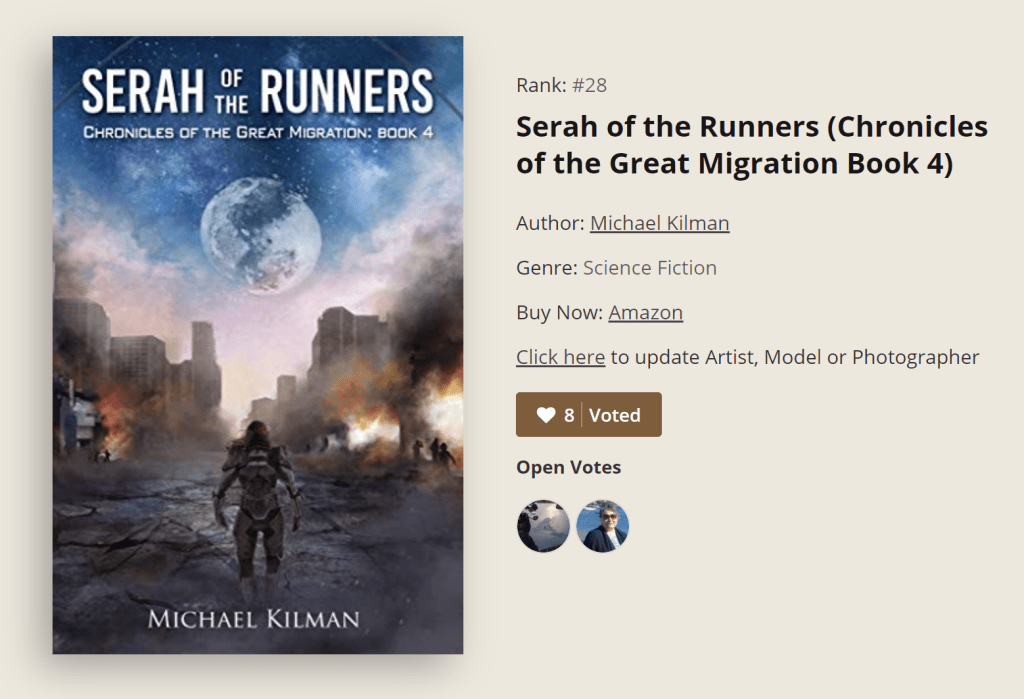
The third chapter of my fourth novel, Serah of the Runners, is now live! You can now read A Shadow on Luna. This second chapter follows Serah who has some hard choices to make in the aftermath of the battle with both Saud and the Children of Gaia at the end of book 3.
You can find my first three entries to the series here
Serah of the Runners is due out October 17th 2019!

Another building burned. Fire crews and emergency vehicles scrambled to reach the wild inferno. The city was in a state of panic. Designated day and night didn’t seem to matter much now as the sun blazed non-stop. Before, there was at least a dimming in the shield marking the difference between night and day, but like all else, everything had changed. The earth grew smaller and smaller with each passing hour. But the city moved at a snail’s pace towards some unknown destination.
From a distance, Serah watched the chaos from the second level of a building. Her flaming red hair hung down to the middle of her back, and she wore a recon EnViro suit, with her helmet off. She knew the Recycled were still out there, and she’d be damned if she was caught unawares, at least for now.
Exhausted from all of her efforts to keep the city from boiling over into a full-fledged panic, she had finally given up soothing. She was never very good at it anyway.
She wished all of the sisters were around, all of them soothing the city, but most were dead and the few that might be alive were missing and scattered. The Order of the Eye was shattered. Miranda had won.
At first, people were timid and shy about looting shops. For a few days, everyone had stayed indoors in fear that the EnViro shield might collapse and they would find themselves cast out into the vacuum of space. But now that it was clear that wasn’t going to happen, or at least if it did happen there was little they could do about it, people had taken to the streets, realizing that the old order of things had collapsed.
“Should we help?” Shannon walked up next to Serah. She too was wearing a suit. They were probably the only two Runners left alive.
Serah shook her head. “No, looks like the fire crews have it under control. It seems like the water pressure is back to normal.”
“I don’t understand. Why would someone set fire to that building?”
“Isn’t it obvious?”
Shannon didn’t say anything, so Serah continued.
“It’s a bank. Someone wants to reset the credit system. They think that the Uppers would only store their credit information in one place. It’s a foolish thought, but I guess I can’t fault them on it.”
“It is? But those records are stored somewhere, aren’t they?”
“You’d have to kill the AI. It keeps everything backed up in all of the city’s systems.”
“How do you know all that?”
Serah shrugged. “I used to be one of them.”
“One of who?”
“An Upper.”
“What?”
“It was a long time ago. Look, Vala’s around here somewhere, but she’s not responding.”
“Maybe she doesn’t want to be found?”
“Of course, she doesn’t. If I had been in the library when those things came in and survived, I’m not sure I would want to be found either.”
“How many survived, Serah?”
“Do you mean in the assault on the library?”
Shannon nodded.
“Well, we know that Alexa wasn’t part of that group because she had run off somewhere with Runner 17, though if they were outside the city like we think, well, they might as well be dead if they aren’t already. We know that Mimi wasn’t there…”
Serah stopped herself from saying more. She swallowed hard. Shannon was the last person who needed a reminder of the last moments they had seen Mimi.
The image of Mimi reaching out to them as the Recycled closed the massive door flooded Serah’s mind. She hadn’t been able to escape it, nearly every moment she had thought about Mimi, about how she had stabbed her to stop her from using the red veil, how Mimi had killed indiscriminately and then how the Recycled had taken her. All of it was her fault. She had told Mimi to do something, anything and then she had run Mimi through. In the end, it was her, who had let the creatures take her beyond the door. Now she was dead, or worse.
“Serah?”
Serah blinked.
“She’s not dead. I know it.”
Serah didn’t say anything. For the last three days, she and Shannon had argued over and over about it. She didn’t want to rehash the same old argument. She changed the subject.
“Well, as far as we know, only six sisters haven’t been accounted for, including Vala.”
What they had found in the library was disturbing. It was the kind of image she would dream about for the rest of her life. Even if she lived a thousand more years, she would see the leftover carnage of the library in her nightmares.
“Do you think we can find them all?”
“Well, Vala at least. She keeps searching for other sisters, but then she vanishes again. Every time I try to reach out to her and ask her where the hell she is, she disappears.”
“Why would she do that?”
Serah turned and looked right at Shannon and didn’t say a word. She skimmed Shannon; the girl didn’t really seem to understand the gravity of what happened in that library, even though she had seen the aftermath with her own eyes. Shannon was barely sixty and had spent more than half of that in an alcove; of course, she couldn’t comprehend the gravity of the situation.
“Shannon, if you had been in that library when the Recycled came… well, let’s just say you’d never be the same again.”
“So you think something’s wrong with Vala?” Her voice was soft and timid.
“I think she’s probably in shock. We have to find her before someone hurts her.”
“Who would hurt her?”
Serah bit her tongue. She and Shannon had trained together off and on for forty years. How did she never notice how naive she was before? But then, she only saw Shannon for a few hours a month when she was training her, and they had a specific focus. So, she supposed, now that Shannon was out and about, she was seeing another side of her.
“Looters, rogue security, there are tons of people who might hurt her. Under normal circumstances, Vala could take care of herself. She’s pretty formidable. Hell, Noatla assigned her to that crazy ass Senator for a reason. But I don’t think she’s right in the head. Every time I skim her, her mind’s a jumble, a series of horrific images from what went on in the library and all kinds of other strange images mixed in I can’t understand.”
“So how do we find her?”
“Around this time, for the last three days, she’s reached out looking for her sisters. I don’t know what it is about mid-afternoon, but for some reason, she’s trying then. If we can get her to give us a clue as to where she is, we can probably track her down.”
“Why this spot?”
“Well, I figure this is as close to the center of the city as we can get, and from a floor up we can see what’s going on in the street without getting hung up by a bunch of crazy looting assholes.”
“You don’t think they will try and come up here?”
Serah looked at her for a second.
“Oh, right, your skimming thing.”
“And?”
Shannon glanced down. “And I guess they would be afraid of two people in EnViro suits after the battle?”
Serah nodded.
For a while, they watched the fire crews put out the old banking building. It seemed as if the looters were giving a wide birth to the firefighters and focused instead on other buildings and shops along the block. Perhaps they weren’t completely mindless animals. Maybe they had specific goals and targets in mind? But that troubled Serah more. Was someone organizing this? Of all the riots she had ever seen, she had never seen them stop simply because emergency crews arrived.
There was a pulse of transmissions, a wave of connection. Serah recognized at once what it was.
“Vala?” She spoke it both out loud and also reached out. Each sister had a unique feel to their mind, the way that every person had a unique voice. It was definitely Vala.
Shannon said, “Is it Vala? Is she trying to connect to you?”
“Shhh.”
Serah waited for a response. There was only the hint of pressure on the forefront of her mind, only that sense of presence. It was as if her missing sister had forgotten how to speak, how to reach out properly. Serah wondered, and not for the first time if there might be head trauma or something worse. It certainly wasn’t impossible, given the state of the library.
“Vala?” She reached out again, this time putting a bit of extra will behind her transmission.
Vala seemed to vanish, seemed to disappear into the nothingness. A deep sense of frustration rose in Serah. She clenched her jaw. Some other minds tried to crash in nearby, but Serah, with centuries of training, silenced them and moved past them to search for her sister.
Then she was back again, this time strong and clear.
“Serah? Serah is that you?”
A smile bloomed on Serah’s lips, and so Shannon could hear what was going on, she spoke both through mind to mind contact and out loud.
“Yes, Vala, it’s me. Where you? We’ve been looking for you.”
“It’s dark, Serah. It’s so cold down here.”
“Okay Vala, but can you tell me where you are? We’re coming to get you, coming to bring you into a warm and safe place, alright?”
“Nowhere is safe from them.”
Serah could feel Vala’s tears, hear the desperation in her transmission.
“Shhhh. Vala, let us come find you. Let us help you.”
“Oh god, they tore her in half. Oh god…”
Serah turned to Shannon. “Shit, I’m losing her. She’s worse than I thought.”
Shannon frowned. “Maybe you should try a different tactic.”
“Like what?”
“What do you do when you want a sister’s attention?”
“You mean when everyone is called to assemble?”
“No… Mimi told me about some kind of saying you all have.”
Serah thought for a second… saying? What could have Mimi meant about a saying… unless.
“Vala?”
A sensation of weeping again.
“The Eyes Come Open.”
No response.
Serah pressed on.
“The Sleeper Wakes. The Wheel Turns. As Above…”
Vala said, “So Below.”
Serah smiled and turned to Shannon. “It’s working, Shannon you’re brilliant.”
Serah said, “As Within.”
Vala replied. “So Without.”
“The light passes and time squints allowing the faintest glimmer of wisdom.”
Vala replied, “But Fear is the little death, The one that brings an end to hope.”
Serah said, “Fearlessness is the key that unlocks all things.” But instead of going on, she said. “Vala, Vala are you there? Are you with me?”
“Yes, Serah.” Her thoughts were weak, but they were clear.
“Where are you?”
“District 6. Sub Level 4. Near…”
She disappeared. But it was enough. That area wasn’t huge, and with a few hours of searching, they would probably find her, especially if she was bleeding or left tracks behind. It was a wonder, though, all the way up in District 6. How had she made it so far in her state? Had someone or something helped her? For a strange moment, Serah thought of Noatla but then thought twice. Noatla was dead and gone, they had found her lifeless and cold outside the front of the Library, and they had taken her body and the others, even the parts, back to center of the reserve runners where Shannon had spent the last forty years of her life. They had cremated their remains; after all, no sister would ever want the slightest chance of becoming recycled.
It was no wonder she was having trouble reaching Vala: District 6 was the edge of Serah’s limit to reach out. If she hadn’t come to the center of the city, she may not have found her.
“What happened? What did she say?”
Serah turned to Shannon. “Come on, we’ve got a long walk ahead.”
Several hours later, they found her. It hadn’t taken long to find a trail of blood. Serah was grateful it was just a few splotches here and there, but it was easy enough to follow.
There in the corner, just outside an old storage unit. Vala lay huddled in a corner, her head buried in her knees. She knew they needed to get her back to the reserve core and into an alcove immediately.
The smell of shit and piss swam in circles in the room. There were a few traces of leftover food, but mostly there wasn’t much around. Where Vala had found food, Serah couldn’t be sure, but she seemed to have enough awareness to feed herself, though she guessed that she was using the corners for the bathroom. Rats and roaches scurried around the edges of her vision. They were waiting, hoping for a meal, but Serah wasn’t going to let that happen. For a moment, she thought sensed a kind of disappointment in them, but that was crazy, no one could skim animals, it was one of the first things that Noatla had ever taught her.
Shannon walked over and found a panel for the lights. She switched it on, and as the brightness caught Vala’s form, Serah could see that her gray dress was stained with brown. It took Serah a moment to realize what it was: the blood of her fellow sisters, crusted and dried. Some of the stains were shedding flakes and collected around her crumpled form. Vala must have fled down here just after the slaughter began.
Vala looked up and moaned. Her eyes were sunken, and the large bags beneath them made her look half-dead. Dirt and grime and a crust of dried, brown blood matted her hair and cheeks. She scrambled backward as far she could go, only inches, but still it made Serah’s heartache.
“Please don’t hurt me…” said Vala.
Serah moved toward her, but it was Shannon who got there first. She wrapped her arms around her.
Shannon said, “Shh, Vala. It’s okay now. Me and Serah are here. We’re going to take you to a safe place. It’s a place where we can protect you, and nothing can happen to you.”
Vala sniffled. “You don’t understand. She’s everywhere, everything. She’s going to make us all do our part.”
Serah frowned. Was Miranda still in the city or not? So far, nothing had happened since the creatures retreated behind the door, and Serah wasn’t entirely sure why. The city was in absolute chaos. Now would have been the best time to strike and destroy the city. It wouldn’t take much to crash into central security after so many of the SO’s had been killed or were recovering in Medical Alcoves. Things would only get better once the SO’s could retake the streets and establish order again. So why wasn’t Miranda acting?
“Vala?” Serah moved closer and got down on her knees just before the two women. She reached out and hugged her tight. “Listen to Shannon; everything is going to be alright now. You have to trust me on this one.” Serah paused a moment, and tried to skim Vala to see if it was okay to ask her questions. But the sad reality of it was that Vala was near total emotional collapse. It had only been three days since the library, and it was unlikely she had slept much.
“Vala, is she still using the red veil on you? Is she still pushing on you? Miranda I mean?”
Vala looked up at Serah for a moment. They were the eyes of a ghost. The eyes of someone who has seen something they can never unsee. Serah knew those eyes. They were perfect mirrors, the ghosts of the night when she had seen something so vile that it had broken her. Only Noatla had saved her from madness. Only her sisters had eased her anger.
Vala shook her head. It was slight, but Serah could tell it was a monumental effort.
She pushed on Vala, mixing soothing with a lie. Serah was good at pushing lies; it was part of her specialty. This one was going to be hard to sell though. She wished she hadn’t asked about the red veil, but she suspected that Vala might be confused enough to buy it.
Serah transmitted. “Vala, she’s gone now, out of the city. We are so far away from her now she can’t possibly reach us. Do you know where we are now?”
Vala shook her head.
“Come on; I’ll show you.”
Shannon helped Vala stand. At first, she was reluctant to move, but Shannon had a way about her, something that people responded to under crisis. She supposed that was why Mimi had fallen in love with her so easily. Serah had to admit, after spending more time with Shannon, she was both attractive and kind, which was an unusual combination for a street kid.
Slowly, they lead Vala to the exit and out into the street.
Vala screamed and dove to the ground.
Serah and Shannon both had a similar reaction when they had first surfaced from the subway tunnels three days before. To see the change above, the EnViro shield was a lot to take in.
In the sky, the Earth was still large. Looking up at that Earth for the first time gave you vertigo, it gave you the sensation that you would fall right back into it.
“What’s happening?” Vala was weeping on the ground, beside herself.
“We… we’ve left Earth. Something happened, no one really understands what it is, but there was an explosion, and then the whole city was falling… and then we weren’t. It’s okay Vala, it takes some getting used to, but stand up and you’ll see it’s okay. Besides we don’t have to go far.
Tentatively, Vala reached up and took hold of both Serah and Shannon’s hand. She stood, but as they walked, Serah noticed a limp. She looked down and saw that a large chunk of flesh missing from Vala’s right calf muscle. It was scabbing over, but it was oozing.
“My god, are you in pain?”
Shannon looked down and saw the same thing. She said, “Oh, Vala. We need to get you to alcove right away. Serah, we should carry her. She shouldn’t walk.”
Together they lifted Vala, Serah under her arms and Shannon by her thighs. Shannon took care not to touch the wound.
3.
They entered the reserve Runnercore. Around the center of the room was the alcoves where Shannon had slept off and on for the last forty years, but now, with the Runnercore decimated, the AI virtually disappearing, and the city in total chaos, Shannon hadn’t needed to return to the alcove. She could walk about freely. So, they took Vala to the shower that Runners used to clean off after the alcove and stripped Vala naked. Together, Serah and Shannon washed her and gently cleaned the wound. Vala flinched a few times, but didn’t say much.
Serah was hesitant to put her in the alcove. Sometimes, after a significant trauma, the alcove would amplify the event; it would make you relive whatever was going on in a mixture of your conscious and subconscious mind. It wasn’t sleeping exactly, but something between dream and waking. So, Serah worried what being inside the alcove would do to Vala, who was already in a fragile state of mind. But there was little they could do. They had to help her heal or she would lose that leg, or worse.
After Vala was clean and dressed in the usual undergarments for the alcove, they placed her inside one.
“Here you are Vala,” said Shannon. “We’re going to let you heal inside this for a few days okay?”
Vala didn’t say anything. Her face was pale, and Serah was concerned she was about to lose consciousness. How much blood had she lost? But it didn’t matter. She sealed the alcove and activated it. It filled with the stem-cell fusion mix in just a few moments, and then they walked away.
“I don’t think she’s going to have a very good time in there.”
“Why not?”
“You know what it’s like in there, the half-sleep state. Imagine if you just had something terrible happen to you just like Vala has.”
Shannon said, “Oh gods, I didn’t think of that… but what can we do? She has to heal.”
“I don’t know, but I can skim and check in on her semi-often. She probably has to be in there for a day or so before we could let her out if we needed to. The wound probably wouldn’t be healed by then, but it would be safe enough to take her out if she needed a break. If we had other sisters around, we could take turns soothing her, but since it’s just me… I don’t know if there is much I can do.”
Shannon frowned. “Okay. So, what now? Find the others?”
“Yeah, I was hoping some of the others would come to find us. I just hope they all aren’t as bad as Vala.”
Shannon nodded.
Serah watched her think of Mimi again. She didn’t mean to skim Shannon, but she was worried about her. The love of her life was just taken through that door by the Recycled, and somehow Shannon was holding it together pretty well.
“Shannon… how are you holding up?”
Shannon leaned against one of the alcoves. “Fine. I… I’m worried about Mimi, but… I know we’re gonna get her back as soon as we get the remaining sisters together, right?”
Was that what she was thinking about all this time? That they were going to go on some rescue mission? Should she tell her the real reason they were looking for her sisters? Or should she lie to her? She considered for a moment, but it didn’t take long to make a decision.
“Yeah, once we get them together, we can go after Mimi.”
“Good, just like you guys rescued me all those years ago, right?”
Serah couldn’t help but recall Shandie and Leahara dying in that rescue, but she wasn’t about to point that out to Shannon, who was already struggling to stay afloat. The truth was, Serah wasn’t doing so well herself. They needed to find Fatima. She would have to take over the Order of the Eye. No one else could. The other four were too new, and after Fatima, Serah was the oldest member still alive, and there was no way she felt comfortable as Matron.
“Look, Shannon, I am going to head to a few places where I know the other sisters sometimes hung out when they weren’t running an errand for the Order. We are going to have to make this place a bit more comfortable, maybe use some of those old scavenging skills you learned living on the streets, huh? We need to get beds in here. Luckily, there is at least the bathroom, shower, and two food dispensers already. We just need to make it a bit more comfortable. Maybe you could head out and do that while I am searching for other leads?”
Shannon nodded, and Serah skimmed for a moment. Shannon was happy to have something to do. Serah would have to try and keep tabs on her throughout the day, which meant she couldn’t get too far out of range. But for now, they both had something to accomplish.
“Maybe it’s best if you kept your suit on?”
“Don’t worry, Serah. I might be a bit rusty, but I survived on the streets for a while before Mimi found me, and even without my suit I have that muscle augmentation and years of training with you, right?”
Serah nodded and watched Shannon go. She had to reassemble the Order of the Eye, even if it was just a few of them. If Miranda came back before they were ready, no one would be safe.
Serah turned and looked at Vala inside the alcove. Her eyes were open, and her face strained with whatever she was seeing. Serah reached in and soothed her the best she could and saw a Vala’s face relax. It would have to do for now. She hated leaving her, but there was nothing else to be done. Serah also needed sleep, but it would have to wait, at least for a little while more.
Want more on Anthropology? Consider checking out our book Build Better Worlds: An Introduction to Anthropology for Game Designers, Fiction Writers, and Filmmakers at Amazon.
This is a bit of a “Rules to live by” post I guess. I have spent the last eleven years of my life teaching both undergraduate and graduate students anthropology, culture, and diversity. In my classroom I try to make things as practical as possible. We can fill our students heads with theory all day long, but what I try to do is try to give a baseline understanding of how different cultures view the world so that when they encounter other people in work or out traveling the world, they can find a way to understand another person and prevent some of the conflicts and communication traps that we run into.
I find myself repeating a lot of the following over and over and so I thought maybe it would be useful to some of you out there. Of course, you can completely disagree with me (that’s kind of the point here) but these are things that if you apply them, you might be able to understand those difficult people in your life in a new way.
1. There is no glorious past when things were better. That’s a figment of the cultural imagination and based on the ideals we want in the present. There is no period in history, no culture in history that was ever perfection and/or paradise. Fantasies of the past are fun, but they are just projections on the wall in the great cave of our times.
2. Every culture, every religion, every language, is weird. We are all weird, our entire species is weird as hell. The only reason you don’t think your ideas/thoughts/beliefs are weird is because you are used to them.
3. If one group is disenfranchised, that means someone is benefiting. I.E. if Women are payed less, that means Men are paid more and reap the benefits. If people are treated poorly because they have darker skin, that means if you have light skin you benefit (even if it isn’t obvious). That’s what privilege is. It is not an attack on your character, people cannot help what system they were born into, but they can change it.
4. Everything has a cost, everything. Nothing is cost free. Every major world empire was built on, and is maintained by a river of blood. The very fact you live in this country at this time in history means you benefited from war, colonialism, genocide, ethnic cleansing and all other manner of terrible things. But so has every other great empire. The Romans, the Islamic Empire, the Mongolian Empire, the Chinese Dynasties, they all did the exact same thing. So why teach them? Why talk about our mistakes and terror? Because I believe we can choose to be different. The first step is acknowledging that our culture did some fucked up things to other cultures.
5. Communication is really freaking hard. Words are really powerful. Everyone has words and images that they are sensitive to and trigger them (obviously survivors of trauma like many of my friends and myself have to spend a lot of time working through this) Figure out what yours are and watch your reactions. Sometimes just watching and understanding which words hit you hard can be a powerful tool for healing. But do remember, the only thing you can control is you. Life and most the world doesn’t care if you are triggered.
6. People are allowed to change. Something someone did 10 years ago does not necessarily reflect who they are now. Social media has created a distortion of static identity. Digging up ancient photos and tweets is only really useful if people are still exhibiting the same terrible behaviors now as they were then. Most of us go through a long hard process of testing ideas. This is normal and healthy, until you let your ideas take over and make you rigid.
7. Ignorance is not the problem in this world. Everyone is ignorant of something fundamental. Ignorance simply means to not know something. The problem is willful ignorance. When someone presents you with a new idea or a challenge to what you think about the world, take a breath. Let the emotional outrage simmer down and then try to approach it with calm and detachment and weigh all the evidence. Sometimes you might still be correct, and sometimes not. This is an uncomfortable but powerful process.
8. Being socially active, being mindful, being able to give back, boycotting products or getting an advanced education are all a privilege. Not everyone has access to these things. Remember again, that the only thing you can control is you. But also remember that you are powerful and that individuals are capable of making great (and terrible) changes to the world. You cannot force responsibility on other people and you should always remember that people face different barriers in life.
9. Read lots and from a wide variety of perspectives. Try and consider that you might be wrong about everything once in a while. It’s terrifying but sobering. Consider how little knowledge is contained in the entire human experience compared to the vastness of the rest of the universe.
10. Make sure you learn the difference between something that is opinion or cultural options (i.e. Monogamy or Polygamy are the best kinds of marriage) vs something that is objectively and verifiably true (I.e. The Earth is round). While your at it, learn about the scientific method and what good evidence is. Most things on the internet are easy to debunk with a little effort and awareness of your own bias.
11. Take a moment before you blame someone else for your problems or the problems of your culture. Yes, sometimes things are out of your control, structural violence absolutely exists, sometimes crazy random shit happens, and some people are unlucky, but if you keep seeing the same pattern over and over again, you might be a part of the equation. On a cultural level, if we are scapegoating people, who benefits? Blaming other populations for our issues, historically always turns out to be shortsighted.
12. Apathy and greed are deadly and destructive. A society that bases it’s institutions on these things will always have very serious problems. Empathy and generosity go a long way.
13. Listen to people’s stories. Share your own. If you don’t represent yourself, someone else will. Stories are how we save the world.
14. Diversity and difference is one of the most powerful tools in the human experience. Why? Because different people and cultures think about things in different ways. That means that there are many ways to approach complex problems. Sometimes we can’t see how to solve something because we are too close to it (personally or culturally).
15. There is no such thing as a homogeneous culture. People are people everywhere you go. Just because someone has the same language/religion/gender/nationality/income doesn’t mean they have the same inclinations or hopes or dreams. Each one of my children have different hopes and dreams about the future. Why would a group living on the other side of the world be any different? Don’t put people in boxes or make grand assumptions.
16. The is no one size fits all solution to anything. There is no single solution to solve any of the worlds major issues. All of history demonstrates this.
17. You are the bad guy, the evil empire, the oppressor, the asshole in someone’s story. No one in history is perfect. The people we claim as saints were either assholes earlier in life and grew from that or we are missing information. Plenty of people think I am an asshole. Plenty of cultures think Americans are terrible. No one ever thinks they are the asshole and every culture thinks they are they greatest ever.
I could probably think of more, but those are a lot of the things I find myself repeating most often. You, of course, are free to disagree, and of course comment and discuss.
This essay was later adapted to, “How Worldbuilding Became My Pedagogy,” in 2026. If you found it useful, you might also enjoy the Worldbuilding series or the co-authored book Build Better Worlds: An Introduction to Anthropology for Game Designers, Fiction Writers, and Filmmakers. And if you want to bring these ideas into your own creative project, I offer worldbuilding consultations – the first 15 minutes are free.