New Excerpt from Strange Reflections

Hello all,

This is an excerpt from the horror novel I am currently working on titled “Strange Reflections.” This passage is from Chapter 5: The Rescue Party.

If you are interested in this story you can read the first 3 chapters here.

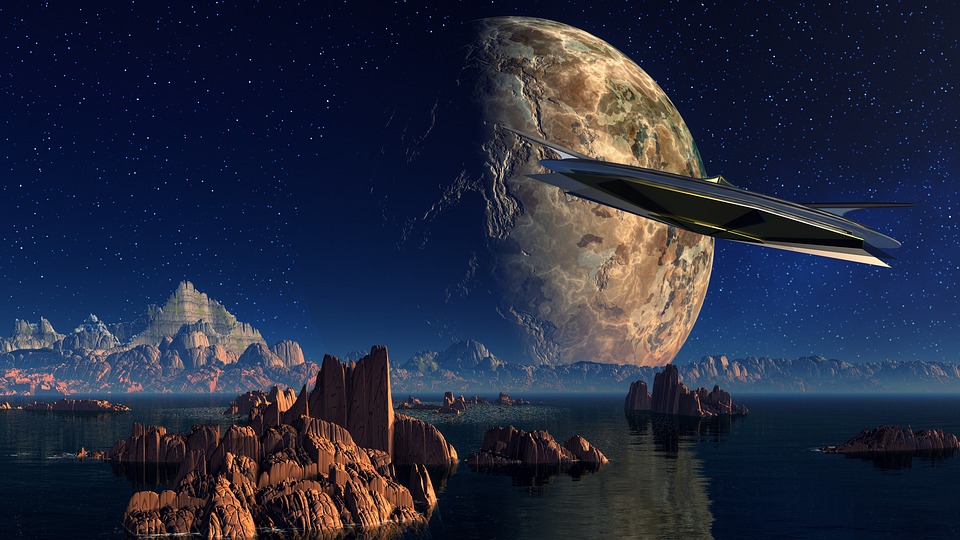
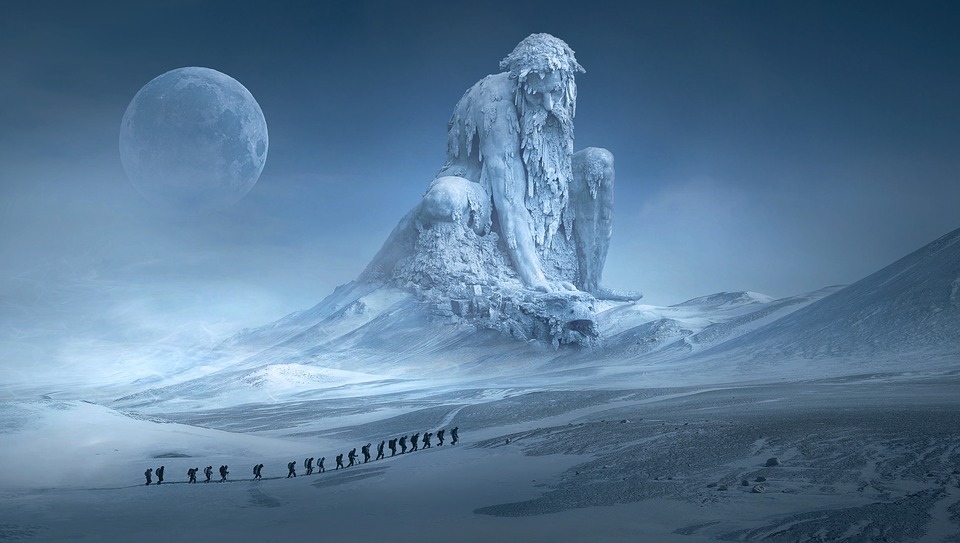
Special thanks to my friend and fellow author Sarah Rosmond for the new image.

Enjoy!


Excerpt from Chapter 5

There was laughter echoing down the maze of mirrors, a slow rumbling movement of a malignant will. There was no source, but it filled her, penetrated her, and she felt a compulsion to stare at the nearest mirror.

Amanda turned and gazed long at the scar that ran up her face. As she looked at her reflection, the glass turned back time. Her wounds unknit and exposed flesh opened. She reached up to touch her face and felt the shock of the same pain she had felt on the day when the explosion had rocked her convoy. She pulled her hand away and looked down in the reflection and saw that there was blood. Then, shocked at the sight she lifted her same hand to her face and saw no blood. Looking again into the mirror she saw the wound gaping, bits of skin hanging from her mangled face. Her leg in the mirror was a shattered wreck. The moment her eyes touched the reflection of her leg, she felt the pain of her wound surge and grow till she crumbled to the floor.

It was the pain that broke her gaze. Later, she would realize it was the pain that protected her, had saved her from the madness of that moment.
But Armin was still staring. He was a statue, raptured by the seduction of his reflection. His body tensed. His fingers were flexing and clenching in rhythmic movement.

Armin’s jaw worked. “No.”

Amanda said, “Armin, what do you see? What is it?”
He stared into the reflective surface; his eyes fixed his mind focused. Amanda could see sweat gathering on his forehead in the dim light.
She thought about what she had seen and wondered if Armin saw that very same thing.

“No it’s not true.” His voice was barely a mask for his rage.

“Armin?” Her voice quivered. Gooseflesh took possession of every pore of her skin.

“Armin.” She stood, moved forward and rested her hand on his shoulder.

But Armin did something he had never done before, something that Amanda had never thought him capable of. Armin, the joker, as he was always known in the squad, had never seemed to have a hateful bone in his body. Armin, the person who was the life of the party, always quick with a joke or a sarcastic reply, did not even turn his head as he raised his left arm and punched Amanda hard in the face.

The blow was so violent and so forceful that Amanda couldn’t understand how he was able to gain the leverage he needed to knock her back. She stumbled and fell, a shot of pain crawling up her leg for her ancient wound, like tiny spiders nibbling on her nerves.

“Armin? Why?”

Armin screamed. He drew his pistol and fired, his finger worked and moved and gushed out lead into glass. The sound of the air changed quality as the ringing took possession of her ears. The mirror cracked and shattered and bits of glass fell to the ground and tinkled with an almost lyrical quality despite her muted ears. Armin fired till he was empty and then threw his sidearm at what remained.

Some of the scraps hung in malformed triangles and Armin screamed again, pounding his fists on the glass to knock out every tiny piece. Blood leaked on his forearms and gathered on the tips of the triangles. Some carried the stain with them as they fell to the ground.

Even as the last pieces fell to the floor, Armin did not stop. Instead, he began his work on the next mirror, and Amanda watched as the glass cut down deep to tendon and bone, though he seemed not to notice.

She had to do something. She forced her body up, her leg crying in agony as she did. She mustered all her strength and charged him. She felt the collision in every nerve, and as they both fell to the floor, bodies mingled from the impact. He moaned like an angry beast.

Armin’s blood flowed freely, and as Amanda lay on top of him, it seeped and stained into her skin and garments.

“Armin. Stop. You have to stop.” She shook him.

His eyes were glassy, and he craned his neck to try and gaze into yet another mirror. But Amanda, realizing that it was the pain that had broken her hypnosis grabbed one of his forearms where the glass had cut deep and squeezed as hard as she could. Armin yelped and looked at her, eyes full of rage.

“Armin snap out of it. Don’t look at the mirrors.”

But his neck stretched and reached for a glimpse like an addict craving a fix.

With her free hand, she smacked his face. It was barely a slap, but it was all she could muster.

He fixed his eyes on her again, the rage focused. He reached up and grabbed her by the throat for a few moments her held tight, and she could feel the blackness swarming behind her eyes. Just before she lost consciousness something softened in his eyes. He let go.

“Amanda?” His voice was rough and muted by the ringing in her ears.

“Armin…” She coughed and sputtered but forced her words through the mucus built up by his stranglehold. “Don’t… look… at… the… mirrors.”

He nodded and stared at her for a moment. “How did you get blood all over you?”

She returned his gaze. “Armin… look at your hands…”

He did. For the rest of her days, she would never forget the look of horror and revulsion on his face.

NaNoWriMo Winner!

I am very happy to say, that I successfully hit the minimum goal for NaNoWriMo this month working on my fourth book in the Chronicles of the Great Migration, Serah of the Runners. 

However, at 56007 words, the books is really only about half done. I do have to say, I am very excited about the direction this book is going. Serah’s story is fantastic, and the aftermath of the Battle for Langeles may just shock you. I never thought things would turn out this way, but these damn characters surprise and shock me and every turn. And, if you finished Battle for Langeles, you might just be wondering what happened to a certain few characters… Some of that is answered here, some of them you won’t see again until Book 5 The Children of AEIS

I plan on continuing my current writing pace all throughout December so that the first draft of Serah of the Runners can be finished by years end. That way, I can release it early next year! My hope is to get Book 4 late winter, Book 5 late spring and conclude the series by next fall. At the pace I am writing at it should work… provided the final book in the series isn’t much longer than I think it is. 

Also, a very special thanks to Lyndsie Clark, who I met at MileHiCon several weeks ago, and who basically became a badass writing partner during this month and held my ass accountable. Thanks for spending all the hours in coffee shops in silence with me Lyndsie! Check out her blog here

Why the hell did they do that? or How to Understand People and Your Fictional Characters

Inside

Want a much expanded book on worldbuilding and anthropology? Check out Build Better Worlds: An Introduction to Anthropology for Game Designers, Fiction Writers, and Filmmakers, now available on Kindle!

This entry applies to writers and general audiences. For writers, you can use this blog to think about how your characters make choices. For the general populous, you can consider how conflict and misunderstanding arises and perhaps consider some of this to help in your daily life.

When I teach anthropology I have a saying that I drill into students heads.

You don’t have to like it, but you do need to try and understand it.

This is the essence of what we call cultural relativity. There is a lot of misunderstanding about this topic. For example, if someone tells me that cultural relativity is postmodernism, or that it’s ‘poison’ or that it means anything goes, I know they have absolutely no clue what they are talking about.

I wrote an answer on cultural relativism on Quora on this question a while back so I am not going to go into detail here but in short, if you want to understand someone’s choices (especially if they are in another culture) then there are three things you need to consider to begin that understanding, context, conditions, and choice.

I am going to tell you something that is really really hard for many us raised in the Western part of the world to understand. You are not an individual. This doesn’t mean you aren’t responsible for your choices, but if you want to understand how the world works, put that idea aside for a moment and consider the following.

1. Context

You are contextual. What do I mean? Well, you live in a particular culture at a particular moment in history and you speak a particular language. In some cases even being born a few years earlier or later can radically alter the course of your life. Think of people who were born just in time for the Vietnam War and were then selected in the draft versus someone who missed the war by a year or so.

This body of knowledge (as some of us social scientists call it) is so vast that we spend years growing up and learning all about it. This process is called Enculturation and is largely what institutions like elementary school is all about. Primary school is far less about learning facts, and more about learning how to behave in your given society. Every culture has their version of passing on their culture, though it varies.

Every culture is holistic. Each facet of your context is an integrated whole. Technology, economics, religion, etc. All these things can impact the entire culture. For more on this read my past blog on Worldbuilding Part 2 Anthropology and Key Elements of Culture

Of course, history is a big part of this. What has been happening for the past few decades or even centuries before your birth directly impact your experience. You, as an individual are not free of a cultural and historical context. Change that context, and you also change. Remember, no matter what you do, your culture and history is constantly changing all around you. Life is a dance of constant change and movement. No matter how tightly you clamp down on something, it still changes.

2. Conditions

Embedded within context is your particular experience. Let’s get specific. Let’s assume that two people grew up in or around Denver, Colorado. One grew up in a wealthy area that is heavily Protestant and the other grew up on a poor neighborhood that is heavily Catholic. Their cultural context is pretty much the same. They grew up at a particular time period in a particular culture but the conditions of their lives are different and thus their experience will be different. Their gender, the color of their skin, the religion they subscribe too, even the block they grew up on, changes the conditions of their lives and their experiences within the cultural context.

This is why you get an extraordinary amount of variation within a particular culture in a particular part of history (have I said particular enough for you yet?). Even something as simple as catching the last bus versus missing the last bus to make it on time to work can radically change your conditions. Maybe you got fired from your job as a result or perhaps you got a promotion as a result. Perhaps you are diagnosed with a chronic disease or maybe you won the lottery. Your conditions are constantly changing within the context of your culture. Change really is constant.

3. Choices

Okay, now we can talk about choices and free will. Your ability to make choices (or your agency) is impacted by both your context and your conditions. Your choices are not limitless and you certainly can’t make a choice that you don’t know exists. There are also laws, taboos, and social pressures that influence how we choose and move through the world.

But we certainly aren’t passive actors either. Individuals can cause massive changes to both their own conditions and their cultural/historical context. Even minor figures in the historical records influenced small things in ways that may or may not have had a big effect on that particular cultural moment.

Why should you care?

Well if you are fiction writer, this may help you to flush out character profiles and understand the choices your characters make. I talked about this a lot in my third part of World Building.

If you are just someone trying to get through their day, and your boss is a total asshole, sometimes a little understanding can help to dissolve conflict.

But honestly, the real core of this is this is how we can solve big problems. 

If you can take Context, Conditions, and Choices and use these three to analyze someone or something, you can understand it’s source and how it persists. You can see where big and complex problems arise from and can in turn act to address them. Of course, it’s not always so clear or so simple, but without understanding, you can’t even really begin. Honestly, this is a huge reason why people who, have nothing but good intentions, go out into the world to solve an issue, and it backfires and makes things far worse.

Let’s go an intense route for one moment. What about suicide bombers? Anthroplogist Nasser Abufarha asked this question in his book “The Making of a Human Bomb: An Ethnography of the Palestinian Resistance” 

Now this guy has got some guts, he did his research with some pretty scary folks. But in his research what he did was examine context, conditions, and then the individuals (the agents) who carried out some of these attacks. He talked to leaders of these terrorists cells and tried to form a picture of why they do the things they do. Their answers? Well I will let you read for yourself if you want to dive in, but let’s just say quickly that violence begets violence.

You want to understand the rise of Hitler? Context (The history of the interwar period in Germany and of antisemitism) Conditions (The experiences of Hitler’s life that made him such an angry asshole) and Choices (The genocide of six million Jews).

If you can understand some of this stuff, you can solve all manner of problems. Of course, even if you have the answers you still have to contend with political bodies and economic interests who may or may not want things to change, but that is an entirely different topic.

Seeking understanding, and information of the experiences and context of your fellow human beings can change the way you think or behave forever. Sometimes understanding can illuminate our experience and in that light, perhaps you can see an easy way to dissolve conflict.

Look, I get it, you might be thinking right now (if you made it all the way through) that this seems like an awful lot of work. You’re right. It’s a lot of work to be an informed citizen, to know the history of our own country, let alone other’s. But consider this, maybe if you aren’t sure about something, consider withholding judgment. Instead, find an expert or pick up a book on the topic before you decide that one particular group of people is evil, or that a singular event is an anomaly. History and Culture are really messy things, and it’s rare that there are clear black and white answers.

The world really is an amazing place and a little patience can make it all the more beautiful. People are just so damn interesting if you let yourself see it.

Worldbuilding Part 3: Constructing Character Identity using Anthropology

landscape-1328858_960_720

Want a much expanded book on worldbuilding and anthropology? Check out Build Better Worlds: An Introduction to Anthropology for Game Designers, Fiction Writers, and Filmmakers, now available on Kindle!

Alright, so after reading my first two blog posts on world building you have some semblance of the kinds of dynamics that go on in crafting a cultural environment right?

Also, here they are if you need them.

World Building Part 1 
World Building Part 2

So here’s the key question, how does your world impact your characters? This really is the biggest and most important piece of your world building and the easiest place to lose consistency. If you mess this up, your story could suck or at least have readers rolling their eyes. At the end of the day, it’s compelling characters that we care about. Also, don’t forget to listen to your characters. They have hopes and dreams too.  

I touched on this a little bit last time, but this time we’re diving deep into a little social science of identity construction.

1. Nature vs Nurture

Since good old Descartes (but really all the way back to the ancient Greeks) wrote on Dualism in the 1600’s there has been a question of what influences us most, Nature or Nurture.

Most of you probably know this already but the answer is both.

Humans are not a tabula rasa (a blank slate). On a very physical level we have certain tendencies that have been fostered by natural selection. For example, human’s don’t have wings (of course if they do in your story you might need to consider various elements of winged culture) they walk on two legs (known as bipedalism) and they speak.

A terrible example of world-building done wrong because of the physical limitations is the Planet of the Apes series. Now, I enjoy those movies but what kills me is this. In order to have human speech, your mouth, throat, and tongue must have a certain shape to produce human noises. Apes do not have the physical apparatus for speech and even the shape of their face and neck would have to change significantly before they were capable of human-like speech. Still, they are fun films and I do enjoy them, but I can be heard grumbling like a disgruntled Star Wars fan after I watch them.

So that’s an example of nature, there are certain things in our neurology and physical makeup that put limitations on us as well as certain instinctual things that pop up.

There’s now also some science to suggest that your experiences and traumas may pass themselves on to the next generation. This surrounds epigenetics, and I am not going to get into this here (as I am definitely no expert in this area) and admittedly there is still a lot of unknowns about the science behind this, but if true, it certainly complicates things doesn’t it?

What about nurture? Well, there certainly isn’t something inherent or genetic in religion. If there was, we would have people who have never had any contact to Christianity spontaneously becoming Christian in remote areas (we don’t). We are enculturated (basically taught our culture) as we grow up. Our family brings us to church or perhaps we are raised Atheist or Buddhist or Pagan and learn the values and ideals of those practices (remember that purity stuff back in part 1). A huge portion of your personality comes down to nurture.

Speaking of which…

Personality is one of those that is a hard mix of both. If any of you out there reading this have more than one child, you know that they are born with a tendency towards a certain personality. Some children are more cautious, some are absolutely fearless (I’ve got both types and it’s fascinating to see the difference). Some have short tempers and are emotional while others are calm in almost any circumstance. Add environmental factors and it shapes and reshapes their personality. People always have tendencies but the wonderful thing about human beings is that we are capable of changing the way we experience the world, it’s just that a lot of us don’t because it’s a lot of work. As some of you frequent readers know, I have spent a great deal of time working on meditation and have seen changes in my own thinking and experiences, but damn is it hard!

So how does this relate to your character? Well, what elements of nature and nurture come into play? If you have a genetically engineered winged population that’s going to change the experience of your character. Are there benevolent vampires? Well, they gotta eat, right? Perhaps your humans have undergone gene editing to live on Mars but suddenly find themselves back on Earth? Robert Heinlein’s famous sci-fi book Stranger in a Strange Land posits the question of a human who is raised by Martians returning to earth and how he struggles to understand what it means to be human with some fascinating cultural results. So, just in the nature/nuture part, there’s a lot to consider.

2. Imagined Past

So, before I get into this, when I use the phrase ‘Imagined Past’ I don’t mean that something is made up. What it means is that our upbringing and cultural perspective foster history in such a way that we imagine that one event is important and another isn’t. Of course, there are objectively more and less important events in history, but how we imagine those events unfolding is based on things like culture and ideology.

The reality is, history is always messy as hell. I don’t care what event you are talking about. Nothing is ever straightforward and simple. Remember our discussion in part one of world-building on Power and Resistance? That’s why.

The Imagined past is your perspective and your wider culture’s perspective on history and events. They are an interpretation of what happened and why they happened that way.

Let’s take an example that is debated every October, Columbus Day.

If you are a fan of Columbus Day you might say that we should honor a man who changed the world and ‘discovered’ the Americas. Here is a perspective on that point of view.

If you are of indigenous heritage though or perhaps you’ve read some pretty terrible (and true things) about Columbus… you might be a bit more critical of this point. For that perspective check out this article.

But where you sit on the side of Columbus isn’t the point here. The point is, both sides IMAGINE THE PAST and take a certain perspective on what happened and if the events were good and we should honor Columbus, or they were bad and we should ax the holiday. I am, admittedly very critical of Columbus day, but it is impossible to argue that 1492 wasn’t a very important year in world history. After Europeans realized there was a huge chunk of populated territory waiting to be exploited, the world changed significantly. The event happened but how we interpret it changes in our imagination and our perspective. That is imagined past.

So why should you think about imagined past in your worldbuilding? Well, if you have a story where two sides are at war, you might consider having characters from both sides of the conflict. For example, In Avatar the Last Airbender, where four different nations rule the world (one for each of the four elements) the Fire Nation, the conquerors have a very different imagined past as the Earth Kingdom, whom the Fire Nation are trying to subjugate. The amazing thing about that world is that you have characters from all four nations (I really recommend that series if you aren’t familiar), and you get an amazing backstory and shift in perspectives of characters from different nations and even variety within each of the nations (Remember in Part 1 we talked about how every population is variable?) So consider that in your world-building, how do your characters imagine the past? How can this create conflict? Could the sharing of a perspective of the various perspectives on a historical event change the character interactions? Could it further entrench them? Perhaps part of the past was hidden and is now revealed and changes how charters see things? Think of how your favorite stories do this well.

3. Intersectionality

Red alert Red alert! If you have heard this term before and don’t understand it, you might cringe at its use. I promise I don’t have some crazy agenda here so just hear me out.

It’s actually really quite simple.

Intersectionality = Identity is complex and variable

Intersectionality is really about considering the various components of identity. Identity is really complex.

I will use myself as an example to begin with. A White, Middle Class, Straight, Male, Raise Catholic (and now Buddhist), with a Graduate Degree in Anthropology and raised on the East Coast is going to have certain kinds of expectations, perspectives, and thoughts that will impact his perspective. All of those components, plus my personal experiences went into making me the person typing this blog right now.

Now, imagine an African American, Woman, Wealthy, Gay, raised Atheist, with a degree in Engineering, and Raised on the West Coast. She’s going to have very different experiences, expectations and perspectives then I do right?

Intersectionality shows us that Identity is Conditional. It is based on the various ingredients of your life and your experiences and fosters different identities. 

But it’s still not even that simple! Because imagine you took another copy of me and raised me five blocks away in near identical upbringing both of us are still going to end up different, aren’t we? We may have a lot in common but maybe my clone loves Nickleback (which means we couldn’t be friends) and thus we may end up going to different concerts and meeting and encountering different people and thus changing our experiences and perspectives.

Let’s talk about freewill really briefly here too. Though, if you want a prolonged philosophical discussion on this check out my blog on Freewill. When studying a culture Anthropologists often look at something we call ‘agency’. Agency means basically, your ability to act based on the rules (formal and informal) of the society. Agents are individuals within a society that have to function based on cultural norms, laws, and expectations. So yes, we do have free will, but our culture puts rules around what that means. For more on this check out a YouTube Video on ‘Field Theory’ Also if this or anything is confusing to you, feel free to comment and I will do my best to clarify.

There is nothing wrong with difference, but if we want to understand someone else’s perspective and why they might think or act in a certain way, then intersectionality, understanding the conditional nature of identity is a good tool to consider. 

What about intersectionality in your characters? Well, intersectionality can help you to avoid those annoying stereotypes and tropes, such as strong women come from tragic backgrounds. Maybe, for example, the woman in question was raised as a blacksmiths daughter and had to work with her father and deal with difficult customers on a daily basis. Or perhaps you have a character that comes from a race of elves that are savage and violent, yet the character has adopted a pacifistic religion after a personal revelation? The point is you can look at the conditions of your characters lives and upbringing. Some people make character profiles in this regard where you can plot different parts of your character identities. I don’t do this unless I run into a roadblock, but some of you may find it useful to do so. Really, there is no wrong answer for method in writing.

Oh, one more thing, your identity changes every day little by little (or a lot if your world comes crashing down) based on your experiences and daily interactions. You are never the same person from day to day. Consider this also in your characters. 

4. Personal Bias and Blind Spots in knowledge

All of the above contributes to this section. Everyone has blind spots in knowledge. Everyone has bias and limitations as to what they can see and understand. If you put me in front of a motorcycle and tell me to fix it I will blink at you until my eyelashes fall off. If you tell me to understand the experience of a Muslim woman growing up in Sri Lanka, I probably can’t help you there either. There is nothing wrong with having blind spots, the problem is, when we assume that blind spots equal weakness and we make arrogant statements to cover it up (I can’t tell you how many times I myself have done this only to realize what I was doing later).

So back to me and my conditional identity. I grew up on the East Coast. On the East Coast there is often a kind of linguistic style in play where it’s actually weird and awkward not to interrupt people. We are very often active communicators cutting each other off mid-sentence and it’s not considered rude. Also, I come from a huge family. Now you might think your family with 3 kids is big, but my Dad had 14 brothers and sisters and I have 3 brothers, with some of my aunts and uncles, who were my age raised almost like siblings. So, on top of this east coast conversational style (Here’s a wonderful YouTube on that for you who really want to understand the linguistics of it) and my huge family upbringing, I can be a loud, arrogant, interrupting son of a bitch. Now living in Denver Colorado, it took me a long time to understand that people don’t always appreciate the way I communicate because this region in the Rocky Mountains has a very different conversational style. So there is a huge blind spot for me. Understanding that blind spot was really powerful and helped me to see the way I bulldoze people in conversation sometimes. 

So what are your character blind spots? Is your character a Buddhist monk and barely knows anything of Christianity? Is your character a male who suddenly finds himself in a female-dominated society? Hell, look at Star Trek TNG, is your character a Klingon growing up in a human world and trying to bridge both cultures? What kinds of things wouldn’t your character easily understand because of their training or knowledge? A pacifist priest isn’t usually going to understand combat. A warlord may not understand diplomacy. Good characters have flaws and weakness and blindspots. No one likes a perfect character. They are boring. My character Mimi, in Mimi of the Nowhere, doesn’t trust easily. She struggles with sharing intimate parts of herself after a long life living on the streets. Blindspots can also be where your characters grow and change. The world you built could suddenly come crashing in and force them to change and alter their identity.

I hope this short series was helpful for some of you on your writing journey. Certainly, there are other blogs and podcasts and stuff on worldbuilding out there, but I hope sharing some of my knowledge and experience from my field of study helped you to consider some things about your writing.

I am more than happy to entertain other questions and perhaps write future editions to this series but unless someone has a specific question about worldbuilding, I’m gonna call this series complete for now. Good luck with your writing journey!

World Building Part 2: Anthropology and Key Elements of Cultures

astronomy-3188563_960_720

Want a much expanded book on worldbuilding and anthropology? Check out Build Better Worlds: An Introduction to Anthropology for Game Designers, Fiction Writers, and Filmmakers, now available on Kindle!

Worldbuilding is a big thing, I mean, you are building a world right? There is a lot to a world, and in this second entry on Anthropology and Worldbuilding, we are going to look at 10 core elements of a world. If you take an introductory anthropology course, one of the things you’ll encounter is a survey of what makes up a culture. Now, this won’t be a complete list of things to consider, but it will go over some of the major interconnected parts of culture you may want to think about as you craft your world.

Those categories are as follows: Language, Environment, Political Systems, Economics, Gender, Class, Race, Religion, Kinship, and Change 

There are other important elements too to consider, like education, media/art, health, sanitation, fashion, etc. but in this entry, we are going to focus on the ones above (It’s gonna be long enough as it is).

In reality, you could spend years crafting a world, as Tolkien did, mapping out every little piece down to what kind of grass is present in the village your character grew up in. But unless that’s a key plot point, who cares?!?! Often times, when you are writing, knowing these things as the writer, is useful, but it may not really advance the story, so keep notes. Sketch things out when you need but don’t take the time to insert everything.

****A quick disclaimer **** here before I get into the categories. I have a saying in my college courses, you don’t have to like this stuff, but you do have to understand it. Some of the following may challenge your ideas about the world, or maybe you already know this stuff. Either way, this stuff is well studied and researched. There is data/evidence behind all of this. If you want more sources ask in the comment and I am happy to share. But I will not tolerate trolls. They belong under a bridge and out of site. 

1. Language is Culture and Culture is Language 

Warning, I am about to get crazy philosophical on you here, but that’s for a reason. There is no culture without language and no language without culture. If you want to go far down this rabbit hole check out this episode of radiolab called words

There is a lot of debate on just how much your language impacts your culture and the way you perceive things, but perception and language have at least some connection. I also did a YouTube episode on this and the Sapir-Whorf Hypothesis 

So how does this apply to your fiction? Well, Different languages are going to have different ways of experiencing the world. If you have multiple languages you need to think about how those languages are structured in terms of Race, Class, Gender, Emotion, Religion, etc. So each language is going to participate in the world a little differently. Is it a fishing culture? You are going to have a lot of words and phrases and idioms surrounding fishing. Is it a warrior culture with a unique form of martial arts? How does that ripple in the way they communicate? Language can act as a lens of experience. The focus of the culture is going to change based on their economic structure, their family organization and so on. So the language should reflect that.

What if it’s our world, but in the future? Try tweaking a few words or phrases that might have changed as the result of new technology or experiences. You could also come up with a specific saying that many characters use for your specific universe. Think of the term muggles for example, in Harry Potter or Long Days and Pleasant Nights in the Dark Tower series. A few words and phrases can give your world a little more color.

2. Environmental Interaction and Knowledge

There is this complete bullshit notion out there that indigenous people are just dumb passive individuals who never manage their land. The reality is quite different. Every human being in history has managed and altered their environment. In fact, we know that agriculture wouldn’t have been possible without centuries of human-directed alteration to the plants and animals in their region. Buffalo herds didn’t magically grow to their massive size on the North American continent. The indigenous tribes of the great plains spent generations doing things like controlled burns and both direct and indirect land management to increase the size of the herds. If you want to get academic on this topic check out this article on something anthropologists sometimes call Traditional Ecological Knowledge

So, how does this apply to your story? Well, different cultures in your worlds will have different kinds of environmental knowledge and solutions to problems that come with that environment. If for example they live underground, and there are a luminescent species of mole with fur lit up like a Christmas tree, perhaps your characters will integrate that into their clothing so they don’t always have to carry a light around. Or perhaps, they like the Kayapo tribe of the Amazon, set up informal stations (Anthropologist Daryl Posey called these mobile grocery stores) where certain kinds of fruits, berries, and nuts grow along a several thousand mile trail so they don’t have to worry about food on long journies. If you have a jungle culture, what things in the jungle do they take advantage of? Avoid? How is their particular kind of knowledge relevant to your character? Is that character from one of these locations? Are they passing through? Consider all this as you craft a world.

3. Economic Systems

No, not all economic systems are about money and not all of it has to do with capitalism, communism, or socialism. Those are only modern western economic systems. If you want to build a strange world that operates in ways we can’t imagine, you might want to ditch your economics textbook and consider the following section.

Also, money is not inevitable and barter doesn’t lead to money. That is completely inaccurate. Check out this Crash Course episode on debt and the origins of money. 

At its core, economics is about survival. If you don’t have food, you starve and die. If you starve and die there is no worldbuilding, no culture.

Economics in Anthropology terms has three main components: Production, Distribution, and Consumption. These are three major areas that anthropologists investigate in exploring another culture.

1. Production: The means of taking raw material and transforming it for human use. This can be as simple as hunting and killing an animal and then cook the meat or as complex as the production of the device you are reading this on now.

Production comes in different flavors: 

Foraging: This is use what you find. You go out into the woods/desert/tundra/wherever and hunt or gather the resources you need. This allows (and sometimes requires) nomadic societies. Populations must be low or resources will run out quickly

Horticulture: This is small-scale informal planting. People start to settle down a bit in these societies or at least begin to control specific regions. Think of gardens in your backyard

Pastoralism: This is animal husbandry. You raise animals and use their products. This could be things like milk or meat. Pastoralists are either nomadic or travel across large pieces of land to make sure their animals are fed.

Agriculture: This is large-scale farming. It includes tools and technology that allow for mass production of food. The key to agriculture is that it provides the surplus required for the establishment of cities. You cannot have cities without agriculture.

Market Economies/Industrialization: (Capitalism, Socialism, and Communism are basically different philosophies in this category) Agriculture is still a part of this but this is also where you get mass production of other goods and services. Often you have things like markets or trade outposts set up to exchange of goods

These different kinds of systems may overlap. Pastoralists sometimes forage and Agriculturalists sometimes raise animals. These aren’t mutually exclusive categories. People use whatever strategy they can to adapt and survive in their environments.

2. Distribution: The handing out of the results of the production cycle. This is as simple as passing out meat around a campfire or as complex as distributing smartphones all around the world for purchase.

Distribution comes in a few flavors as well

Reciprocity: This is like buying your friend coffee at Starbucks. You know that later (hopefully) that will reciprocate and buy you coffee. This sets up systems of obligations and informal debt. In a foraging society, I may kill a deer this week and then share it with you, with the expectation that if I don’t kill one next week but you do, you will share with me. Friendship and social bonds are formed through reciprocity as well as ensuring social and physical survival.

Redistribution: Put stuff in the community pot and everyone gets someone back. Potlucks are a form of redistribution. Everyone brings a dish to share and everyone gets a variety of tasty food. Taxes are also an example of redistribution. You pay taxes to maintain roads, bridges, government, police, courts, fire crews and so on. In a Native American example in some tribes of the Pacific Northwest, they had something called a Potlatch, where wealth was marked by who could give the most away.

Market Exchange: This is things like grocery stores and the stock market. Once a society has sufficient surpluss an exchange of goods is set up.

3. Consumption: This is the consumption of the product. Again, this could be as simple as eating food or as complex as purchasing a gadget and then using it. Purchasing is a point of consumption but consumption doesn’t end until the object is gone or considered waste and disposed of.

In the study of consumption anthropologists often consider a few important things:

  • Who Acquires what goods and services?
  • Who creates the items for consumption
  • How and why are products presented (marketing)
  • How are goods consumed in ritual contexts (like holidays or special events)
  • Are different products used by different groups in society and what are the limitations to this consumption?
  • Who is allowed to consume together and who is not (think segregation but also how does wealth divide people?)
  • How is consumption a reflection of wider social relationships?

How does this apply to your story? Well, different economic systems are going to have different impacts on your world. If you are talking about an entire planet different groups are going to behave in different economic ways. For example, indigenous people are technically part of many countries, yet some of them, in particularly remote regions for example, still live as foragers while still occasionally participating in market economies. Often you will find that some indigenous people adopt some pieces of technology/economy and disregard what they don’t think is useful.

If your world has elves that specialize in the production of a specific kind of bow, what kind of implications does that economic practice have on the rest of the world? If you have a plant-based alien species that need only the sun and water to survive, how do the deal with traveling through the vacuum of space? Remember Economics is about survival. 

4. Class

Okay, now that you have your economic systems down, what about Class? How are people organized based on the economic principles? Are there groups of hunters? Warriors? Religious Specialists? Merchants? What kinds of social organization/specialization exists in your world and how rigid are those assignments? 

In books like Brave New World, genetic engineering allowed for certain groups to be placed at birth into a rigid class system. So, one thing you want to consider with your worldbuilding is social mobility. Basically, can someone move out of the station they were born into?

In anthropology, we examine things like the Hindu Caste System, which, traditionally at least, kept people who were born in their station, in their station. The Caste System included (in order of the most powerful in their society) Priests, Warriors, Merchants, Servants and then below them were the Untouchables who were considered so poor and unclean that they didn’t have a caste. We consider how these systems allow people to move in their culture and their lives, how this impacts language, kinship, gender and so on.

Does one particular class require a lifetime of training? Can anyone enter the priesthood? Does access to technology or weapons matter? Are there gender restrictions on certain classes? 

In my particular series, The Chronicles of the Great Migration, humans live in walking cities because climate change has ravaged the earth. In the city of Manhatsten, there are five major classes of people. On top you have the Uppers, who live in the tops of the skyscrapers and have unlimited access to life extension technology and wealth. Below them, you have the Mids, who live in the middle level of the sky scrappers (floors 10-40) and have some access to life extension and some education and wealth. Then you have the lowers who live on the ground level to the 10th floor of buildings. They are the majority of the population and have minimal access to life extension (but even they live to be around 200 years of age). Below them are two groups, the homeless, who live on the street and Runners. Runners are convincted criminals who are required to go on dangerous missions outside of the city to ensure that the walking cities have the resources they need to persist.

So how does this apply to your story? Well in mine, different characters come from different class backgrounds. Thus they will have different experiences, story arcs and dilemmas they must face. For example, one of my main characters is homeless and another is a Runner. Their backstory based on their class and their upbringing significantly impacts how they react to the things that happen to them during the course of the series.

Consider how the class of your character (including job skills) impact their interaction with the world.

5. Political Systems and Governance

All cultures have to keep track of stuff and manage people. Even a small hippy commune of twenty people still have to work together and govern in some way to survive.

All Political systems do the following at least minimally: 

  • Decision Making (Who makes the rules?)
  • Norm/rule/law creation (Not all laws are written)
  • Dispute Resolution
  • Norm/rule/law enforcement
  • Deviance punishment
  • Social integration
  • Defense of the community and society
  • Aggression/offense against other communities and societies

Political systems come in four major flavors (Though a closer examination shows it’s a lot more complex than four simple categories). Those are Band, Tribe, Chiefdom, and State. Here is a quick summary on this at YouTube 

One last important piece on political systems is the level of political integration. The Size of the society means you need a much larger government entity controlling the infrastructure.

Consider, for example, a small band with 40 people. In this example food is mostly shared, the economic system is foraging, they build mud huts that require low maintenance and for sanitation, they simply wander off in the woods. Now contrast that with a state and more specifically a city. It is a capitalistic based economy with several million people. Their infrastructure requires public transit, roads, bridges, power, a sewer system (after food sanitation is one of the most important components to prevent disease) grocery stores, and so on. Whereas those 40 people could mostly live by consensus, the city dwellers of several million require a large scale government to ensure that all those things are running on a daily basis.

So how does this apply to your world? Well, first off, what kind of social organization does your world use? Then, how does the political structure function in the categories above? How are people punished? How is the community defended (from both internal and external threats) and so on.

Social control is what a political entity does. It can be as simple as public shaming and gossip (gossip is a form of social control that seeks to enforce norms and values and regulate individual and group behavior) or as complex as the state apparatus in the famed dystopian novel 1984. Surveillance and social control also has a lot of academic theory behind it, check out this video on one of the more famous philosophies, Panopticism

6. Gender vs Sex

Oh boy, here it comes, I can feel some of you cringing already. Even the mere mention of gender makes some people retreat in terror these days. But, take a moment and hear me out, because, in your world, you might not even be dealing with humans. But, even if you are, it might be useful to consider all this stuff for the sake of your characters.

Sex:  The physical traits/characteristics of reproduction you are born with. 

Gender: The cultural interpretation of the physical apparatus

Need more on this? Watch this short YouTube Video 

Here’s where it get’s complicated, even on a physical, biological level there are not simply two sexes. Intersex is a biological phenomenon that has at least 36 different forms (as of this writing). Meaning that biologically it is not simply male vs female. More on this at this video

Okay, well what about gender? Well, I often tell my students that gender is kind of cultural performance. Think about it this way, every day you wake up and if you are male in American society, you shave and groom (performance) you put on masculine clothes (performance) you walk out the door and carry your physical body in a way that displays your gender (performance) and you engage in gender appropriate activities and roles throughout the day (performance). Almost everything you do with your gender identity is a big game, a serious game, but a game none the less. This applies to any gender. Think of all the performing women or trans individuals must do throughout the day and how much money we all spend on these performances.

Further, this performance has changed over time. High heels, the color pink, and other elements we would now consider feminine were once signs of masculinity. 

Then, it get’s really interesting when we look outside of European/Western based culture. Native Americans have had up to 5 genders for thousands of years. (Check out this link for more. ) 

We also have the Guevedoces out of the Dominican Republic, who have a genetic difference and appear to be girls until age 12, when suddenly they grow a penis. They are a concentration of intersex which also have their own gender identity (More here)

So why does this all matter for your characters and your world? Well for example in Ursula K. LeGuin’s classic sci-fi novel ‘The Left Hand of Darkness’ The aliens can be either sex/gender but most of the time they are neither. More on that from a Tor article here Another example of this Anne Leckie’s new book Provenance where gender uses only one pronoun for all the characters. (An interview with Anne Leckie here).

Basically, exploring gender and sex in your world can have no bounds. You could have an alien species with 17 genders, each with different occupations and pronouns if you wanted to. It’s your world, you can imagine it how you want and if you want it to be gender binary only, that’s cool too. But just make sure your gender norms are connected to the rest of your world and consider that language and gender have a strong relationship. We don’t usually call a woman handsome and a man beautiful in our culture, consider how that ripples around the rest of society.

7. Race and Ethnicity

You still here? Oh good, time for another controversial topic, Race.

First of all, Race isn’t real. It is a social construct used to disenfranchize one group of people for the benefit of another. See this article White People Didn’t exist until 1681

We also need to make a quick distinction between Race and Ethnicity

Race: Difference marked based solely on physical appearance

Ethnicity: Sometimes marks difference based on physical appearance but also includes things like language, history, religion, social status and other elements. Basically, ethnicity is much more complex and you can also sometimes become a member of an ethnicity during your lifetime.

I have actually created several YouTube Videos on this topic already so I am going to defer you there for the anthropological knowledge behind all this stuff so I can jump right into how this relates to storytelling.

I recommend the following videos

Where does Skin Color Come From?

What is the Origin of the Concept of Race?

So what about your world? Well, Race isn’t real, but it does have real consequences. People with different external appearances can often experience discrimination. What if, for example, like in the Dragon Age Video Game Series, elves encountered discrimination because they were considered an inferior race? Race and Ethnicity have real consequences and will impact your character’s experiences.

Also, if you write a world where there is no difference in ethnicity… well sorry, but that’s just lazy writing. The only way you could get away with this is if your world had just a small village of a few hundred people and that was it. But if you are talking large scale fantasy worlds, interstellar travel or even whole planets, if you don’t include ethnicity and consider the different points of views, it’s lazy and unrealistic. Difference is good, it is what makes the world so wonderful. We should celebrate our differences rather than shrink away from them. Different points of view means that we have different answers to different problems.

Also, if you want to avoid problems and a lot of grief, be wary of representing another culture inaccurately. Everyone has bias and blind spots in their knowledge. That doesn’t make you less than anyone else, we are all ignorant in some way. So, accept that, suck it up and when at all possible consult someone from the background you are writing about, or at the very least read fiction from their point of view. There are things like Afrofuturism (Black Panther being a key example) and Indigenous Science Fiction. 

One important thing to consider in ethnicity and race in your worlds is that there will inevitably be power dynamics between groups. Which ethnicities have power? Which ones don’t? Why? How does that impact the characters?

8. Religion and Spiritual Traditions

I hate to be the bearer of bad news, but no, not all religions are the same. This idea that all religions are the same is some weird concept that came out of the 60s. But it’s not true. That doesn’t mean that one religion is inherently better or worse than some other, but as a friend of mine once said to me, just because something has wheels doesn’t automatically make it a car. Some things that have wheels include roller skates, bicycles, horse-drawn carriages, skateboards, shopping carts and so on. But those things are definitely not cars and serve different functions. Religions, like things with wheels, have particular functions for particular cultures. Like I wrote before, difference is good. There is nothing wrong with different kinds of religion or the lack thereof.

For more on how Anthropologists try to understand religions check out this YouTube Video, I made on the topic. Which includes a description of important things that all religions do, that you might want to consider in your world building.

Things not all religions have: 

  • Gods
  • Spirits
  • Heaven/Hell/Afterlives
  • Belief/Faith (Yes not all religions require belief or Faith)
  • Reincarnation
  • Meditation
  • Reincarnation

There are many more things that not all religions share and there are something like 6000 religions out in the world. Probably when you think of religion you think of world religions, but those are only a fraction of the possibilities.

Here’s the thing about world religions, they don’t exist before we have empire and agriculture. World religions also require writing to preserve and pass on their teachings. Ever play the game telephone as a kid? Imagine trying to spread your religion without a text to another culture with another language, how badly would that game of telephone go. Translation from one language to another is already tough enough and you always lose something in the translation (and not all world religions are truly universal and applicable to every language in culture) so if you don’t have a written text at all, you won’t really be able to spread very far and keep the teachings somewhat accurate.

So how does this stuff apply to your worldbuilding?

If you are writing about war and invasion, you may consider how the different religious ideologies of the groups clash. One thing empires do is bring their ideology with them, forcing it on the locals. Those ideologies include religion but aren’t limited to them. We certainly force capitalism and money on people just as readily as we do Christianity when we colonize.

Different cultures have different spiritual systems. The goal is not always the improvement or betterment of individuals. In fact, sometimes, spiritual practice is about things like spellcasting or affliction (spiritual attack). Further, consider how your alien species with seventeen genders from earlier might create myths about their origins.

Gender/Religion/Myth are heavily tied together as Anthropologist Walter Williams talks about in this famous article on the Berdache Tradition. If you read this, note how mythology restructures the way society is organized.

A quick note, before you get all Joseph Campbell on me about myth. Not all cultures have a hero’s journey or the same myths, Yes, some do, but not all. Not every story, is a story of transformation, in fact, some stories are so good because despite everything the character stays the same. Unique worldbuilding would have different values tied up in different mythology. Relying entirely on the heroes journey limits your ability to explore different kinds of worldbuilding.

9. Kinship/Families

How families organize varies across cultures and thus could vary across your fictional worlds. It seems to me that most fiction I have read is obsessed with monogamy and western styles of family organization. I myself am a serial monogamist so I understand the appeal, but that doesn’t mean that your fictional world has to follow that pattern.

But here I am going to shed a little light on a few kinds of kinship for you to consider in your worldbuilding. 

First, blood relatives aren’t always what is designated as a family. Kinship really just means strong bonds and cooperative ties.

I am willing to bet that most of you have heard the following idiom somewhere.

“Blood is Thicker than Water”. 

And probably you think, oh yes, it means family ties are stronger than friendship. If that is what you think, you would be wrong. The actual idiom is

“The Blood of the Covenant is thicker than the water of the womb.” 

Basically, it means the exact opposite of what you have been told. It means that the covenants that we create in life are much stronger than the ones that we are given at birth. And that is, largely true if you look around at families in cultures across the world. People don’t necessarily define family as who came from who. In fact, in some culture the idiom ‘it takes a village’ is literally true. Just because a woman gives birth to a child, doesn’t mean she is the only mother. In small-scale cultures, it is often the case that everyone acts as that child’s parents and many of these individuals are considered relatives. Hell, in some cultures in societies certain plants, animals, or inanimate objects are considered relatives and very much a part of the family.

Some types of family organization: 

Monogamy: Two people in a relationship. This often yields a small family but Monogamy can include just the children of the union or the larger extended family so you can have big families in Monogamy but not nearly as large as Polygyny.

Polygyny: One man with numerous wives. This could be two wives or ten. These wives are sometimes known as sister wives and the children are often, but not always raised in a collective fashion. This is really good way to increase your population quickly if that is of interest to your 17 gendered alien culture.

Polyandry: One woman many men. There aren’t many cases of this around anymore but in some places in the Himlayas, you find examples of this. Family organizations are that the men all pitch in and raise the few children. Polyandry sometimes acts as a form of birth control and population control and is used in instances where population explosions would be devastating.

Walking Marriage? You also have cases like in the Mosou in China where marriage isn’t considered more than a temporary thing. Women rule in this particular culture.

Marriage doesn’t exist in all cultures. One of the main purposes of marriage is to establish who has rights of inheritance and who owns what land. If you live in a small-scale communal society there may be no need for marriage. Marriage is a social institution like anything else, and is used for very specific purposes. Marriage is very useful in large-scale societies that require a clear lineage and has a strong concept of ownership.

Other things to consider in family in world building: 

  • Incest Taboo: Every Culture has one, how that is defined differs
  • Rights of inheritance/
  • Are families large or small, is there extended family
  • How often do people have children? Or can they (maybe that’s a plot point)
  • How many children can be born at once? Perhaps in an alien species, they have liters instead of one or two at a time.
  • How does the family structure persist over time?
  • How do families form alliances?
  • How do the families provide for emotional and social needs (or maybe they don’t and that’s part of it)
  • How does child rearing happen? Are parents hands-on in your world? Hands off? Is a child born and then left to their own devices or do they spend eighteen years learning the culture before becoming an adult?
  • How is adulthood marked? Is there a ceremony or ritual? Or is a number of years?
  • Speaking of which, do they care about years? Not all human cultures mark age or have birthdays

10. Change

If you want anyone to actually give a damn about your world, then you need to show how it’s changing. In the real world all the above elements we discussed changed every single day. Some of those things change quickly, and other’s change slowly. A good story, one that sucks you in and keeps you reading until 4am when you have to be at work at 6, is about a world that is either undergoing massive change or is on the verge of it.

In a good story, something in the culture has been disrupted or is at threat of being disrupted. Of course, there are also stories where a character is discovering a new world, but, even in those stories change is coming, sometimes brought on by the characters themselves.

A few examples:

  • In American Gods, The Old Gods are Disappearing to be replaced by new ones
  • In Harry Potter, The Dark Lord is trying to come back
  • In Lord of the Rings, Sauron is returning
  • In Ready Player One, A corporation is trying to take over the OASIS
  • In the Dark Tower, The world has moved on, and the universe is coming to an end
  • In Game of Thornes, well, everything is constantly changing for all of the characters
  • In my series, the Chronicles of the Great Migration, resources are running out and the cities won’t be able to migrate for much longer and a terrorist organization wants to destroy the cities (I doubled up on the change).

Change is compelling but I want you to think about this for a moment like an anthropologist. I mentioned in the last article on Worldbuilding that cultures are holistic and that when you change one thing it changes everything.

So think about that. What kind of impact does each change in these stories (or your favorites) have? How does the change ripple around your fictional universe?

Here is an example from anthropological literature. In an article titled ‘The Production of Possession Spirits and the Multinational Corporation in Malaysia, Anthropologist Aiwa Ong looked at what happened when women found themselves working in a factory for the first time. These women faced long hours, stressful working condition, a radical change of their gender roles and everyday experiences. The result? Several of the factories had to be shut down as the result of spirit possession. These women appeared to be possessed by spirits and behaved in strange ways sometimes damaging equipment in the factory. The change in the cultural experience caused massive psycho-social stress. Whether they were actually possessed or not, isn’t the question, but an example of stress and change. In bringing in a local medicine man and changing some of the working conditions they were able to calm the women down but this is an example of how a massive change can disrupt everything. Another example is from an episode of RadioLab on an epidemic of laughter 

Stress makes people do crazy things and can even make people physically ill. So if there is a massive change going on in your fictional world, you are going to have to account for how this will impact every one of the major areas of society we have talked about. On a character level, maybe it causes one of your characters to lose their mind or behave in a way they otherwise wouldn’t.

Change is your friend in worldbuilding, and maybe the most important one. 

Alright, that’s enough. If you made it this far through the article good for you. If you didn’t well, maybe you will get to the end one day. I know this was kind of long, but that’s because examining culture and creating a world is a big undertaking. I hope that some of this was helpful to your writing process and as always, if you are interested, check out my series, the Chronicles of the Great Migration. 

World Building Part 1: Using Anthropology to consider important elements of ‘Worlds’

fantasy-2925250_960_720Want a much expanded book on worldbuilding and anthropology? Check out Build Better Worlds: An Introduction to Anthropology for Game Designers, Fiction Writers, and Filmmakers, now available on Kindle!

There are many blogs and books out there on world building. I thought maybe injecting a little anthropology in this process might help you with some of your writing process. After all, anthropology is about studying culture. But if you really want to know more about anthropology I have a page for that. I also sometimes answer questions on a variety of topics on Quora on anthropology and culture.

In particular, though, check out the episodes from Anthropology in 10 minutes or Less on ‘What the F*** is Anthropology’ and Understanding Culture. in order to get a picture of some of the basic elements of understanding cultures and how we study it.

Before I get into anything though, It is definitely possible to overthink things when you are writing. This is not stuff for your first draft, but rather it’s stuff for you to have stewing in the back of your brain while you are writing and for that second draft… or seventeenth draft… You might be useful to think a little about how worlds actually hang together.

Personally, I don’t plan anything. I am a pantser. Once in a while, a note occurs to me, but I can’t even be bothered to write stuff in order. Right now, in fact, I am writing parts of the 5th book of my series before book 4 is even done.

That being said, if you are one of those writers who wants to outline a world, this blog, and some future ones I have planned, might be helpful for you. Even if you don’t write science fiction or fantasy, it might be helpful to understand how cultures function for your writing process.

1. Worlds/Cultures are Integrated, Holistic and Ever Changing. 

We hear that term Holistic thrown around all the time. But when it comes to understanding how a culture is structured, it means this: Everything about a culture is connected. That means, Politics, History, Art, Language, Economics, Religion, Family, Technology, Gender, Education and every other element interacts with one another constantly. No one single part of culture isolated.

It’s like the butterfly effect. You change one thing, you change everything.

Look around you. You can see examples everywhere. One right now is the thing you are reading this on. It could be a tablet, or a phone or a computer. It doesn’t matter which. How much has this technology changed the world? Consider how it’s influenced family relationships. Social media, for example, allows us to annoy the crap out of relatives with our political posts all the time right? Businesses, elections, religious organizations and so much more all use these technologies and are impacted by them.

If you are world-building, and something in that world changes, remember that everything is going to change. If for example, some kind of new magic is introduced, or some new technology comes around, you have to account for how that impacts the entire culture, not just one part of it.

Further, if your story takes place on a trade outpost in deep space, recognize that multiple cultures are going to influence other and cause culture change. Language and terminology will also change. Things like Pigeon Languages Appear.  Religious practices change. Catholicism in Central America is different than Catholicism in Australia. Why? Because the local cultures influence even the most powerful of institutions and cause change.

2. Cultures/Worlds are not Monolithic 

Think about your neighbor. How alike are you? How different are you? Now think about your siblings, your friends, your parents, your coworkers, or whoever is around you. Do you all have the same ideas? Do you all share the same political views? Religion? Sexual Preferences? Are they a cat person? Dog Person? Do they eat Sushi?

No culture/religion/political group/gender/race/class of people are all the same. People are variable.  That’s because people have different experiences and preferences. So if your universe has a group of cultist nutjobs who want to blow everything up, remember that amongst that group there will be people who have different opinions and ideas. Some of those followers might question what the leadership is doing. Some might be more devout than others. Hell, maybe this causes a major rift in the organization, opening the way for your hero to swoop in and pit two sides against one another or gain some valuable intelligence.

Trust me when I say this, with a history of doing research with people in the field, I know that getting people to agree on any one topic is difficult. Getting people to collaborate on a project, even when they actually do agree is difficult. There’s infighting, different political agendas, different expectations and perceptions as well as different communication styles. And that’s just within a single unified group. Throw in some diversity and you get lots of misunderstandings.

At the same time, people can only know and understand what they experience. So, even though individuals aren’t monolithic, neither are they free from cultural context. People are influenced by the history they are taught growing up, their religion, ideas of gender norms, class expectations, and so much more. I grew up Catholic and then left the Catholic church as an adult. That doesn’t mean that some of my thinking and experiences weren’t heavily influenced by the upbringing but it also doesn’t entirely limit my ability to make choices. It does, however, provide a frame of reference for how I understand the world. Certain characters of yours may have the ability to be critical of their past and their cultural context and enact changes, but not all of them will be able to do that.

Lastly, there is no such thing a monolithic evil group of people. Even within the Nazi regime, people tried to assassinate Hitler. Some worked to hide Jews or spied for the Allies. In the death camps, some of the administrators smuggled people out and resisted in other ways, Think Schindler’s List.

Which leads me to my next point…

3. Power and Resistance are really important 

When we think of power, we have a tendency to think big. But power and resistance operate every single moment of every day.  Yes, this can happen in big, overarching, world-shattering ways. Or it can be as simple as an argument over who pays for a check at the end of a date.

In fact, in the classroom when we discuss power relationships, I ask the students to brainstorm the power dynamics involved on a first date. At first, students might have a tough time understanding what I mean, but the moment they realize that there are power dynamics in just about everything you do during that date, (Who pays? Who drives? Who orders? Who decides where you are going? Will there be a second date? ect.) hilarity ensues and the students inevitably bring up funny personal examples.

Within a culture, two things are constantly happening. People and systems are trying to either keep things as they are, or change them. An overly simplistic way of looking at this is Conservatives vs Progressives (I say overly simplistic because no one is 100% conservative or 100% progressive and people have complicated views on a variety of issues). At the very least, you should have forces in your world that are trying to maintain the established way of doing things, and forces that are trying to change them. So, in building your world, what are those things? And remember our lesson from #2, those forces are not monolithic.

But the forces of conservation vs change brings up another really important point…

4. Cultures spend a lot of time concerning themselves with ‘Purity’. 

If you think about it, you’ll realize that most things you do are wrapped up in some kind of concept of purity. Take off your shoes before you go into the house? Purity. Wash your hands after using the bathroom? Purity.  Resisting eating that donut I found in the dumpster? Purity. On a more serious note, things like Immigration, Crime, Religion, Traditions and so much more are all debates about purity.

In fact, Law is a form of purity. It is the idea that in order to maintain society, we must have certain laws in place to protect ourselves. Anthropologist Mary Douglas wrote a book on this back in the 1960s called Purity and Danger. It looked at just how cultures construct and maintain these ideas. She analyzed the Book of Leviticus and the Hindu Vedas for her insights. You don’t have to read the entire book, in fact, the core concepts are in this nice brief video Summary of Anthropologist Mary Douglas Danger and Purity

5. Pacing your World 

Be wary the info dumping. It’s really easy to do. Introduce your concepts and ideas slowly throughout your dialogue and through your character’s experiences.  Take your time in introducing your world. A field researcher doesn’t see the entire country in one go, they travel across the landscape trying to make sense of how things are connected and why people do the things they do. If you overload your reader, they will, like a field researcher, go into culture shock and run away screaming.

One key thing I have noticed in worlds that are built well is that they start small and work their way out. For example, in Harry Potter, you are first introduced to Diagon Alley and Hogwarts. Each subsequent book introduces you to more of the Wizarding World so that by the time you get to the final book you know there is an entire planet full of Wizards, political organizations protecting Wizard Identity, Schools in other Countries and so on. If you’re writing a series, consider starting small, in one or two locations and then working your way out. This allows you to build slowly focusing on character and plot development rather than getting bogged down by World Building.

Alright, for now, this is enough but one last thing. Study worlds that work! (Read Read Read) I cannot stress this enough. Why does the world of Harry Potter work so well? Think of the concepts above. How about the World of the Dark Tower? The Hyperion Cantos? Hunger Games? Dune? (Can you tell my genre yet?) All of these worlds incorporate these particular kinds of ideas. Go back and really think about how these things are implemented in some of those famous stories. Then take a critical look at your draft version #566 and see how each of the four above concepts function.

I am going to write a bit more on Worldbuilding in the coming weeks but for now, here are a few links to some videos and articles on Worldbuilding that I have found helpful.

Common Worldbuilding Mistakes

Worldbuilding Basics

The Seven Deadly Sins of Worldbuilding

The Perils of World Building

Also, if you like this blog, maybe, just possibly, check out my own unique world, about Giant Walking Cities. 

Your book idea probably isn’t original, here’s why that doesn’t matter.

pexels-photo-771322

My book series, the Chronicles of the Great Migration are about giant walking cities in a dystopian future. When I first started writing about this idea, I thought I was the most original person in the world. Arrogant as hell right? It’s okay, go on and laugh at me. I completely understand. I laugh at myself all the time now.

You know what made it really funny? I started writing this series in 2011, thinking, wow, no one has ever thought of an idea quite like this before. I was completely oblivious to the award-winning and very wonderful books by Philip Reeve who wrote the series ‘The Mortal Engines’, which is coming out in film form this year. When I discovered this two years ago, it made my heart ache a little and it certainly humbled me. But I loved my characters so much that I decided to resume writing.

Then, I had to laugh some more when earlier this year, this article came out. Imagine a World of Walking Cities and references a man who came up with the idea in 1964, twenty years before I was even born.

But here’s the thing. It actually doesn’t matter. Now I want to note here, that as a University Professor, plagiarism is wrong and immoral, and you should never ever steal the work of another human being. But, when it comes to grand ideas, overarching themes and concepts, there is, and has always been a lot of borrowing going on. Even Ursula K LeGuin (who is arguably one of the greatest writers of the 20th century) grappled with this in her article Art, Information, Theft, and Confusion

A great example of this is the sci-fi novel Dune vs Star Wars. Now Dune was published in 1965 and George Lucas did admit that the text heavily influenced him. In fact, here’s a short YouTube video, on just how much Star Wars pulled from Dune (Hint: It’s a lot… like a lot.)

But, are Dune and Star Wars the same thing? Certainly not. Yes, a lot of borrowing went on, but the Universes of each story are very different and explored different questions. (Star Wars Fans don’t hate me but I think Dune is the superior of the two).

Similarly is there anything super unique about a boy going through a Wizarding school? No of course not, that theme has been done to death, but JK Rowling made it her own and built a unique and interesting world and the characters that go with it.

So, does your story share common elements with another? So what if it does. Here is a short list of the things that actually matter in crafting a good story.

  1. You have taken a concept and played with it in a unique way 

What makes a story a part of a fantasy genre? Things like magic, warriors, rogues, special objects or locations? Fantasy might be the genre with the most overlap because some of it’s core characteristics require that overlap. But what makes a series like the King Killer Chronicles  or Mistborn standout? Both these use magic systems, but both have taken the concept of magic and added some interesting and unique elements to it. In return, the goals and experiences of the characters are necessarily also unique.

For example, Allomancy (one of the three systems of magic from Mistborn) has the magic wielders consuming and then using certain metals for their powers. Some people can burn certain metals, and others cannot, while some people can burn all the metals. This unique form of magic will necessitate a specific kind of problem-solving and character conflicts. For example, two Mistborn (people who can burn all the metals) fight with the knowledge that each opponent probably has a limited supply of each metal. This creates certain plot points and influences thinking in each character.

Science Fiction might be the genre that has the most arena of play and thus allow for all kinds of variation. Do you have aliens? AI? Superhumans? Genetic Engineering? Alternative history? It’s a very broad genre and there are endless things to explore.

So for example in my series, yes there are giant migrating cities (they are really more moving mountains because of their size) but you also have telepathy, artificial intelligence, life-extension, superstorms and a variety of undead creatures called ‘Recycled’. All of these various elements work together to create a unique world.

By themselves, none of those elements are unique and can be found in a hundred different science fiction novels.

Make your world unique and colorful. Small changes to world building can create some really interesting results. Why? Because cultures and worlds are holistic. A change in a political sphere will change economics, kinship, religion, gender, class, ect. Trust me on this, I’m an anthropologist and we see it all the time. A small change in your world building can create some pretty significant results.

2. Are your characters unique or can they have a unique experience? 

Certainly, if the universe you are writing in is unique then unique character experiences are too difficult to manage. But what if you write something like romance or thrillers that are limited to the current reality in which we reside?

Your characters are your strength regardless of the genre. Ultimately, what people are reading your book for is the characters. If they don’t give a shit about your characters, then they aren’t going to keep reading. Empathy with characters is really important. Check out this YouTube Video on this topic for more.

But beyond empathy what makes your characters unique? Or perhaps their particular interactions are unique. What makes your characters one of a kind and unforgettable? Are they funny? Do they have an interesting internal struggle? Do they have a really interesting talent or fatal flaw? Maybe they have all of these things? A unique and/or interesting character will change the story for the better.

Think of it this way. If you put a character in a situation where someone tries to run them off a road in an act of road rage, not all characters (or people) are going to behave equally right? How they interact with a stressful situation can tell a lot about whether your character is interesting or not. And, life is pretty stressful, even without an evil robot from the 29th century coming to kill you.

3. What’s the change agent?

It’s not true that all characters change. In fact, having a character stay the same while the rest of the world changes around them, can also be a fascinating story element. One thing that makes a story unique is whatever is causing the change.

It could be as simple as that new woman in the characters life, or perhaps someone stole their wallet and the next they know, they end up in a parallel universe where humans are extinct and ruled by a telepath race of snails… sorry I go on tangents a lot in real life too haha.

The point is though, what is causing things to change? Stephen King in his book ‘On Writing’ talks about how most of the time, he likes to put a character in a particular situation and see if they can work their way out of it. So, in what ways would your character solve their issue? Or could they even? Maybe the whole point of your story is that they can’t solve anything and they are a bumbling idiot and it’s sheer luck that gets them through. Terry Pratchett and Douglas Adams played with this a lot. The results are pretty comedic.

4. At the end of the day, it’s about telling a compelling story, even if many of your elements have been done to death. 

So, to summarize it doesn’t matter if elements of your story have been done to death. I mean… time travel right? How many books and movies have explored that? But think of the ones you enjoy, what made you love them?

It is all about owning your story, about taking those old ideas and putting a fresh spin on them, that’s how you tell a great story. Consider some of these elements if you ever feel stuck or if your beta readers tell you they were bored.

Never forget, it’s okay to give up on a story if it’s not working. Sometimes putting something aside will make room for something even better. Life is too short to bang your head against the wall. If you aren’t excited about your story, the reader probably won’t be either.

Be A Better Writer? Some Resources and Tips to help you in your craft.

Like anything else, writing is a skill, one that must be cultivated and developed.writing-1209121_960_720

It is certainly true there are some writers who are born geniuses who probably came out of the womb with a pen in hand ready to write their first lines, but that’s not me.

I’ve spent a lot of time writing and learning and writing some more. I had the advantage of taking a few courses in college-level creative writing, but not everyone has that opportunity or experience. So here below I wanted to provide some tips and some resources about some of the things I have learned that have helped me along the way. There are a probably 1000 other blogs and a 1000 other books that do this (I am going to suggest some too), but I hope that some of what’s here is helpful to those of you reading this.

Resources are at the bottom.

A quick note before we dive in. Recently a colleague of mine (and fellow anthropologist) and myself published a book on worldbuilding. So if worldbuilding is something you are interested in, check out our book Build Better Worlds an Introduction to Anthropology for Game Designers, Fiction Writers, and Filmmakers on Amazon. This book has all the building blocks needed for building a more authentic and immersive world.

1. Read a lot. But read like a writer, not like a reader.

It’s pretty common advice. Read lots and lots of books and short stories in your genre and outside your genre. Get off social media and actually read, or listen to audiobooks during your commute, but for the love of god read! Yes, this is essential, no exceptions. If you can’t read consistently you cannot be a good writer.

But there’s another level to this that isn’t talked about quite as often. You aren’t just reading as a fan. What’s important is that you are reading as a writer. What does it mean to read as a writer? It means to read and once in a while stop and reflect. 

Didn’t like that particular passage? Stop right there. Why didn’t you like it? Think about it deeply. What didn’t work? Was it poorly worded? Did it mess with the flow of the plot? Dig deep and think about it. Part of learning to be a better writer is exploring what doesn’t work. It’s actually helpful to read stuff that sucks once in a while.

Loved a particular passage? Stop right there. Why was the line or passage powerful? What about it struck you? Did that line make you feel a connection to the character? Why did that work at that particular? I call these passages juicy morsels and always look for the ‘recipe’ for how they are crafted.

Are you bored with reading this book? Are you considering putting it down? Again, why? You might not always be able to put your finger on it, but there are powerful lessons if you can.

If you start doing this with every book you read, over time you will build up a solid idea of what makes writing potent and powerful and what makes it terrible. You can even do this with books you love that you’ve read before. Which passages are your favorite or least favorite, why?

A quick note here:

No, you don’t have to keep all of this shit in your head as your writing. Write and reflect, write and reflect and yes, you should do more writing and reflecting. No professional athlete ever became that way by reading about technique over and over again. They watch others play, and yes they might read, but they go out there and experiment with these things and find out what feels good to them and what works and what doesn’t. All of my thoughts here are just that, things for you to consider and try, if they don’t work discard them. I am just sharing with you what has helped me on my writing journey.

Which leads me to my next bit of advice:

2. Play play play

Why are you writing again? Seriously, think about it. Why are you writing? You like it, that’s why. If you don’t like it, stop. No one is making you write that novel. Do it because it’s fun and you enjoy it.

But here’s the other thing, experimentation is important. When I was learning guitar, I tried many different styles of music. Why? Well first because my teacher insisted, but then I started to realize that exploration made me better. It helped me to understand the things I favored in a new way. If you are a sculptor and you only ever use clay, how do you know what’s possible in other mediums?

Do you only like to read and write science fiction? Well, have you tried to write something else? Try writing a short-story in historical fiction, take a flash fiction workshop, read and write some horror, or try some romance on for size. Why? Because it will make you a better writer and you might learn something about yourself and your writing you didn’t know before. Hell, try to write some spoken word or lyrical poetry. Those things are really hard and if you can do them half effectively then you will have expanded your skill set and learned more about your own style.

Have fun, play and explore, remember to keep the joy of writing on your mind, because sometimes it is tedious. When it is, try something new or explore. Mix it up, people!

3. A large portion of what you write is going to be garbage

Seriously, accept this. Honesty about your own work is a really powerful tool. Notice I said honestly and not being overly critical.

How many times does a baseball player strike out, or hit fouls? How many hours do they spend in batting practice or batting cages? How many times do they swing and miss? Do you honestly believe that writing is any different? 

There is absolutely nothing wrong with writing garbage. There is nothing wrong with looking at those 5 pages you forced out of your brain for the last hour and saying, damn this sucks and deleting it. You have not lost anything by doing this! 

Shitty writing is part of the process. My first published book, Mimi of the Nowhere, was my fourth attempt at a book. The first 2 are complete garbage and the 3rd one, Upon Stilted Cities, required a lot of reworking to make it what it is today. They will never see the light of day. I’ve probably written several dozen short stories that are total shit. I would go so far as to say that a quarter of what I write is absolutely terrible.

And so what if it is? Does that mean I am wasting a quarter of my time? Hell no! The more bad writing you do, the quicker you get to the good stuff, that stuff that works, the stuff that makes readers root for your characters or cringe when something awful happens to them.

A pity party doesn’t help anyone and definitely doesn’t help you become a better writer. Give yourself permission to write garbage, to look at the page and laugh because it’s so terrible. I cannot tell you how freeing it was the day I finally accepted this.

4. Routine is really powerful, so are deadlines and goals. 

I belong to a Facebook Group called My 500 Words. It’s a group that seeks to get you to write at least 500 words a day every single day for at least 31 days. Why? To build a habit, to make writing a serious routine. It was not until I started building a writing routine that anything started to happen.

Here is where you are thinking, but I don’t have time for this? I work full time, or I am a parent, or I have other obligations. Sorry to blunt, but, bullshit. What you are saying when you make excuses is that writing isn’t that important to you right now. There’s nothing wrong with that, if it’s not a priority that’s fine, no judgment here sometimes life doesn’t allow for writing to be a priority. Believe me, I understand that more than you can know.

Otherwise though, suck it up and sit at that chair, cause this shit doesn’t happen by itself. Excuses are like assholes, everyone has one. Besides, someone usually says to me they don’t have time right now, after telling me how they just binged this amazing show on Netflix or played through this video game. If you want to write, you’re gonna have to cut some of that TV and gaming time out (again this was hard for me to accept at first too.)

When you’re ready to make writing a priority, do so. No one says you have to dedicate your free time to writing. Do it because you want to because that story is burning in the back of your mind and wants to come to life on a page. Prioritize writing because you love it, not because you feel like you have to. Writing can be a powerful act of creation and joy. If you create a writing routine, you can bring your dream of being a writer to life.

The last thing I want to add here is that setting deadlines is really helpful. Events like NaNoWriMo can be really helpful because it is a community of people who set a deadline and a goal. For me it was setting dates with an editor. This has proven to make sure that I am constantly working on something or else I will have to start staying up all night to finish. I cannot tell you how helpful that’s been for me.

Oh one more thing. Sitting there and telling yourself that your not good enough or that you suck, or that you will never be published isn’t useful at all. Just remember, it’s a skill, like everything else. You can do this. 

5. Resources

Note: No one is paying me for any of these recommendations (Though I will happily take a check if someone wants to give me one) These are all things I found sincerely useful in my writing journey.

When it comes to these resources I do not recommend binging these. No, you should not watch an entire YouTube channel on writing in one day! (You should be writing dammit!) Take your time, spend 10-30 minutes at once. Let your brain absorb these ideas and these thoughts so that they are in your subconscious while you are writing. I am a college professor, and what I can tell you is that it takes time to absorb no ideas and concepts. Cramming is only good for the short term, and if you truly want to be a writer, you’re in it for the long game. 

YouTube Channels for Writing
Just Write (Episodes Focus on what works and doesn’t in writing)

NerdWriter (Episodes on writing and critiques of what doesn’t work)

Jenna Moreci (A very helpful channel about Writing, Editing, Marketing and all things Writing)

Hello, Future Me (Focuses on particular Writing Elements such as villains, systems of magic and other key pieces) I particularly recommend the episode on Hard Magic Systems for the Fantasy Writers out there. If you are writing fantasy you may also want to consider Brandon Sanderson’s blog on Laws of Magic

Books on Writing That I found helpful: 

Self-Editing for Fiction Writers

For me, this was one of the most helpful books. It isn’t just about editing, in fact, I would argue that it is a critical look about what works in writing and what doesn’t. I can’t recommend this book enough.

On Writing

A lot of people don’t like Stephen King, that’s fine. But what is impossible to deny is that he consistently writes novels that sell millions of books. There is a reason for that, I have spent many hours critically reading Kings work and that’s largely because of this powerful book on what it means to be a writer. I highly recommend it.

Write Good Or Die 

This is a book that is filled with tips and advice on writing that will help you improve your craft. Again, another one I thought was very useful.

Grammar for Fiction Writers 

Yes, we all need reminders about grammar, unless of course, you are an editor already. This book is really helpful

Sin and Syntax: How to Craft Wicked Good Prose

Another good one for thinking about the flow of your writing and how to craft better sentences and paragraphs.

Zen and the Art of Writing

Bradbury’s book on Writing is a mixture of poetry and the passion he feels for writing. It’s another book that is worth contemplating as you type or scribble your prose.

That’s all Folks!

I sincerely hope this was all helpful. If you have further questions or thoughts or anything to add please feel free to comment below.

Also, shameless self-promotion here, but if you like Science Fiction check out my book Mimi of the Nowhere, the first book in my Science Fiction series, the Chronicles of the Great Migration.

Chapter 3 of Upon Stilted Cities is here

Chapter 3: The Inspector is here! 

USC Front Cover Graphic


Alexa Turon, a young girl who works as the inspector in the docks has no idea Mimi is watching her. But the one person she can’t seem to stop thinking of, is Runner 17.

This chapter is Spoiler Free for Mimi of the Nowhere

Only 12 days left before Upon Stilted Cities is released on 7/17/18

Preorder has begun at some sites! 

Check out the Prologue and Chapter 1 Here 

Chapter 2 Here 


Chapter 3

The Inspector


Alexa Turon watched Runner 17 descend with the lift, sinking until he was out of sight. Her two-way mirror caught a flash of setting sun just before the dock bay door shut. The fluorescent lighting flickered across her face.

She ran out, picked up her dropped tablet, and then hurried back to her office.

There was a hotness in her. It surged up through her chest and settled in her throat. She sat down at her desk. Placing her hands on the ancient cracked keyboard, she felt the rough bumps against her fingers. She began typing up her report. Missing keys had already caused her fingers to callus. Slow work, many typos. Worse, the delete key was completely gone.

“Alexa Turon,” a high, obnoxious voice whined over the com line. It was Marty, her shadow, her boss. She still couldn’t remember his last name and when she called him by his first, it frustrated him. “You have a call from a man named Douglas Turon, who claims to be your father?”

Alexa groaned. “Great, here we go again.”

“Pardon?” asked her supervisor.

Alexa blinked, she hadn’t realized she had said it aloud. “Oh… um… put him through.”

Douglas Turon flashed on the view screen just above Alexa’s cluttered desk. He didn’t look much older than his daughter. The screen flickered for a moment and settled. At 193 years of age, his face was frozen in that of a man in his mid-30s. His chin-length blond hair, short pointed nose, and thin patchy beard made him look a brother, not a father. It was the alcoves.

“Alexa, how are you? Is everything all right? Your mother and I are worried about you, you know.”

She tried hard not to roll her eyes. Here she was, 23, and her parents were still calling her at work. Granted, she wasn’t legally an adult yet regarding voting and other privileges, but she would be in just two short years. Besides, so far as she knew, none of the other 23-year-olds had parents freak out if they didn’t hear from them for a few days. Even though the legal definition of an adult was 25, most parents still accepted that their children were adults at 18. An ancient habit.

“Oh, things are fine, how’s Mom?”

“Your mother is doing just fine. She landed another promotion in the library. She is going to be working almost directly with Senator Lightfoot on one of her artifact-cataloging projects. You know your mother, always the archivist and never much a people person. The prospect of spending days on end cataloging items from the last dig has got her so excited she can’t sleep. It’s all she talks about.”

“Oh, well that’s great news. Does that mean you could move to the Uppers?”

“You know Alexa, we just might. Your mother says that Senator Lightfoot has offered to sponsor us. I mean, Floor 39 is a wonderful level to live and all, but can you imagine the Turons making it to Floor 40? I mean, think of the benefits we would have as an Upper. Your mother and I have talked about having another child, and a move upward would make that possible. Speaking of which Alexa, I may have a job for you here in the IT department.”

Uh oh. Here it came. For the twelfth time since she took this job, her father was about to ask her to work for him, and then, of course, ask her to move back in with him and her mother. She knew the tired argument already. He would mention, again, some fantastic job opening (probably one that he made up just for her) and again, he would talk about the benefits of living at home as a young Upper Mid and saving to become a true Upper. Then he would talk about Alexa’s potential being wasted in the Runner Dock and how dangerous it was amongst all those criminals.

“Dad, I love you, but stop. I’m not interested.”

Her dad’s eyebrows shifted and one arched upward as if to say, whatever do you mean my sweet daughter.

“Dad, I don’t want to go through all this again. I’ve chosen to work down here, and I don’t want another lecture.”

“But Alexa—”

“No buts, Dad. I know you’re worried about me, but my new apartment in the Upper Lowers is in a safe area and working in the docks is as safe as anywhere else. You know damn well that they keep the Runners on a short leash. I have a button on my data tablet that I can press if I feel any threat at all.”

“Alexa. It… it’s not just your safety. Your mother and I are worried about your future too. You have so much potential. You scored the highest of any Mid on the Standard Placement Test; you were the top of your class. Supreme Justice Smith even offered you a position, and yet you chose the Runner docks. Why? If you could just explain to us why you made your choice, we could support you. We want to understand why our little girl is throwing her life away.”

Alexa felt a rush of anger. “First of all, Dad, we both know why Justice Smith offered me a position. You’ve heard the rumors about all his pretty young assistants and the after-hours ‘work’ they do for him.”

“Oh Alexa, those are just rumors. None of the allegations made against the Justice were ever proven.”

“Professor Claven told me that the rumors were true and to stay the hell away from him. So that’s what I am doing. For the last time, Dad, I’m not throwing my life away.”

Her father rallied, not dissuaded.

“Alexa, if you could explain why you chose the Runner docks when you could have chosen almost anywhere else in the city, then maybe your mother and I could be a bit more understanding.”

“It’s not any of your business, Dad. I’m done discussing it.”

Her father stared blankly at her, and Alexa felt a rush of guilt crest over her like a wave approaching the shore. She wanted to tell them, but she just couldn’t. They would never understand, and though they had been supportive of her alternative methods for dealing with her headaches… well, this was something else entirely.

She sighed. “I’m sorry, Dad. You have to trust me. I’m doing this because I feel it is the right thing to do. This is the right place for me to be. Can’t you just accept that?”

Her father frowned through the flickering glare of the view screen.

He sighed, “You are almost an adult now, Alexa, and of course we want you to do what you feel is right, but time so often has a way of revealing our mistakes.” He paused again. His head turned back away to acknowledge someone nearby. He nodded his head a few times and mouthed a few indistinct words before he turned his attention back to Alexa.

“I’m sorry Alexa, but the AI needs some routine maintenance, Joe Fisher told me it’s acting a bit strangely, so I have to go. But Alexa, I’ll make you a deal. Neither your mother nor I will mention anything else about your job if you promise to sit down and at least chat with Dr. Black in systems maintenance next week. He’s heard about you from one of your professors in scholar school and is interested in meeting with you.”

Alexa rolled her eyes. It was another deal. There would be more. Always more. She also knew that accepting the meeting would get them off her back for another week and would allow her to focus on… well… whatever it was she was supposed to be doing down in the docks. She wasn’t sure what it was yet, but she had some ideas.

“Alright Dad, I’ll meet with Dr. Black next Friday. How does that sound?”

A smile spread across her father’s face. She loved that smile. “Wonderful. Your mother will be so happy to hear it, and I just know that—”

“One thing, Dad. Don’t expect me to take the job. I will go to the meeting but please, no expectations, okay?”

“Of course, Alexa. Of course.” But his smile said otherwise. He expected her to take this other job, to get out of the Lowers and to move back in with them. She knew another argument was coming, probably even a yelling match this time. But for now, a temporary ceasefire.

“I have to get going; Joe Fisher needs me. Do me a favor and call your mother this evening, Alexa. I know she would be happy to hear from you. I love you.”

“Love you too, Dad.”

The screen went blank. She exhaled. She wished so much that she could tell them why she chose the docks, but she didn’t exactly know herself. She also knew that until she could give them some sort of concrete explanation, something that made sense to them, they would continue to pester her. She wished she was a better liar.

In truth, she didn’t much care for the job. The hours were long and mostly boring, the smell of the place was almost intolerable. And the Runners, despite her reassurances to her father, made her very nervous. Well, except for that Runner 17. He had made her feel something… different.

17’s beautiful dark skin. And his eyes, like gray-brown orbs, she couldn’t stop thinking about his eyes. Her mind’s eye wandered downward, recalling each muscle. His chest hairless, covered in scars. She wanted to run her hands across those scars and feel the muscle below. She wanted to run her hands further down his naked body and… She caught herself at the thought and put a stop to it. Those thoughts lead to trouble, and she was already worried she was in over her head, despite what she said to her parents.

Her mind wouldn’t shift. She began to type at the keyboard again but found it impossible to focus. Her supervisor, Marty, had warned her that 17 was entirely unpredictable. But maybe it wasn’t the bad kind of unpredictable. And his face… it was so familiar. Where had she seen it before?

17 had told her that his only crime was pissing off the wrong woman. But she wasn’t sure that she believed that. After all, Marty had told her that every Runner claimed to be innocent, that every single one of them would say that were framed or imprisoned for ridiculous reasons. Most of them, he had told her, were murderers or thieves or rapists. Most of them were the scum of the Lowers. Marty had told her that, even if a few of them were innocent, it didn’t matter, because most of them were guilty as hell. What were a few innocent lives if the scum was off the street; if the city was safer. She wasn’t sure just what to think about that. Safety seemed like a big price to pay if innocent people were having their lives destroyed.

But was there any truth to what 17 had told her?

She felt that warmth again. Alexa found herself wondering, what was 17’s real name? The thought had overtaken her so rapidly, that she hardly recognized she had it. By the time she began searching through her data tablet for the desired records, she had only just become conscious of what she was doing. It almost felt intuitive.

It was quick work to find 17’s listing. He was first on the list of active Runners. Of course he was. The list was in numerical order. She selected his profile and opened up the record. In it, she could see most of 17’s missions and their details. A few were marked with a restricted access symbol, a circle with a red x in the middle, but for the most part, she saw that he had been on hundreds, no thousands of missions. She wasn’t interested in most of the mission by mission details and scrolled downward, looking for what she desired. As Alexa reached the end of 17’s profile, she felt a wave of frustration. There was no name, but there was something else, something that almost took her breath away. At the very bottom of his profile, after the first mission was a ‘years active’ indicator. 17 had been active for one thousand, two hundred, and ninety-four years.

Quickly she thumbed the main menu button and returned to the screen to put in the search query.

“AI?” she asked.

“Yes Miss, how can I help you?” Alexa’s AI now sounded just like her third-grade teacher, Mrs. Feltcher. It hadn’t sounded like that before. Why the change? It occurred to her that she did have a lot of fond memories of Mrs. Feltcher. Had the AI analyzed her history and psychological profiles? It was a thought that she didn’t like, but her curiosity was getting the better of her, so she put it aside.

“AI, can you give me a complete list of current Runners in order of the longest active duty status to shortest?”

“Yes, Miss.”

Almost instantaneously the list appeared on her data tablet screen, and just as she had suspected, 17 was at the very top. The next Runner down had only had an active duty status for 674 years. She gasped and then caught her breath before it ventured too far from her lips.

“AI, are these active duty stats correct?”

“Yes Miss, they are current as of this morning.”

“So that would mean that Runner 17 has almost double the years of active duty of any other Runner?”

“Correct.”

“What does that mean?”

“I’m sorry Miss, but I am not fully sure I understand your query.”

“I guess… I mean… why is he still alive?”

“To quote Major John Daniels,” the AI’s voice switched to what was the imitation of a gruff old man’s voice that she assumed belonged to Major Daniels, “That bastard 17 is the toughest, luckiest son of a bitch on this whole worthless rock of a planet.”

The AI system was not without a sense of humor, and she almost burst out laughing. Before she could, however, one question burned. She could feel sweat beading on her brow, it had to be asked, or it might burst forth from her chest. There was that heat again. It was taking her.

“AI…” she paused for a moment, terrified of the answer. She didn’t know or wouldn’t learn for a while why she was so terrified of that question, but it caught in her throat, struggling its way upwards toward her lips.

“What was his initial crime? I mean, why was he sentenced to Running?”

“I am sorry Miss, but that information is restricted.”

“Restricted? To know someone’s crime? That seems odd. Aren’t those records supposed to be public knowledge?”

Alexa had studied both the current and ancient legal systems in scholar school and was certain that this information was supposed to be public record. It was one of the concessions that the first Senate had made when they had originally commissioned the Runnercore because so many people had been worried about transparency once they had abolished lawyers. In fact, after the sentencing of the first Runners, there were riots in the streets. It had not been lost on the people in the lower levels of the city that they would be the primary recruitment grounds for the Runnercore. They had known that those in the upper tiers of the city would rarely, if ever, become Runners.

One city, Sydney, had fallen to the mobs. No one had ever heard from Sydney again it had apparently vanished off the face of the earth.

But here was a man who lived those times. Only two years after migration began, this man had become a Runner. Not only had he been alive during the transition to migration, but it was also likely that he one of the first Runners if not the first Runner. Alexa felt a tinge of disappointment in herself. Here had been a great opportunity to learn about the ancient history of the city, of what life had been like in those early days from an actual living, breathing person. The only other person in the city who had been alive during the transition, from what she had read, was Major John Daniels, the head of security, and it was unlikely she would ever have a chance to ask him questions about ancient history.

“You are correct, Miss, all criminal records are supposed to be available to the public, but Runner 17 is a special case. His records had been marked off limits by an Architect.”

“An Architect? You mean one of the creators of the migration system?”

“Yes, Miss.”

“Which one?”

“I am sorry Miss, but that is also classified information.”

Something about all this was strange. Maybe her unknown task had something to do with Runner 17? She bit her lip.

“AI, can I have access to all the files on 17, including before migration?”

“I’m sorry Miss, but most of those files are restricted.”

She frowned, none of this made sense, why would anyone hide the files of one of the oldest Runners? There just really was no reason to restrict those files. Something in her flickered, that familiar feeling of knowing, but she dismissed it for now. This was neither the time nor the place; she would explore that feeling when she got home. She kept her breathing slow and steady to keep her from going under. Her head had begun to tingle, but it was subsiding.

“Just give me what you can, then.”

“I am transferring the files to your tablet now Miss. Is there anything else you need at this moment?”

“No thank you, AI, that will be all.”


At that same moment, on the other side of the city, an alert popped up on a data tablet indicating that someone was attempting to gain access to 17’s files. The eyes watching traced the source of the data inquiry and for a brief moment activated the camera on the tablet accessing the files. The tiny camera on the front of the data tablet snapped a picture and immediately an image of Alexa Turon’s face was captured and transmitted. Facial recognition software identified the face as Alexa Turon, and instantaneously every known file and record on Alexa Turon was accessed and reviewed.

The threat was considered.

For now, at least, there was no threat.

But he would watch this one closely, lest she put many lives at risk.


3.

Alexa sat down at her desk, utterly unaware of the surveillance. She scrolled through some paperwork, the part of the job she hated most. She marked a few boxes on her tablet and signed her name below, indicating that the inspection of 17 was complete. She submitted the data through the city’s server and after less than a second, the central AI confirmed receiving the packet.

There wasn’t much to inspection. Between the AI, the engineers, the Recycled Runners, and the alcoves, most Runners were ready to go with only the most basic inspection. Her main job was to do all the paperwork, double check vitals and put up a red flag if something psychological was wrong, whatever that meant. Most Runners were at least to some degree unstable. Otherwise, they wouldn’t be Runners. All she was, was a cog in the wheel of the Runnercore, akin to a mechanical arm in the never-ending assembly line that kept the city functioning. Her parents were right about that, and she knew it. The job was a dead end.

She was told from the get-go that most of the time she wouldn’t even see Runners, and it would be an extremely rare occasion to see more than one at a time. In fact, the security advisor who had briefed her on her duties had told that she might only see a Runner once or twice a month. She had asked, what then were her duties in those slow times? She was told that she was to stay vigilant and to do her part. But in the month she had been there, she had encountered not only a dozen or so Runners but now even one of the oldest Runners.

Despite her long battle with boredom and the overwhelming pressure from her family, Alexa knew she was in the right place. The pieces of the puzzle were beginning to take shape, though the picture still wasn’t clear.

“Alert, Runner 494 deployment.”

“Of course.”

Alexa grabbed her electronic tablet and searched for 494’s profile. She walked out of her office and toward the EnViro suit platform. 494 was emerging from the tunnels. He was, unlike 17, clothed from the waist down. Several tattoos of red lines of concentric circles painted around his nipples and cascaded outwards across his chest.

Alexa reviewed the profile as she walked. 494 had a warning label attached to his profile. “Convicted Serial Rapist” it stated. She shivered. There wasn’t any real danger to her since the dozen or so armed security guards would incapacitate 494 if he so much as breathed the wrong way, but she still disliked dealing with individuals like this. It was the thing she had dreaded most about the Runnercore.

Alexa approached with her clipboard, “Vitals are all looking good, 494, how are you feeling?” She tried to hide the quiver in her voice. She didn’t want this one to know that she was afraid, but it was too late.

494 turned and stared at Alexa, his face expressionless but his eyes hungry. He glanced up and down her body, “Fine.” It was a long, drawn-out word, and his lips spattered saliva just a little bit. He licked them to keep the moisture from becoming drool.

She felt his eyes consume her, and every part of her instinct told her to get away from this man. She felt that at any moment he would lunge for her. Her fingers drifted toward the emergency assistance button on her tablet, a button that would call every guard in the dock and potentially activate 494’s shock chip in the base of his neck if the AI felt he was too aggressive or out of line.

Her heart was racing. He kept staring at her. Now he was taking in every detail of her face, and she didn’t like it. She could tell by the way his eyebrows worked in concert with the slight changes in his eyes that he was considering something. Alexa hoped to the gods that he wasn’t considering what he should do to her. She decided to stay out of this one’s mind, it wouldn’t help any to skim him.

Even still, she felt exposed and even a little violated. She moved her feet a little closer together, narrowing the space between her legs. Her thumb moved to a hair’s breadth above the emergency button. One sudden movement and she would press it.

“Um… Your EnViro suit… It’s in station 12,” she said, forcing the words out.

She thought he was about to say something, but instead, 494 turned without further interaction and began walking toward the platform where his suit waited. She let out all of her breath, so hard in fact, that she worried he would turn and look back. But he didn’t.

Then she lost control of herself, and Alexa felt 494’s mind overwhelm her with images of violence, anger, and lust. She felt nauseous, dizzy, and had to stop herself from fainting. 494 was truly a terrible human being. She was glad to see him leaving.

Some of the Runners she had encountered so far had definitely deserved to be there but 494… he was exceptional. Sure, most of the Runners were slimy and could even be malicious at times, but 494’s mind was the very definition of insane. She hoped that the Barrens consumed him, that he disappeared in the winds forever.

Her mind returned to 17 as she watched 494 walked toward the lift that led out into the Barrens. What had 17 done to deserve his tenure? Were all Runners true criminals, or were some in the wrong place at the wrong time? She would have to do some more reading up on it. It’s not like she had much else to do while waiting for Runner deployments, and if her boss asked her, she could simply say she was learning about each Runner for her own protection. He would probably approve of that; it would probably fit into his narrow definition of “being vigilant.”