The Great Risk of Truly Being
Lately, I have been thinking a lot about my Buddhist spiritual path and also I’ve been rereading Children of Dune by Frank Herbert. This is because the Dune movie comes out in October 2021 and I wanted to be reminded of why I love that universe. This quote in particular stuck with me today in thinking about my own spiritual path and the way I live my life.
“You, Priest in your mufti, you are a chaplain to the self-satisfied. I come not to challenge Muad’Dib but to challenge you! Is your religion real when it costs you nothing and carries no risk? Is your religion real when you fatten upon it? Is your religion real when you commit atrocities in its name? Whence comes your downward degeneration from the original revelation? Answer me, Priest!” – Children of Dune by Frank Herbert
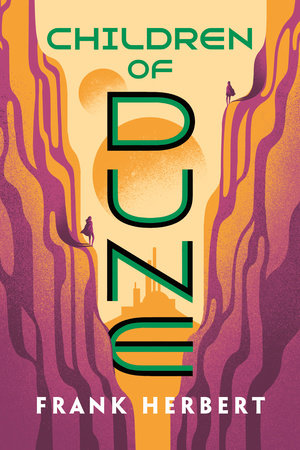
Now understand, if you haven’t read the Dune series, it is fundamentally about the nature and dangers of power and of messiahs/heroes. Paul Atreides, the main character in the first book, knows because of his ability to see the future, that a holy war will be waged in his name and there is little he can do about it. The book, and the series as a whole, asks us to consider what we believe, who we have mythologized, and what that says about humanity, power, love, compassion and asks what it means to be human. There is a reason that the book is considered a masterpiece by both the literary community and many sci-fi lovers. Dune is also the best-selling Sci-fi Novel of all time. Even if it’s not for you (because every great work has people who don’t like or understand it and there is nothing wrong with that), it has lots of powerful things to say about the way humans do things.
Stop right now, and think about your life path. Is your path about self-satisfaction? It is about serving your interests? Is it about the arrogance of being right above all others? Or, is your way of knowing the world about self-reflection? Is there a space for growth and change, the transformation into the best version of yourself? Are you taking the risk to truly be or are you buried in a series of identity markers and worried about defining who you are to everyone you meet? Do you focus on comparison? We all fall into these traps, I know I do sometimes and have to catch myself.
So many religious and non-religious people seek a philosophy not out of transformation and growth, but for comfort and safety. They like things that make their life feel cozy and warm. And while the benefits of community (notice the word unity at the end of the word) are important and worthwhile, I want you to sincerely ask yourself, what have you done to grow lately? Have you acknowledged the ways in which you are wrong or at least entertained the idea that you might be wrong? It can be powerful to look at your ideas and consider that you might be wrong about everything (even if you end up being correct) once in a while. Are you doing the work to be a better version of yourself or are you feeding the beast of arrogance and certainty?
You might be thinking, well isn’t a better version of myself a self-serving principle? It is not. Why? Because a better version of yourself will have better daily interactions. It will be less angry, less selfish/greedy. A better version of yourself will listen with patience to others rather than jumping to conclusions and is much more likely to help those in need. A better version will not only suffer less, but cause others to suffer less. A better version of yourself means that your part of the world, and potentially the whole world, is a little better. It might not add up to much, but imagine if everyone was doing this kind of work on at least a semi-regular basis.
So if your religion or ideology or philosophy (secular or non) is about what you can gain personally from others no matter the cost, then you might need to stop and reflect. What do you serve? Some of you might simply say God or Country, but if your service is exclusive only to those who believe what you do, or conditional on whether or not they will act and behave in the way you want them to, then you only serve an idol of the self and arrogance.
Another quote to consider from verse 8 of the Tao Te Ching:
“The supreme good is like water,
which nourishes all things without trying to.
It is content with the low places that people disdain.
Thus it is like the Tao.
In dwelling, live close to the ground.
In thinking, keep to the simple.
In conflict, be fair and generous.
In governing, don’t try to control.
In work, do what you enjoy.
In family life, be completely present.
When you are content to be simply yourself
and don’t compare or compete,
everybody will respect you.”
If you are Christian, you can see a similar attitude in The Sermon on the Mount and a number of other places in the bible. If you’re Muslim, there are words like this in the Koran, or the Hindu Vedas, in many Buddhist Sutras, and so on. The teachings of many religious philosophies overlap in the idea of personal growth is vital, and yet, somehow the worship of the myth structure becomes far more important than the actual practice of working toward being a better person. We often view these ideas as a panacea for the poisons of living in a difficult world and forget that nothing comes without work.
Instead, we see so many religions (and secular ideologies) restrict people’s actions out of a false sense of morality or limited black and white thinking. But the world is full of shades of grey. Even really good people do terrible things. Really bad people sometimes show amazing acts of kindness and compassion. It is so easy to pin a group of people or a culture to a certain standard or ideology, rather than accepting the fact, that no matter where you go, people are just people and all are equally complex.
So ask yourself sincerely, what purpose does your religion or ideology serve? Is it about the betterment of yourself and humanity? If not, it’s just another object to be possessed, a kind of materialism, a limit to the way you think and approach the world. If your heart is closed because of what you subscribe to, then you very likely have missed the entire point.
The work is not comfortable. The work is not easy. The work isn’t about serving the self. The work is risky and sometimes dangerous to your identity. If you have summed up your identity in a few key terms (be it a religious identity, a political affiliation, a gender, a mental state, really anything), then you have forgotten that we are an ever-changing, ever-moving entity. You are not the same person you were when you started reading this short essay, even if you reject all of my ideas.
Personal growth, in my view, is the most important thing we can do. After all, using this life, this precious moment (no matter if you believe in one life or countless lives) seems to me, to be the reason why humans are on this planet. Let your spirituality or philosophy open you up to the wonders of the universe. After all, there is endless beauty and joy to be discovered both out there, and within. You need only take off the veils or masks that we all wear and look honestly.


 Loridian's Laboratory