A Land of Fortresses (Poetry)

I wrote this last week during a poetry workshop at the High Plains for Applied Anthropology. This poem is dedicated to Howard Stein, who always inspires us to remember how powerful poetry is as a tool for understanding our humanity. Thanks Howard!

A Land of Fortresses

We are a land of fortresses,

Solitary, we treat only with those who think like us,

We are surrounded by a moat of toxic water,

Where the corpses of diverse ideas fester.

Our noses burn with their smell.

So we plug them and avert our eyes,

Staring only at the safety within our walls.


It is safe in here,

Like in the dark ages.


The world out there is dangerous,

Trolls pick their teeth with the bones of their victims,

The ones who wandered too far from their fortress,

They gorge under crumbling overpasses at the intersections of cyberspace.


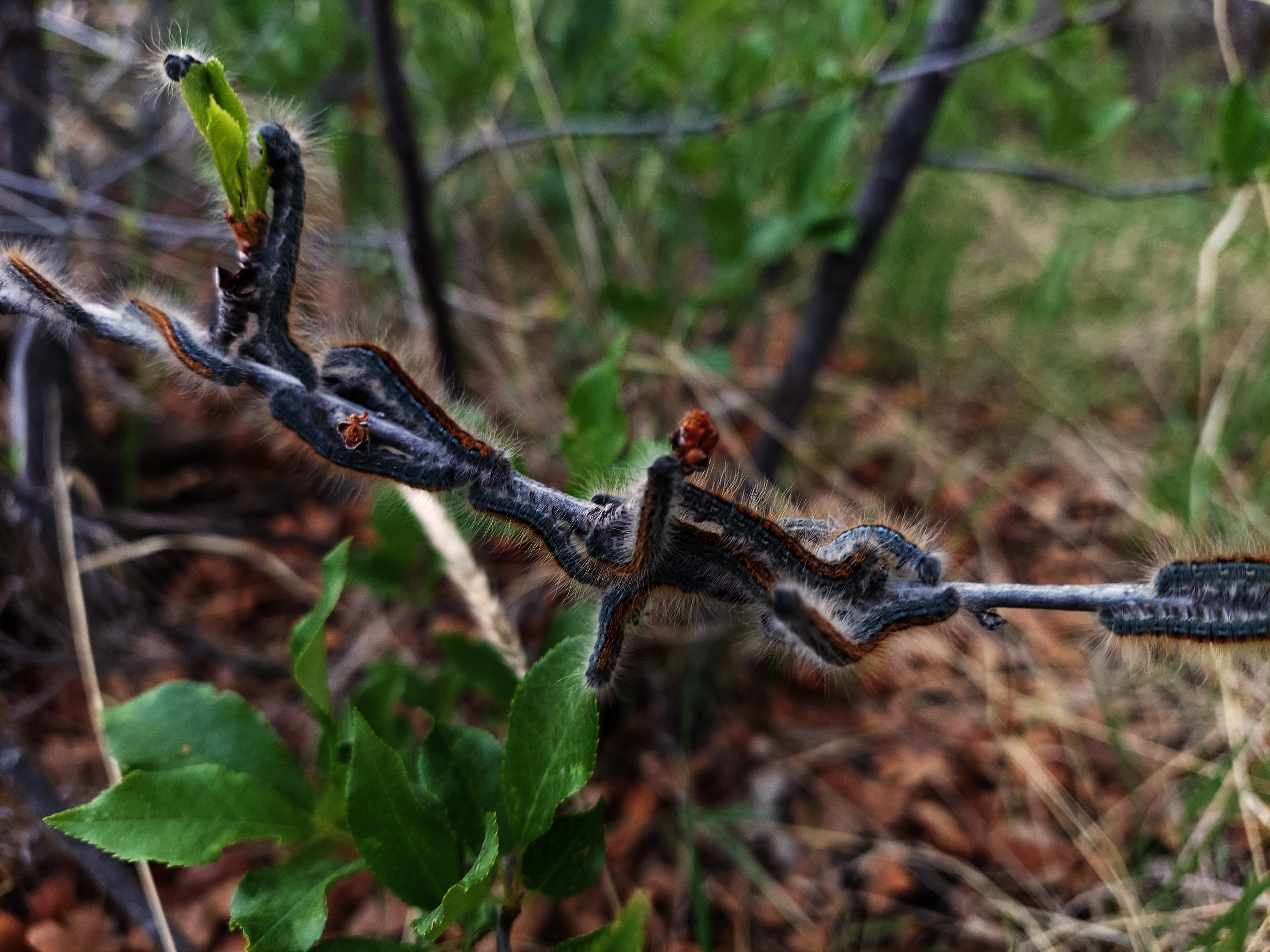
Hoards of hairy monsters circle the walls,

Pounding on the portcullis.

Longing to cut their teeth on fresh fleshy argument.

Their wicked smiles gleam,

But only at 2 am, with beards unshaven,

Their cry of, ‘actually’, screamed at rhythmic intervals.


In the moonlight mist,

Even robots wait in ambush.

With strange requests for our most intimate knowledge,

To be used against us.

Your mother’s maiden name,

Your first pet,

Your high school mascot,

A way inside.

Our memories are our vulnerability.


There, waiting in a tower of thorns we hide behind walls.

Ignoring the needy who gather at the gates by day.

We stay closed for business,

To those with needs unmet.

Never pondering,

Only pontificating from the ramparts.

And the guards pay no mind,

Until the siege weapons arrive,

Well past the time of asking.


They erect the weapons just beyond our reach,

With great desperation.

Then we dig in.

Prepare the boiling oil,

Prepare the volley of flaming arrows,

And slings, to keep our outrageous fortunes,

To ourselves.


But know,

The walls will fall.

They always do eventually.

Even with our pride bolstering them.

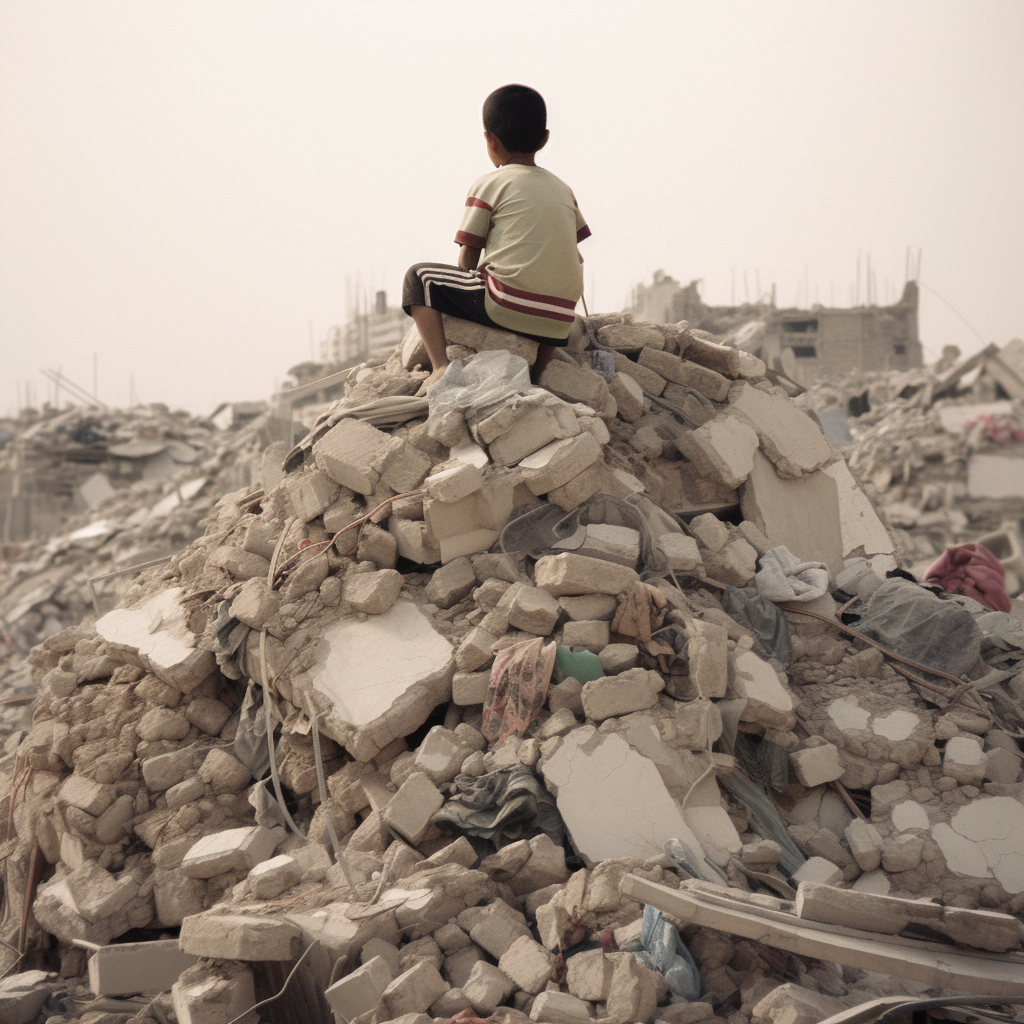
Even after they crumble,

We cling to their illusion of solidity,

And believe everything we think.

Until it rots us through to the core.


Then, we stand amongst the rubble wondering why.

Screaming in the darkness at some imaginary god to save us.

Requesting thoughts and prayers,

Rather than doing anything at all.


And so we join the lost,

The homeless.

For we have no home in ourselves.


Wandering,

Pounding at the gates of another

Begging for entrance,

Pleading for compassion.

Cut by the thorns as we try to scale their walls.

And we construct siege weapons,

To topple the towers,

And bring all to ruin,

Because we have been ruined by our indifference.


I have built a wall

I have dug a moat,

Made of algorithms.

To cling, to avoid,

Both are poisons.

I have turned away,

I have clung until my fists bled.

My own life, slipping through my fingers.

Only to find Saturn return and demolish my walls,

With the weight of its gravity.


Open the gates.

Smash the walls.

Feel the freedom of the open-air,

Of strange conversations in dense forests,

And find the wisdom in the unkempt grass,

Or roll in the mud until you are baptized.


There is no choice.

To ignore is only to delay.

To ignore is to forfeit your will,

Your choice in the matter.


Go Then,

Be forced naked into a wilderness that no longer wants you,

But claims you anyway.


We will make good mud.


We are exiles of our own making.  

The Argument (Poetry)

The Argument ©Michael Kilman 2022

The argument

There they are!

A few glimmering words, circling the inside of my skull

I reach… Pluck… Pluck… Pluck

Butterflies churn and excitement grows stirring me from near slumber

Something new to be born as the stars circle overhead.


Forget it.

You cannot grasp them.

Your tongue is swollen and thick from too much use

Your body aches from a endless maddening hustle

And your fingers dare not toil at their sacred assemblage


Liar!

Look at how they shimmer!

They are bright in the dark that they will arrange themselves as oceans often do

They caress me in all the right ways

And I long for their knowledge, their truth

I cannot ignore their cultivation.


Weep then,

Weep for hours on end for they will not flow from your lips or fingertips  

They will leave you a widow, after a lifetime of promises,

Moaning at all your loss

And then, kick you to the shadows where you will linger long waiting for a promised sun

That never shines


But I must!

For what else is to be done now at this late hour?

The clock maddens my mind with it’s ticking taunts

What fruit could this debate lay naked and open

It is best to embrace when the eyes will not close

I submit to their shimmer and ally myself to their cause.


Blocked

That is where you will find yourself,

Outside the door of an illustrious mansion, hearing the clambering and laughter of guests.

But with no key for entry. In vein you will jostle the doorknob.

Lusting after them with no passage.

You chase in vein fool, how many have you plucked?


Oh my good sir,

I have plucked them all in argument.

I have found peace in your taunts.

They are settled, nestling against my heart.

And they are alive.

Why Your Narrative Design Team Needs An Anthropologist or at Least Some Anthropology

Why Your Narrative Design Team Needs an Anthropologist

By Michael Kilman, M.S. Applied Anthropology


I’m an avid gamer and science fiction author. I’m also an anthropologist with over a decade of teaching, fieldwork, and consulting experience. So for me, worldbuilding is everything. A bad worldbuild kills my immersion immediately. And as audiences grow more sophisticated, I hear this more and more from gamers, readers, and filmmakers too.

Which raises a question: why do so many fictional worlds still feel hollow?

Part of the answer is that most narrative design teams are missing a specific skill set, someone trained to see culture as a living, integrated system. Characters across games aren’t just copies of western identity, there are distinct ways of knowing the world that don’t always translate easily across culture. That’s missing skill set is anthropology.

Below are six reasons why bringing anthropological thinking into your narrative design process can transform the worlds you build.


1. Holism: Everything Is Connected

One of anthropology’s foundational concepts is holism. It’s the idea that culture is an integrated system. If you change one facet of culture, you change everything. Think of chaos theory’s butterfly effect: small shifts ripple outward in unexpected ways.

Applied to worldbuilding, this means your fictional economic system, your family structures, your political arrangements, your religion, your ethnic identities, your people’s relationship to death, their biology, their environment, all of these are deeply interrelated. They shape systems of power, freedom, and oppression. When you’re building a fictional world, a holistic framework helps you understand how those relationships create meaning, consequence, and true complexity.

Anthropologists are trained to hold this complexity. We work at the intersection of biology, environment, social structure, language, and culture. This big-picture thinking is exactly what most narrative design processes are missing.


2. More Immersive and Realistic Cause-and-Effect

Creating a believable fictional world means thinking carefully about the causes and consequences of every major action. This isn’t just true for individual characters, but the culture as a whole. The most compelling games and narratives are often the ones that let player choices ripple outward in culturally coherent ways.

Imagine if your protagonist made an alliance early in a game with a faction. This alliance created real, culture-wide changes throughout the narrative.  This isn’t just a change in character relationships, I’m talking about changing the religion, economics, political system, or maybe even language of your world later in the game. That’s where anthropology comes in. Anthropologists have more than a century of research on how cultural change actually works and how it manifests across cultures and generations.

When I’ve consulted on these kinds of questions, including with a major tech firm on post-pandemic cultural shifts, we’ve drawn on real historical examples. The 1918 flu pandemic, for instance, fundamentally shifted American standards of beauty. It made sunbathing fashionable, and altered building architecture toward open spaces and natural light. That’s the kind of layered, counterintuitive thinking that makes fictional worlds feel real.


3. Anthropologists Are Intercultural Communicators

Our job isn’t just to study cultures, it’s to help different cultures and subcultures understand one another. We are a kind of intercultural mediator. That’s why tech companies hire UX and Design Anthropologists, and why I’ve worked with clients ranging from Native American tribal governments to Samsung UK on cross-cultural research questions.

Intercultural communication is a fundamental part of narrative design. If your world has diverse factions, ethnic groups, or political coalitions, an anthropologist can help you think through how those groups would actually perceive and misread each other. In fieldwork you learn quickly that even the most positive, and well intentioned changes you might make to a community meets resistance. That’s because, no matter how benevolent the change, someone will always lose and in ways you may never expect. Building that friction into your narrative design is what makes a world feel inhabited rather than constructed.


4. Diversity Is a Craft Skill, Not Just a Political Position

There’s a lot of conversation right now about representation and diversity in games and media. Culture wars are near constant in the social media sphere. But here’s the thing, lack of diversity isn’t just ethically problematic, it’s bad storytelling. The world is complex. Fictional worlds that flatten that complexity feel wooden and vacant.

The challenge is that writing cultures unfamiliar to you requires more than good intentions. True inclusion requires research, consultation, and ideally collaboration. Anthropologists can help mediate that process. We’re trained to identify the blind spots in our own cultural assumptions.

Have you ever considered what you think of specific accents? Why do you think that? Where do your opinions on different kinds of accents come from? These biases don’t just come from personal experiences, they’re formed over time, and through history and conflict. 

Anthropologists have also spent decades thinking about analogs and representations. If your fictional culture is standing in for a real one, you need to know what you’re doing. An anthropologist who has worked directly with those communities are ideal, they can help you navigate your own assumptions and open up your fictional world in a way you never considered before, a way that makes your story vastly more interesting and immersive.


5. The World Is Full of Untapped Source Material

Every culture is a dreamscape, a world made through symbols and imagination. One of the biggest missed opportunities in speculative fiction is that it only draws on a tiny sliver of possibility. The same alien invasion stories, the same European medieval settings, the same recycled mythologies, and gods, and political archetypes, and economic systems appear over and over. To be fair, it’s not that these traditions aren’t rich and wonderful on their own, it’s just that they’ve become predictable and stale, a singular worldview that no longer makes us question our own thinking with wonder. They just don’t stand out anymore.  

The world contains thousands of distinct cultural traditions, belief systems, governance structures, and cosmologies that most Western narrative designers have never even thought about. I made this exact argument in my TEDx talk, because, what we imagine matters.

Consider the game Never Alone (Kisima Inŋitchuŋa), made by and for Iñupiaq people, featuring the indigenous language and unlockable interviews with Iñupiaq elders. That game didn’t just tell a unique story, it expanded the possibilities of what games can do. It’s beautiful, and complex, and driven by the culture it comes from. There’s nothing else out there quite like it. It stands out because it offers another way of knowing/being in the world.


6. Anthropology Is a Toolkit, Not Just a Perspective

Everything I’ve described above isn’t abstract, it’s practical and in the era of AI, more necessary than ever. AI is capable of generating an incredible amount of mediocre and predicable media. Anthropology is an edge in worldbuilding and storytelling. It gives you concrete tools: frameworks for analyzing kinship and power, models for understanding how religion and economics interact, methods for identifying the cultural logic behind social norms that seem arbitrary.

My colleague Kyra Wellstrom and I built some of those tools into a book titled: Build Better Worlds: An Introduction to Anthropology for Game Designers, Fiction Writers, and Filmmakers. It distills over a century of anthropological research into an accessible guide that doesn’t require wading through academic textbooks.

On my YouTube channel I also host live Worldbuilding Q&As every month called, “Ask an Anthropologist.” I also bring on special guests. There you can also find my social science explainer series, Anthropology in 10 or Less, and soon my new series launching this spring, Anthropology Through Science Fiction. I’ve been translating these same ideas into free, accessible content for creators. And in my worldbuilding consulting practice, I bring this toolkit directly to projects.


Ready to Build a Better World?

I’ve spent 11 years teaching anthropology at the university level, published research on how worldbuilding works as a pedagogical tool, and consulted for clients ranging from indie fiction writers to major tech firms. My fiction, including the dystopian sci-fi Chronicles of the Great Migration series and my dark fantasy novel Shades & Shapes in the Dark are built on the same anthropological foundations I’m describing here.

If you or your team is serious about creating fictional cultures that feel authentic and immersive, I’d love to talk.

Book a free 10-minute consulting call →

Or explore free worldbuilding resources, essays, and video content at loridianslaboratory.com.


Michael Kilman holds an M.S. in Applied Anthropology (focus: Media) from Portland State University. He is the author of the Chronicles of the Great Migration series, Shades & Shapes in the Dark, and Build Better Worlds. He is also known for his TEDx talk “Anthropology, Our Imagination, and How to Understand Difference.”

Recorded Panel from SFAA 2022: Virtual Communities and Imaginary Worlds

This week I had the good fortune of chairing a panel at the Society for Applied Anthropology in Salt Lake City. My Fellow Panelists and I decided to stream it live on YouTube, where it will live for people to rewatch. The title of our panel was Virtual Communities and Imaginary Worlds. The panel was a lot of fun and it was an honor to be on the panel with two brilliant researchers.

You can watch the video here. You will find descriptions of each panelists talk and the timestamps for their presentations on the YouTube page. The last 20 minutes are Q&A.

My First Three Novels are Free till March 25th!


If you’ve read my posts and enjoy my work and haven’t checked out my book series, The Chronicles of the Great Migration, now is your chance to get the first 3 books in the series totally free until Friday March 25th. My books are leaving KU permanently and to celebrate, I thought I would run a free promotion for the series.

Mimi of the Nowhere, Upon Stilted Cities: The Winds of Change, and Upon Stilted Cities: The Battle for Langeles are totally free until this coming Friday.

Feel free to share the link to as many people as you like. And, if you do read the books, all I ask is you leave a honest review.

Terminal Decay: A Short Story in the Chronicles of the Great Migration

Recently I have decided to take some of my unpublished short stories in my sci-fi series, The Chronicles of the Great Migration and begin recording them and uploading them to YouTube. This will be an ongoing series with occasional releases that add to the world in which my story takes place.

The first entry in this series is titled Terminal Decay. In it:

A sentient satellite falls to earth and reflects on it’s life and the state of humanity, who is now relegated to living inside giant walking cities.

I hope you enjoy it!

Guest Spot on Beyond the Pen Podcast

Yesterday I went on the Beyond the Pen Podcast to talk about my co-written book Build Better Worlds: An Introduction to Anthropology for Game Designers, Fiction Writers and Filmmakers. I had fun talking to the two wonderful and dynamic hosts about our worldbuilding model, Orcs, and a little about my own writing process.