Why Your Narrative Design Team Needs An Anthropologist or at Least Some Anthropology

Why Your Narrative Design Team Needs an Anthropologist

By Michael Kilman, M.S. Applied Anthropology


I’m an avid gamer and science fiction author. I’m also an anthropologist with over a decade of teaching, fieldwork, and consulting experience. So for me, worldbuilding is everything. A bad worldbuild kills my immersion immediately. And as audiences grow more sophisticated, I hear this more and more from gamers, readers, and filmmakers too.

Which raises a question: why do so many fictional worlds still feel hollow?

Part of the answer is that most narrative design teams are missing a specific skill set, someone trained to see culture as a living, integrated system. Characters across games aren’t just copies of western identity, there are distinct ways of knowing the world that don’t always translate easily across culture. That’s missing skill set is anthropology.

Below are six reasons why bringing anthropological thinking into your narrative design process can transform the worlds you build.


1. Holism: Everything Is Connected

One of anthropology’s foundational concepts is holism. It’s the idea that culture is an integrated system. If you change one facet of culture, you change everything. Think of chaos theory’s butterfly effect: small shifts ripple outward in unexpected ways.

Applied to worldbuilding, this means your fictional economic system, your family structures, your political arrangements, your religion, your ethnic identities, your people’s relationship to death, their biology, their environment, all of these are deeply interrelated. They shape systems of power, freedom, and oppression. When you’re building a fictional world, a holistic framework helps you understand how those relationships create meaning, consequence, and true complexity.

Anthropologists are trained to hold this complexity. We work at the intersection of biology, environment, social structure, language, and culture. This big-picture thinking is exactly what most narrative design processes are missing.


2. More Immersive and Realistic Cause-and-Effect

Creating a believable fictional world means thinking carefully about the causes and consequences of every major action. This isn’t just true for individual characters, but the culture as a whole. The most compelling games and narratives are often the ones that let player choices ripple outward in culturally coherent ways.

Imagine if your protagonist made an alliance early in a game with a faction. This alliance created real, culture-wide changes throughout the narrative.  This isn’t just a change in character relationships, I’m talking about changing the religion, economics, political system, or maybe even language of your world later in the game. That’s where anthropology comes in. Anthropologists have more than a century of research on how cultural change actually works and how it manifests across cultures and generations.

When I’ve consulted on these kinds of questions, including with a major tech firm on post-pandemic cultural shifts, we’ve drawn on real historical examples. The 1918 flu pandemic, for instance, fundamentally shifted American standards of beauty. It made sunbathing fashionable, and altered building architecture toward open spaces and natural light. That’s the kind of layered, counterintuitive thinking that makes fictional worlds feel real.


3. Anthropologists Are Intercultural Communicators

Our job isn’t just to study cultures, it’s to help different cultures and subcultures understand one another. We are a kind of intercultural mediator. That’s why tech companies hire UX and Design Anthropologists, and why I’ve worked with clients ranging from Native American tribal governments to Samsung UK on cross-cultural research questions.

Intercultural communication is a fundamental part of narrative design. If your world has diverse factions, ethnic groups, or political coalitions, an anthropologist can help you think through how those groups would actually perceive and misread each other. In fieldwork you learn quickly that even the most positive, and well intentioned changes you might make to a community meets resistance. That’s because, no matter how benevolent the change, someone will always lose and in ways you may never expect. Building that friction into your narrative design is what makes a world feel inhabited rather than constructed.


4. Diversity Is a Craft Skill, Not Just a Political Position

There’s a lot of conversation right now about representation and diversity in games and media. Culture wars are near constant in the social media sphere. But here’s the thing, lack of diversity isn’t just ethically problematic, it’s bad storytelling. The world is complex. Fictional worlds that flatten that complexity feel wooden and vacant.

The challenge is that writing cultures unfamiliar to you requires more than good intentions. True inclusion requires research, consultation, and ideally collaboration. Anthropologists can help mediate that process. We’re trained to identify the blind spots in our own cultural assumptions.

Have you ever considered what you think of specific accents? Why do you think that? Where do your opinions on different kinds of accents come from? These biases don’t just come from personal experiences, they’re formed over time, and through history and conflict. 

Anthropologists have also spent decades thinking about analogs and representations. If your fictional culture is standing in for a real one, you need to know what you’re doing. An anthropologist who has worked directly with those communities are ideal, they can help you navigate your own assumptions and open up your fictional world in a way you never considered before, a way that makes your story vastly more interesting and immersive.


5. The World Is Full of Untapped Source Material

Every culture is a dreamscape, a world made through symbols and imagination. One of the biggest missed opportunities in speculative fiction is that it only draws on a tiny sliver of possibility. The same alien invasion stories, the same European medieval settings, the same recycled mythologies, and gods, and political archetypes, and economic systems appear over and over. To be fair, it’s not that these traditions aren’t rich and wonderful on their own, it’s just that they’ve become predictable and stale, a singular worldview that no longer makes us question our own thinking with wonder. They just don’t stand out anymore.  

The world contains thousands of distinct cultural traditions, belief systems, governance structures, and cosmologies that most Western narrative designers have never even thought about. I made this exact argument in my TEDx talk, because, what we imagine matters.

Consider the game Never Alone (Kisima Inŋitchuŋa), made by and for Iñupiaq people, featuring the indigenous language and unlockable interviews with Iñupiaq elders. That game didn’t just tell a unique story, it expanded the possibilities of what games can do. It’s beautiful, and complex, and driven by the culture it comes from. There’s nothing else out there quite like it. It stands out because it offers another way of knowing/being in the world.


6. Anthropology Is a Toolkit, Not Just a Perspective

Everything I’ve described above isn’t abstract, it’s practical and in the era of AI, more necessary than ever. AI is capable of generating an incredible amount of mediocre and predicable media. Anthropology is an edge in worldbuilding and storytelling. It gives you concrete tools: frameworks for analyzing kinship and power, models for understanding how religion and economics interact, methods for identifying the cultural logic behind social norms that seem arbitrary.

My colleague Kyra Wellstrom and I built some of those tools into a book titled: Build Better Worlds: An Introduction to Anthropology for Game Designers, Fiction Writers, and Filmmakers. It distills over a century of anthropological research into an accessible guide that doesn’t require wading through academic textbooks.

On my YouTube channel I also host live Worldbuilding Q&As every month called, “Ask an Anthropologist.” I also bring on special guests. There you can also find my social science explainer series, Anthropology in 10 or Less, and soon my new series launching this spring, Anthropology Through Science Fiction. I’ve been translating these same ideas into free, accessible content for creators. And in my worldbuilding consulting practice, I bring this toolkit directly to projects.


Ready to Build a Better World?

I’ve spent 11 years teaching anthropology at the university level, published research on how worldbuilding works as a pedagogical tool, and consulted for clients ranging from indie fiction writers to major tech firms. My fiction, including the dystopian sci-fi Chronicles of the Great Migration series and my dark fantasy novel Shades & Shapes in the Dark are built on the same anthropological foundations I’m describing here.

If you or your team is serious about creating fictional cultures that feel authentic and immersive, I’d love to talk.

Book a free 10-minute consulting call →

Or explore free worldbuilding resources, essays, and video content at loridianslaboratory.com.


Michael Kilman holds an M.S. in Applied Anthropology (focus: Media) from Portland State University. He is the author of the Chronicles of the Great Migration series, Shades & Shapes in the Dark, and Build Better Worlds. He is also known for his TEDx talk “Anthropology, Our Imagination, and How to Understand Difference.”

World Building Part 4: Six Things To Think About When Constructing Myth In Fiction

Fantasy, Goddess, Mystic, Serpent, Snake, Woman, Myth

Want a much expanded book on worldbuilding and anthropology? Check out Build Better Worlds: An Introduction to Anthropology for Game Designers, Fiction Writers, and Filmmakers, now available on Kindle!

Myths are fascinating and interesting arenas within cultures. Every culture has some kind of myth story (but not all cultures have creation myths i.e. the Piraha) that helps us to understand what in the world we are supposed to be doing as human beings.

But here’s the thing. There are a lot of video games and fiction out there that just throw in cute myth story for no apparent reason. The myth is fascinating but doesn’t have any weight in the character’s lives. The culture gives it a nod here and there and it holds no real consequences in the society. This is a major problem. This is where many fictional worlds go wrong. So here is a list of things about myths that you should consider in order to create better cultures and better worlds.

Note: You may want to check out Worldbuilding parts 1-3 over here

1. Myths aren’t just about religion. They aren’t all false. They are repositories of knowledge a culture uses to interpret reality.

Every country has a myth about it’s creation. In the United States we tell a story of the Founding Fathers, a group of men who fought for liberty against the tyranny of the King of England and ultimately won out. Upon the granting of our independence, a sacred document was penned to replace the faulty Articles of Confederation that tenuously held the colonies together. This document is called the Constitution.

Every American grows up hearing this. We interpret these stories and this document over and over when new ideas, technologies, court battles, as they come into our culture. That document and it’s amendments structure the values of our society and so, there are endless debates and interpretations of what those men wrote. This is a very active and powerful myth structure.

When you create your myth structure, be it religious or secular in nature, what impact does it have in society? How do people debate the meaning of those myths? Are their other myth structures at odds with the dominant one? For example, how do the Christian myth structures support or conflict with that of the Founding Fathers and the formation of our country? We see constant debates on laws and rights based on these two competing (and sometimes overlapping) myths. This is an arena in fiction that is rife with making authentic and interesting conversations that your characters and cultures have.

2. Myths structure our idea of purity

Mythology also tells us what good and bad things are in society. Not all myths are concerned with simple binaries (regardless of what structuralists might think). But many of them identify what things are good and bad to have in a culture or give prescriptions for the kind of mind, body, or spirit to cultivate.

Returning to the American example, the political myth of our country includes a number of concepts about what kinds of governments are good and bad. Who should have the right to vote (which has changed over time) and with the Bill of Rights, attempts to map out the rights of citizens that are required to keep maintain a working political system.

Myths may or may not include the following

  • What things are we supposed to eat/avoid
  • What are good/bad/ideal sexual relationships or practices
  • Marriage patterns
  • Clean and dirty parts of the body and when or why you should wash
  • Important dates
  • Important people
  • How we mark or think about time
  • What kinds of intelligences are there (does nature have a will of it’s own? Is there an all-knowing being in the sky? Does a fox have human intelligence? ect.)
  • How many genders are there? Which one is in charge or are they equal? Are there more than two genders (recall part 2’s conversation about the Native American Two-Spirited system with up to five genders)
  • How was the world created?
  • Will it be destroyed? When? How?
  • What about disease? Is there germ theory? Is, like in the middle ages in Europe, smell associated with disease?
  • How about the question of suffering? Is there a being that makes suffering? Is suffering from ignorance? Is suffering a thing at all?
  • Is there free will?
  • How many lives do we have?
  • What words are sacred/dangerous?
  • Is there a certain style of dress or attire or tattoo or body modification that is considered sacred or taboo?
  • What is reality? Are we living in a giant theater performance? Do we live in a simulation like in the Matrix? Is there a better place to go when we die? A worse one? How do physics/magic/will structure reality?

You don’t have to include all of the above but you should at least consider them and their ramifications. Lots of tension and conflict in fiction can, like in the real world, arise for competing myth structures or provide interesting limitations that characters have to work with.

3. Myth legitimizes the present social order and system of power

Myth often offers an explanation for why people have the life conditions they do. In Hinduism for example, the Hindu caste system, and the breakdown of wealth and poverty is addressed in numerous Hindu texts. People are born into certain conditions because of consequences of their past lives. In Christian Europe it became popular for Kings to claim that they had a Divine right to be in their throne. In China, an emperor was thought to have a “Mandate of Heaven.” These are a mix of religious and political myth structures that allow those in power to continue to consolidate their power and claim a legitimate right to their station. Similarly in the United States we have the bootstraps myth, the idea that with hard work, you too can one day be wealthy and that often, the poor are lazy and unworthy of success. This myth goes back to Benjamin Franklin. (Check out this podcast “Poverty Myths Busted” on why it’s more complicated than the bootstraps myth suggests and also as an interesting study in myth-making and consequences.)

Your fictional world should include myths that have consequences related to power. Manifest Destiny was the myth structure that justified the Europeans conquerors actions during the 15th – 19th century. It claimed that God wanted Europeans to civilize the world and spend Christianity far and wide. That had some really deep and pretty awful consequences for non-Christians and non-Europeans. Empires always spread their myths. Even the Mongol empire which had freedom of religion and a secular state, still spread it’s myth about the mighty Genghis Khan and the legitimacy of their power.

4. Myths Explain The Nature of Reality

Myths can sometimes act as a kind of proto-science, that provides explanations for the state of reality. In the absence of scientific investigation (and even with it) Myths can provide us with the story of where we came from, why we are here, and where we are going. They can explain why man has two legs, why some creatures have different kinds of tales, what are good morals and values to have and provide limitations on what can/can’t do or can/can’t know. Myths can be flexible and empirical, based on the observation of individuals and experience, but they can also be fanciful and strange or even non-nonsensical to outsiders.

In writing your fiction, remember that even in a secular state, there are many competing myths. We still have creationists in the United States who argue the world is only 6,000 years old, along side scientific evidence that the world is 4.5 billion years old. Which leads me to…

5. Myths mark In Groups vs Out Groups and for the In Group bring Unity

Myths not only structure the way that people see the world and the elements above, but they also make clear cultural distinctions about who is a part of a group and who isn’t. Sometimes this can be as simple as, hey, I subscribe to that belief so I am part of the group. Sometimes, it can something like, in my mythology this particular group of people has different color skin because they are punished by god(s) (yes that’s a real myth story and has some obvious and very dangerous consequences). Myths can tell us, who is allowed to join in the community and who is a pollutant (back to that purity stuff) and a danger to the society. Thus, in your fiction, it can be a source of conflict. Perhaps the origin story of one group states that another group was created by an evil being hell bent on taking over the world. Enter your main character who suddenly finds themselves working with a person who they thought were inherently evil their whole life because of the myth structure they were raised on. Again, myths are a lens from which people see the world and how they order society.

And one final thing…

6. Myths are not monolithic

If you write a world where you have hundreds of thousands or millions of elves and they only have one myth story… you’ve got a serious problem. If you write an alien planet that has only one religion/language/myth/culture… you’ve also got a serious problem. Look around at all the myths in your own culture. How many religions are in the world? How many flavors of each of those religions that use different myth stories to justify their existence? If your cultures only have one myth and everyone agrees on it… that’s lazy and bad writing… unless you do it on purpose. If you do this, you will have to justify why you did it. Maybe there was some event in the past that forced everyone to agree on the same thing? But that has to be one hell of a justification. There are currently 42,000 denominations of Christianity in the world and some of them are very different from the days following the death of Jesus. Over the course of time, myth and politics and religions change. If you are doing one myth as social commentary, or a purposeful reason, make sure you have a good reason for doing it, otherwise it will just come of as lazy and/or bad writing.

If you are going to spend a lot of time creating a myth for your fictional world, make sure it has consequences. Nothing shows poor writing more then an amazingly well built myth structure that doesn’t impact your characters lives or adventures. Myths have weight. They are another arena to build good tension. Use them wisely.

Continue the series with Worldbuilding Part 5: Monsters, Aliens, and Evil Androids, or go back to Worldbuilding Part 3: Constructing Character Identity. For a comprehensive guide to anthropological worldbuilding check out Build Better Worlds. And if you want hands-on help with your specific project, I offer worldbuilding consultations – the first 15 minutes are free.

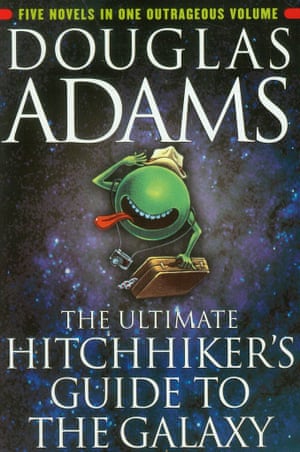
The Importance of Storytellers and Douglas Adams (Excerpt for the Battle for Langeles)

Image result for the hitchhiker's guide to the galaxy

To me, stories have been among the most important things in my life. From a young age I was always an avid book lover and of course, I grew up watching tons of media and even enjoying stories in the video game world (Final Fantasy 7 and Bioshock Infinite are among my favorite game stories).

Stories influence us, they shape us, they help us to ask difficult questions all while giving us the distance to think about them in a meaningful way. Few other things in this world are impactful as sharing personal stories or reading a good book.

For my Masters Research, I worked with the Romero Theater Troupe, a theater organization that lets everyday people tell their stories on stage and share their struggles with the world. It was working with the Romero Theater Troupe that I realized how powerful our stories are for making a positive change to society and I had a moment of personal reflection where I realized I wanted to focus and tell more stories myself because I believe that it is through storytelling that we can really change the world.

I have always written, but after working with the Romero Theater Troupe, I started thinking about the stories that have influenced me in life. One of the most important influences to me was Douglas Adams, the Science Fiction Writer who is best known for his Series, The Hitchhikers Guide to the Galaxy

I’ve read this series four times, and each time I grew to realize just how much depth there is behind the laughter. Adams brings in so many relevant points about politics and power and other, still relevant, issues that we face in daily life, all through the eyes of a man who not only reluctant to go on a journey in space, but just wants a good cup of tea (He actually almost gets an entire spaceship full of people killed over a cup of tea) and to go to bed early. 

Sometimes as authors we put little easter eggs or allusions hidden throughout our work, marking tribute to the contribution of other authors or things that influenced us. In book 3 of my series, The Chronicles of the Great Migration, The Battle for Langeles, I have a small tribute to Douglas Adams.

What Author’s or Stories Influenced Your Life? Feel Free to Share in the Comments.


Excerpt from Chapter 13 Rigel’s Dream, Rigel’s Debt (Spoiler Free)

Louis glided down the hall, his upper body stiff and his feet pumping furiously towards Dr. Solidsworth’s Lab. His motionless shoulders and arms moved only with the rhythm of his torso. He took wide, gapping steps. He moved quickly enough that several times he had to reach up and adjust his glasses.

Louis Franklin was the only person in the entire city of Manhatsten, and possibly the remainder of humanity, that still wore glasses. These were no ordinary reading glasses, they were, by ancient standards, granny-grade frames with bottlecap-thick lenses. Louis didn’t like the idea of laser eye surgery, and the idea of a digital optical implant–they had replaced contact lens in 2042CE–going anywhere near his eye was the most terrifying thing he had ever heard of.No, glasses worked perfectly fine.

Sweat gathered at the line between his short, slicked-back hair and pale, light-skinned forehead. His lab coat, which stopped early at his upper thighs, shifted as he moved. He had to hurry, the timely delivery of the news could make all the difference. He rushed into Dr.Solidsworth’s door, slamming his body against the hard metal surface. Louis had forgotten that Dr. Solidworth had extra security protocols on his lab and that the door would not open on approach.

“Keypad,keypad, where is that keypad.” He searched to the left and the right of the door but did not see it. He looked again; he still did not see it. Then he remembered that there was a request access code for a holo-key pad display, an extra precaution to unwelcomed visitors. “AI, would you please display the holo-key pad.”

“Please state your authorization code, Dr. Franklin.”

“Alpha, Gamma, Seven, Six, Nine, Eight.”

“What did the dolphin say?”

Louis rolled his eyes, he forgot about the security answer. He could understand why Dr. Solidsworth was paranoid after the attempt on his life decades earlier, but how many passwords and secret phrases did he think he needed before he felt safe?

“I don’t suppose you could give me another hint.”

“No, Sir, Dr. Solidsworth does not allow additional hints.”

He racked his brain. He knew it had something to do with one of Dr. Solidsworth’s favorite books, but for the life of him, he couldn’t remember it. Something about fish… fish and dolphins, what would the dolphin say? He knew dolphins never had the power of language in the way that humans did. Of course, Louis had never actually seen a dolphin other than in ancient movies and a few pictures. He would have never even looked them up if Dr. Solidsworth had not given him the passphrase.

“Ah ha! I remember! The dolphin said, ‘So long and thanks for all the fish.’”

“Very good, Sir,” replied the AI.