Through an Endless Darkness Gleaming… Cover Reveal!!!

Good News! I’m almost finished Shades & Shapes in the Dark, the first novel in my dark fantasy/horror series. The first book is getting one final readthrough before it goes to the editor. Expect a release date and preorder launch soon.

But as I am wrapping up that one, I’m already almost finished the first draft of the second book, and I have written a large portion of books 3, and 4.

Sometimes when I’m working on something, the image of the cover is so clear to me, that I just have to sit down and bring it to life. But first, I thought it might be good to tell you a little more about the forthcoming series.

The four book series, Shades and Shapes in the Dark is the story of 9 year old Clarissa Lamont accidently unleashing something sinister from an ancient ritualistic site in the middle of a forest in the suburbs of Philadelphia, and her four decade long struggle to first understand the nature of this shadow monster, and then find ways to fight it.

The first book, Shades & Shapes in the Dark focuses on her first encounter with the shadow monster, she names Demon, and her early attempts to defend herself from it’s relentless hunger.

Book 2, Through An Endless Darkness Gleaming focuses on Clarissa’s teenager years and her attempts to forge a weapon and find new tools and knowledge to combat the shadow.

Book 3, An Illumination of Extraordinary Madness, focuses on Clarissa’s 20’s as she finds new knowledge and skills to protect the people she loves.

Finally, Book 4 titled, The Nature of Twilight At Dawn, deals with Clarissa’ growing into herself in her 30s, and her final confrontation with the monster in her 40s.

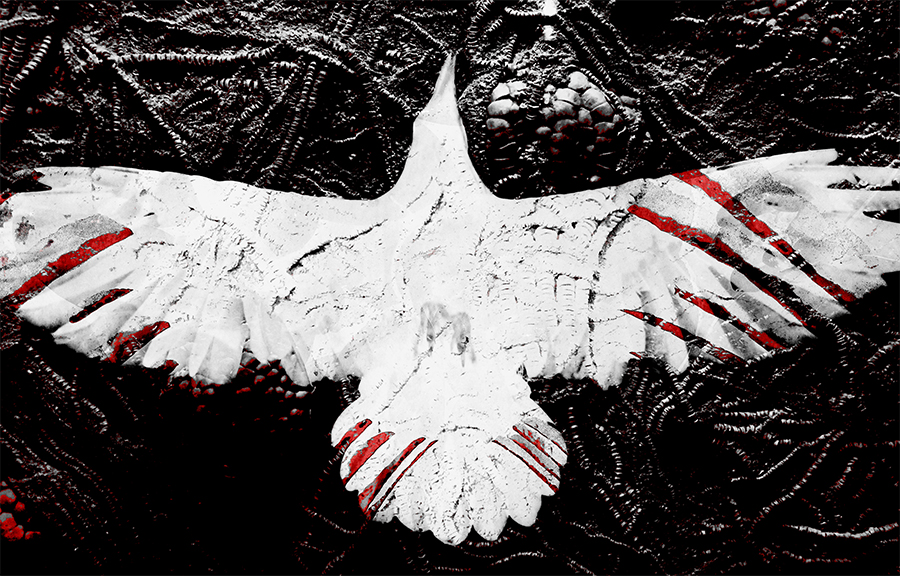
I’ve already released the cover for Shades & Shapes in the Dark, but today, I’m excited to release to you the cover and cover art, for book 2, Through and Endless Darkness Gleaming. Each chapter of each book contains a poem that tells a truth about Clarissa’s world.

Here is the opening poem for Book 2:


Through and endless darkness gleaming,
Where time ceases flowing and streaming,
And the wicked things are dreaming,
In the sea of the infinite more.

The white raven’s feathers flutter,
Over a child’s head who has no rudder,
Lost in despair so utter,
As she walks across the bone strewn shore.

For Whosoever shall borrow a favor,
Will forever savor, the flavor
Of the first science’s power of darkest, blackest lore.

For that power always has a price,
In contracts made with language precise,
Made with the devils forged in the fires of the forgotten before

But perhaps a bargain made can be broken,
For her power, is only a token,
Of the loss she suffered, and the pain she made others endure

Unbound is that magic that came with the pact,
Another hidden clause in the contract,
For power seeps from the very cracks,
The cracks hidden in the earth’s deepest core

Oh friend,
Be careful what you say,
Or what you give away,
Because reader,
The danger
is greater
than before.

The Ebook Cover for Through an Endless Darkness Gleaming
The Cover Art for Book 2

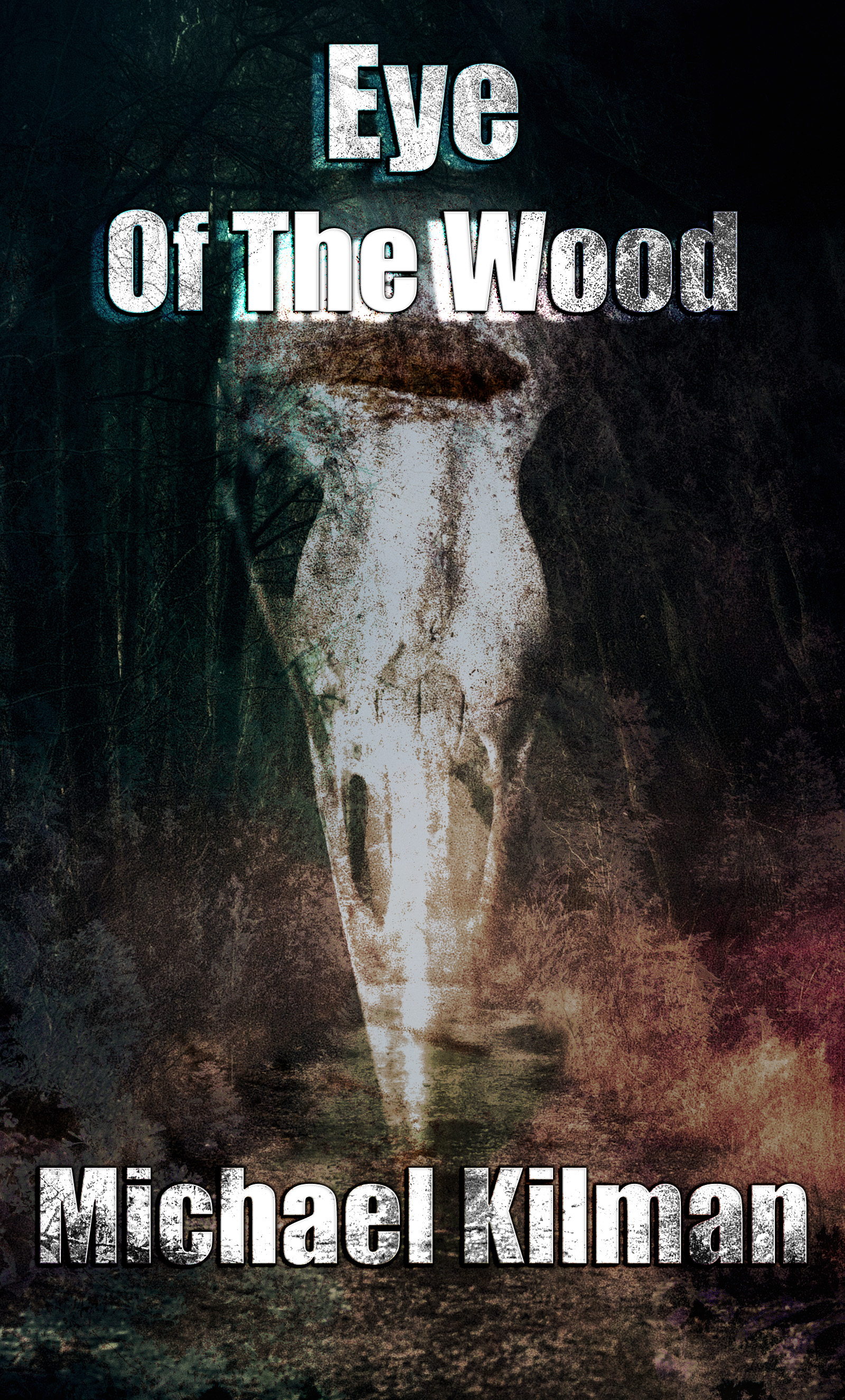
The Eye of the Wood Audiobook is Live!

Despite the long processing delay on the distribution end, my short horror story, Eye of the Wood is now Live! As of the time of this post, it’s only available on a few platforms, but, if you have Spotify you can listen to it as a premium member using your monthly audiobook quota. It will be up on every major audiobook service in the coming days.

If you’re not a substack follower, check out my substack for a way to get a free code for the audiobook here

Synopsis:

All must seek the eye of the wood, the clearing at the center of the forest. For within lay the only hope to keep the living, hungry darkness at bay.

Mishmash (A Free Comedic Short Story)

Image via Pixabay user azmeyart-design

Last week I entered a contest over at Reedsy for a short story. The prompt I chose was, choose a perspective from a Zombie, Mutant, or Infected Creature. The result? A comedic piece about a Zombie suddenly remembering himself.

It appears that my entry didn’t win, but I had so much fun writing it I thought I would share it with all of you. If you like my other comedic sci-fi stories than this one is right up your alley. Enjoy!

Mishmash

Stumbling forward and dragging one dislocated leg behind him, the creature woke from its viral-infused fugue. Its first thoughts upon waking were, where… how… what… and also, where’s dinner?

It looked around. Gray concrete lined every surface. In front of it, a gray wall rose far above. The creature’s eyes traced the wall up twenty feet or so, and saw dozens of people standing there behind a black railing under an awning. Then, it looked down and saw a moat between them and it. It tried hard to think of where it had seen something like that before, until finally, the image of a zoo popped into its head. He, and yes, it now remembered it was a he, couldn’t fathom why he would be in a zoo. Especially since he seemed to be inside of a pen.

He leaned down and dunked his hand in the water, testing the temperature, but felt no change. It occurred to him; that he felt nothing at all. Looking up, he opened his mouth to ask the people above where he was, but all that came out was a long low moan of “Misssssshhhhhhmassshhh.”

“Wow! It talks, Daddy?” asked a little girl in the pink dress with twin pigtails standing above Mishmash with the crowd.

“Well, zombies can’t talk. Not anymore. They’re too stupid. All they want to do is eat,” said the man, whose long beard hung over his bib overalls.

“Oh.” she paused for a moment and then said, “But it said Mishmash. Isn’t that a word?” asked the daughter. “It sounds like a word.”

“Well, maybe that’s its name. Maybe that’s all it remembers of being human,” replied the father.

“But if it remembers its name, then doesn’t that mean it’s not stupid?”

Changing the subject, the father said, “I don’t know. Do you want to feed it, princess?” 

“Yeah!” shouted the little girl.

Mishmash searched the crowd above for the father and the little girl. As he did, he saw motion above him. Something was falling from the sky. He tried to focus his eyes, but they didn’t work quite the way they used to. Then he saw it, a severed arm twirling through the air, and the moment he identified it, the arm smacked him right in the center of his face before it fell limp to the ground before him. He stumbled backward, his dislocated leg twisting, and he fell on his ass.

The girl squealed with laughter. “Bullseye Daddy!”

The man chuckled and pulled up on the straps of his overalls. “You sure got him good, princess.”

She clapped her hands. “Oh, I can’t wait to watch him eat it! It’s so gross when they eat. I love it!”

Her father laughed again. “Well, remember, if you’re too grossed out, we can leave. You don’t have to watch.”  

“Don’t worry, I won’t be! I told you I watched the zoo livestream feeding the zombies on YouTube all the time!” She giggled and continued, “I like it when they eat heads. It’s so weird to watch them try to bite it like an apple.” The little girl sighed and then pouted. “I wish I could get two hundred million views on my YouTube videos.”

“Me too, princess, me too. Too bad they won’t let us have our phones here or we could have recorded your bullseye. I bet a lot of people would have laughed at that.”

Confused and listening, Mishmash looked down at the arm. Then he looked up at the little girl who had thrown it. She stood at the top of a rail, a good twenty feet above, standing in the middle of the crowd. Her pink dress flapped in the gentle breeze. He scanned the crowd looking past the father in overalls and at the other spectators. Other people in the crowd wore everything from yoga pants to their Sunday best. It was a whole general mishmash of people from all walks of life.

Mishmash picked himself up, stumbling to his feet. Angry, he shook his fist and shouted at the little girl and said, “Mishhhhhhmassshhhh” He thought to himself that people really let their kids get away with anything these days. He wasn’t wrong. Imagine, reader, how you would feel in Mishmash’s situation.  

Many members of the crowd standing behind the railing above held severed limbs and assorted body parts of their own. Mishmash thought he saw one young boy holding what had to be a coiled ball of intestines. Before Mishmash could say or do anything, a shower of body parts rained down around him. He dove to the ground, covering his head as organs and limbs made squishing and splatting noises on the concrete of the enclosure.

Puzzled at the assault, Mishmash stood up again and dusted himself off. He turned and saw that, to his surprise, zombies were all around him. Terrified, he stepped back to the edge of the moat, feeling his panic rise. They ignored him.

Each creature headed toward the closest body part. He looked back down at the arm lying there in front of him. Then he looked back up at the crowd, and then, back at the Zombies. They didn’t seem very interested in him, and certainly, if they were zombies, wouldn’t they want to eat him?

With a sinking feeling, Mishmash looked down at his hands. He turned them over back and forth. They were a strange grayish color, though there were splotches of normal skin here and there. He thought, Oh no. Oh no no no no no. How had this happened? He couldn’t be a Zombie, could he? Zombies weren’t supposed to think. Something was wrong here, but he couldn’t quite remember what.

Hunger pain rose in his belly and his eyes drew to the severed arm sitting there just before him. Without thinking, he kneeled on the ground with his good leg, picked up the arm, and drew it toward his mouth. It was cold as if recently stored in a meat locker or a morgue. But that didn’t matter. He was so hungry he could barely stand it.

Mishmash opened his jaw wide so that he could bite off the biggest chunk possible, then stopped. He remembered himself, paused, and dropped the arm. It occurred to him that he really shouldn’t be doing this. It was a human arm, and he was… what? Well, obviously, not exactly human. Were zombies human? What did it mean to be human?

For a moment, dear reader, he felt tempted to go down a philosophical rabbit hole about that question, but opted instead, to examine his circumstances. He was after all a scientist. That’s right! He remembered now, he, Mishmash, was a scientist, at least in the before times.

He abandoned the arm, walking around the pen and observing the others eating their fill. Despite his desperate hunger, he felt a wave of revulsion. It was a noisy business, their hungry mouths munching and tearing at flesh and tendon. Nor did it smell much better. Zombies, he decided, smelled terrible. He sniffed himself and wondered if the moat was available for bathing. Did they provide zombies with soap here? He doubted it.  

Mishmash looked back down at his hands again and something, some fragment of memory, stirred in him. He remembered the bite. He looked down at his right hand and noticed, under the graying skin, teeth marks.  

Stumbling, he fell and remembered his dislocated leg. There was no pain. He looked down at his knee, bent at an odd angle, reached down, and straightened it with a pop. Apparently, the only discomfort he could feel was hunger. He stood, with his leg adjusted, but far from perfect, he walked back to the moat where the abandoned limb lay. It was then more memories flooded back.

“What’s it doing? What didn’t it eat the arm?” said the little girl.  

“I don’t know. Maybe it’s full?” said the father.

Another person, who Mishmash couldn’t see, said, “Zombies don’t get full, you idiot. They eat and eat and eat.”

The father said, “Then you explain what it’s doing.”

Mishmash lost the tenor of the conversation to his own thoughts.

Everything was so clear now. His name wasn’t Mishmash, it was Dr.… Dr.… well, he couldn’t remember his name, but he remembered the viral outbreak. Because the virus took a long time to transform you, the military contained the disease in a few cities. With the worst possible outcome avoided, Mishmash and his lab assistant had begun research on a vaccine to prevent future outbreaks.

He looked around again, and his heart sank. This was the pen he used to conduct his research. This was where they kept the handful of Zombies they hadn’t torched. He was in the Bronx Zoo. The body parts were from cadavers because it turned out that Zombies were picky eaters. They only liked human flesh, and you couldn’t very well have your test subjects starve to death. Funny enough, they had discovered Zombies could starve to death. However, the only other way they could die was by destroying the brain. Somehow the virus kept the rest of the flesh up and running regardless of its condition.

The virus had something to do with… immortality research? Yes, that was it. Well, here it was, basic immortality, as long as you ate people and gave up your mind. But then, why did he have a mind? There was a reason, but he couldn’t quite remember. But first things first, Mishmash had to get out of here. He clearly didn’t belong anymore.

He prepared a plea, a cry for help. And reader, I promise you he was trying his absolute best. It was just that, well, his mouth didn’t quite work the same anymore. He moaned, “Miiissssshhhhhhmassssshhhh.”

Someone above said, “Is it trying to talk to us?”

Hope filled Mishmash. They were listening. He was so damn hungry… but someone was listening! He could get out of here. Maybe they would let him go back into his lab and find a full cure. Then he could eat. Perhaps they could provide him with a snack on the way?

Something else flashed in his memory… the exposure… it wasn’t an accident. Someone had undone the restraints on the Zombies bed, just as he was injecting it with the test vaccine. He had been so close. There was something about… the zoo… ticket prices… money? The memory was incomplete. But he remembered that just before the disease spread to his brain, he had given himself a dose of the vaccine. Apparently, it hadn’t entirely worked, but now, here he was, and he was back… well, his mind anyway.  

He tried to think of anything else but the arm and ignore the ravenous hunger, and yes, his eyes kept drawing back to that arm. He didn’t want to eat it, but also, he really did. Could anyone blame him? The cadavers came from bodies donated to science. So it wasn’t like anyone was getting hurt. Dr. Mishmash, as he now thought of himself, had a disease, a virus that made you ravenous. He must have eaten human flesh before or else he wouldn’t have survived this long. He licked his lips and reached for the arm.

He stopped. No, there was no time for eating now. Mishmash focused and knew what he needed to do. He needed to escape. In order to do that, he needed to be as eloquent as possible. Yes, if he could only express himself properly, then he could escape and perhaps continue his research… and eat. He would definitely eat.

Mishmash raised one finger as if to make a pronouncement and win his freedom from the enclosure. He would tell them that his body had fought off the disease, and that he could think clearly again. He would say that, now that I’ve been through the gauntlet and out the other side, a cure was inevitable. They must trust the science.

He opened his mouth and said. “Missssssssssshhhmash. Mishmash. Mish. Mish. Mash. MMMMMMMish. Mish mash mash mash mash mish. MISH MASH!

Then he sat, exhausted. Hopefully, they understood. There were a lot of mishes and mashes there, but he was certain that he had belabored the point.

He looked up, expectant of his liberty. Knowing that any minute now, surely someone would come down and get him out of here. It would be tricky, because the other zombies were around and he certainly wouldn’t anyone to get… bitten…. He licked his lips. Unless… well, maybe he could have just a nibble. That man in the overalls was plump. Perhaps, just a taste?

No one moved. Nothing happened except for silence. Well, okay, it wasn’t silent, because behind him, he could hear his fellows munching away at their… lunch? Dinner? Did it really matter? It wasn’t like you decided, oh, arms are for breakfast and legs are for dinner. Either would be fine for any meal. His eyes drew back to that arm, still sitting there where he’d left it.

He made himself focus. It was just a matter of time till someone rescued him. Mishmash waited. His stomach rumbled. He waited some more.

Then he stood back up and tried to say something again.

“Miiiiissshh mash mash mash mish.”

Still no response. He knew it was difficult to understand his decaying vocal cords, but his tongue was working just fine. Surely they had understood some of the words he had said?

Another zombie walked up next to him. It was a woman. He looked at her lovely face and recognized his lab assistant, though he couldn’t seem to recall her name. She turned her face toward him, and he saw, with only, light horror, considering what he now understood about himself, that the cheek on her right side was entirely missing. He could see her teeth through her face.

She grabbed him by the hand, and all at once, he realized she, too, had woken from the long slumber of the zombie fugue. The test subject bit them both at the same time and Mishmash had injected her with the vaccine as well, in hopes they would both avoid the exact fate they were currently experiencing. So here it was the proof that his vaccine worked, sort of. With a little refinement, Mishmash was confident they would both find a cure and win a Nobel prize for their efforts. Also, she looked really cute standing there, with part of her face missing. Good enough to eat almost.

She said, “Maaaaagooooorrrr Magor magor…”

He nodded in agreement. The humans above didn’t seem to understand but somehow he did. Were they psychically linked somehow? Another interesting element to research. He asked her, in what he was increasingly certain was their own distinct zombie language, how long she had been… awake.

She replied, a few days, and that another, the one who had bitten them after they had given it the vaccine, had woken up as well. Unfortunately, after an attempt at a hunger strike to try to get the attention of someone, anyone, that she was no longer mindless, Magor had gone mad with hunger and eaten the only other zombie who woke from the fugue.

In Zombie, Mishmash said, “Well, at least there are still two of us, and were cured!”  

In the zombie language, which outwardly sounded like Magor Gor Mag Magggggooorr Magor magor, she said, “Well, I wouldn’t say we’re cured just yet would you Dr.? I can’t stop craving human flesh.”

“No, Dr. Magor,” replied Mishmash, “I don’t suppose we are. We will need to get back to the lab and further refine our treatment. But I’m confident we can find the cure.”

From above, the little girl said, “What are they doing, Daddy?”

“I don’t know, princess. Maybe they’re talking to one another.”

The third person, who was still not visible to either Mishmash or Magor, said, “Zombies don’t talk stupid. They just eat. Maybe they’re about to eat each other!”

“Oooo,” said the little girl. “Do they do that, Daddy?”

“I don’t know princess, they might if they’re hungry enough.”

Magor picked up the severed arm that had hit Mishmash in the face and said, “Are you gonna eat this?”

“Yes.” Said Mishmash, “I suppose I should. I must keep my mind clear.”

She handed over the arm. She was only a little hungry since she had just eaten.

Mishmash gave into his hunger.

Don’t be grossed out, reader. You would do the same thing in his situation. Just let Mishmash eat in peace. Then, maybe, he can find a way out of this.

Maybe.

A Poem from “Shades and Shapes in the Dark” Chapter 10: The Shadow of Samhain

Preorder for my novel, Shades and Shapes in the Dark will begin soon! The book is headed off to the editor next week. The nove is a dark fantasy/horror story set beginning in the 90s and span 40 years. The story is about a dark force, that follows the main character Clarissa through her life, and how she must learn to fight back, ultimately drawing on ancient magic and wisdom. The first book begins when she is only 9 years old, and encounters the shadowlike creature for the first time.

Each chapter in the novel has a poem that opens the piece. Sometimes this poem is something to do with the character, sometimes narrative information for the reader, sometimes foreshadowing, and sometimes it includes a bit of the lore of the world.

Chapter 10 is titled: The Shadow of Samhain. It takes place on Halloween and, of course, since it’s the season, I thought I would share that opening poem.

The Shadow of Samhain

Come all ye, gathering shades,
The time of Samhain is at hand,
We will rise to rot and scatter,
Our blight across the land.

For the first of us comes at witching hour,
To seek his contractual prize,
Lust for power brings him strength,
With every victim’s demise

But a bargain struck will not go unpaid,
A boon of power is owed,
It matters not who is struck down,
Nor the depth and breadth of your woe

More news of the novel, including the release date and more is just around the corner!

Cover Reveal for Shades & Shapes in the Dark

I’m incredibly happy to share the cover for my new forthcoming book Shades & Shapes in the Dark, my first standalone horror novel.


Here’s the book description that will appear on the back of the paperback:

How Do You Survive Four Decades of Darkness?

When nine-year-old Clarissa chased a thief through the woods and stumbled upon something sinister, she had no idea how the shadow creature would transform the next four decades of her life. During her journey, she must learn to fight back and find allies while protecting them from the creature’s murderous hunger. Will she let the darkness consume her? Or will she find the secret to cast light on the shadow?

So, when is it coming out?

This novel is big, so I’ve decided to release it in six parts. Each of the six parts will be either short novel length, or novella length. Act I is going out to beta readers this weekend. I am wrapping up the rest of the book this month. Once Act I is released a new entry will come out each following month. So you will never have to wait too long I am expecting ACT I to release in February or March of 2024 pending the Beta Review. I will have an exact release date and schedule for all of you after the new year.

I will be releasing a sample of part 1 once the book comes back from my editor to everyone. But, if you’re a paid subscriber on my Substack, you’ll not only get the ebook for free, but you’ll also get it a week early.

I can’t wait for you all to read this. I truly believe this is some of my best work.

Shades and Shapes in the Dark

Sometimes a story or a character simply won’t leave me alone. It intrudes in every idle moment and even in dreams. It refuses to go away until I do something about it.

I guess that’s my way of saying that I’ve been working on a new book. Yes, I know there are other projects… but this one just won’t stop pestering me.

I’ve only told two people who are close to me about it, but in the last month (one of the reasons for my lack of posting anything) I’ve written 47,000 words in this book. I am hesitant to make any promises for when it will be finished (or any of my other projects) but it seems to me, if I keep writing this pace, it will be finished by the end of the fall season and perhaps sooner.

The book is both Dark Fantasy and Horror and is titled Shades and Shapes In the Dark. And though it is still a work in progress, I am going to share an excerpt here for everyone, and the first full chapter for my wonderful paid subscribers over on Substack

Here is the blurb for the book:

A Girl, A Skateboard, And Four Decades of Darkness…

When nine year old Clarissa chased a thief through the woods and stumbled upon a strange meadow, she had no idea that the creature living within would begin following her and feeding on her for the next four decades. Now, she must reflect on her life, and all the ways in which the creature she has named Demon has tormented her. For somewhere in her long experience there must be an answer to defeat it once and for all, or she will face a fate worse than death.

Shades and Shapes in the Dark

By Michael Kilman

Part 1

A Game of Shapes and Shadows

Those shades and shapes in the dark,

From which we draw our desires,

Shape our way of knowing,

Of where best to put our ire.

We cannot see the murky mists,

With our eyes shut ever so tight

Where we leave behind only corpses,

And journey into endless night.

Oh how we take and take some more

For thieving is our business.

We are a shadow of what we once were

When we know only stiffness

Where ever you go is where you are

No matter how fast you’re running,

No magic, nor wisdom, can set you free,

From your mind’s endless cunning.

Come,

Let us wonder through trains of thought

And let the forms take their shape

For having read this far already

Know now, Reader,

There is no escape…

Chapter 1

Tonight, she would stand before Demon for the last time. It was the last time because, now, tonight, as the cold crept in under her skin on the darkest night of the year, and as the snow pelted her face with it’s cold harsh kisses, she would end it. She was tired of running, tired of hiding, tired of the manipulations and the games the creature had visited up on her these long years. Her torment would end before the sun rose over the snowy meadow.

She had not come here for suicide, far from it. She was no conciliatory party accepting defeat and sewing for peace. There could be no peace between them. It was time to surrender to her fate, here, tonight, no matter her fortune. She would fight with all her being until one lay dead. At least, she hoped Demon could die. Perhaps it could not. But as they say, fortune favors the bold. And her boldness was the sharpest of edges.

It had taken everything from her. Through the years it had stripped away all pretense of happiness, so that only unease remained. Only a species of longing stretched out through her loneliness as if a single gossamer thread, balancing all of her life, were holding her up. And she was dangling, oh, she was dangling now. So what use was anything but surrender?

She had come here because this is where it all began. It was the origin story of her suffering, and her brushes with madness. She had looked for Demon’s lair, for the telltale sign of bones or bodies, but she found nothing in the forest. Clarissa had wandered for through the forest for endless hours in the last month. She had learned the nature of every tree and fern she could find. Still, there was no hint of the permanence of the creature, no domicile for which it sought shelter between feedings. As the year drew closed, both on the calendar and her journey around the sun for the forty-ninth time, she had decided to return where it all began.  

After she and the creature had met at this crossroad of life and fortune, she had come back one other time to confront it. She had thought it defeated then, but it returned just as fall inevitably follows summer. Clarissa wasn’t ready to die during her last confrontation. She was now. Perhaps that would make all the difference. Certainly something would change after tonight.

It would speak tonight. She had no reason to be certain of a such a thing, but it felt right being here. It didn’t matter that the fear nipped at any exposed skin. Nor, did it matter that if she was wrong it would kill her. It was right to be here, as if she stood at the crossroads of sanity and madness.

It was only because of the snow catching the light of the full moon peaking through the clouds that she could see something emerge into the meadow. There was no sound, save for the soft flutter of snowflakes as they gathered on the tall grass, sliding down to touch the earth and gather together. She wished she could gather like that with others. What a grand thing it would be to build something, some life with other people, but Demon had made certain of her isolation.

The trees bent outward, away from the meadow, and no animal ever dared tread here. There were no tell-tale signs of tracks crossing the open space. Any animal who did come near never made it much further than the edge of the meadow before falling into first death, and then decay and ruin. There was a circle of small bones and corpses ringing the meadow, marking it off as a place of sacrifice. When she had seen those skeletons and the strange growth of trees for the first time all those years ago, it had given her pause. Unfortunately, by then it was too late. She had already stepped inside what she now thought of as, the ritual grounds.

She had spilled blood here. It didn’t matter if it was an accident. She was certain now that, by spilling blood in the meadow, she had woken Demon and begun the unending torment that was her life.

Something was moving on the edge of the wood. It rarely let her see it in all its form and being. Mostly it lurked in the shadows, satisfied to feed on her from a distance, to terrorize with uncertainty. Mostly she only saw shapes and shades of the dark, from which it sipped on her. Even now after four decades Clarissa could close her eyes and hear the soft slurping sounds it made as it sipped from the shadows in the corners of spaces. Perhaps, she thought, it cost a lot for it to take full shape. She couldn’t be sure if it was more terrifying in full form, or as a shadow, but both were the just shades of the same color of fear.  

It did not want her dead, at least she didn’t think so. It’s purpose was like a plague that left scarred survivors. Perhaps it was a parasite. She suspected it was her fear, anger, and sorrow on which it fed. For it always appeared when she was deep in possession by strong emotions or it sought to create them. When it appeared, her joy would turn sour in her mouth. Love would wilt away under the drought of goodness so that all that was left was her fixation on fear, then anger, then hatred, and finally despair.

She called it Demon. But she didn’t believe in Deities. Some might argue that the existence of such an evil would demand a deity, but why should it? No, for Clarissa, gods and devils were just lazy stories that people told themselves to feel better about their life. She spat at their simplicity. It would be so easy to hope that some god or goddess would come aid her, to defend her, to send some sign to press forward. But in forty years of torment, she had seen nothing to suggest divine intervention. No, she was on her own. Here she was now, standing in the frozen meadow, forced into a confrontation with some supernatural being. She couldn’t deny magic, but magic didn’t mean there were gods or devils or heavens, or hells.

She called it demon only because she didn’t know what else to call it. It was an animal of some kind, perhaps not one bound by the same rules and principles of our her own existence, but it seemed to follow at least some rules. At first, she had called it shadow, but that wasn’t right. Shadows couldn’t kill. Light disrupted shadows. Demon disliked the light, but… once, it had shown itself in the height of the noonday sun. That moment was forever fixed it in her memory as the moment when her passion was stolen from her, when her one refuge was taken.

There was a soft crunching noise in the snow, now several inches deep. The wind picked up. It did not howl, but it shook the snow from the tops the surrounding trees and cast it into the air like confetti. Somehow she knew that the wind was Demon’s doing and on the back of the wind, she could feel its laughter.

Footfalls emerged before her. She could see impressions forming in the snow. Silence fell. Demon had arrived.

She lifted her flashlight and shone it at the spot. Demon raised its arm to shield it’s eyes, taking a few steps backward. But there was no hiss of burning, or wince of pain, though she had bought the brightest flashlight money could buy. After a moment it let its long jagged arms, relax by it’s side. Spikes protruded every few inches, starting small at its wrists and then growing in size until they stood six inches tall on its shoulders. They reminded her rotting teeth made of something like solidified tar. It’s eyes were like giant black orbs, deep as the darkness it inhabited. To stare into them was to feel a sucking sensation on your soul. Clarissa knew from long experience, that to stare into them, was to risk everything. She stared at them now, fixing her will on Demon.

Become a paid subscriber over on substack to read the rest of this chapter

Snakeskin (A Sci-Fi Short Story)

I’m happy to announce the release of another short story of mine. This is a dark sci-fi horror story. It just officially went up for preorder and will be available October 17th at all your favorite digital stores.

A dark sci-fi/horror short story

In the near future, it is possible to shed your skin for a better body. The procedure is brutal, but many believe it is worth the cost. There are rumors that the procedure does something else too… something sinister. Kelly, who never really wanted the procedure in the first place, is about to discover the truth one way or another.

You can find it here

Eye of the Wood (New Fiction Published!)

Hey all,

It’s been a bit since I published something but my new horror short story Eye of the Wood goes live Wednesday August 17th, 2022 on all major bookselling services. It’s a short story (about 5000 words) so it will permanently stay .99 cents. If you want a quick dark read, this story is for you!

You can find the preorder link here


Blurb: All must seek the eye of the wood, the clearing at the center of the forest. For within lay the only hope to keep the living, hungry darkness at bay.

Build Better Worlds Cover Reveal!!!

Last week I posted a sample chapter from Build Better Worlds: An Introduction to Anthropology for Game Designers, Fiction Writers, and Filmmakers. The book is due out this fall and will cover a host of issues in worldbuilding from the perspective of Cultural Anthropology, Biological Anthropology, Linguistic Anthropology and Archaeology. By using the science to compare real life cultures and what core elements exist in them, the book talks about how better to create authentic fictional cultures.

Without further ado, here is the cover for the ebook version of Build Better Worlds. More info and the official release date coming soon!

Worldbuilding Part 5: Monsters, Aliens, and Evil Androids an Exploration of Fear and Anxiety

Fantasy, Spirit, Nightmare, Dream, Dreams, Haunt, Alien

On May 3rd 2021 Kyra and I did a Livestream reading of this chapter followed by a 35 minute Q&A on Worldbuilding. You can find that here.

In February of 2021 I wrapped up a book project with a fellow Anthropologist by the name of Kyra Wellstrom. The book is called, Build Better Worlds: An Introduction to Anthropology for Game Designers, Fiction Writers, and Filmmakers. You can find it at that link. The purpose of the book is to use real anthropology to help people create better worlds and more authentic characters based on the actual science and data on culture. What follows here is one of the final chapters of the book (which is now in Beta Testing) and will be out this fall.

You can find the other blogs on worldbuilding here

Chapter 21

Monsters, Aliens, and Evil Androids an Exploration of Fear and Anxiety

What is a monster?

It has been stated by numerous philosophers and ethnographers that monsters are simply the embodiment of cultural fears; our anxieties made flesh and blood. We see these reflections and patterns across cultures and over again and for good reason. The monsters a culture believes in often shed light on the things they fear most, and monsters that emigrate to new cultures often change their form in their new surroundings. Monsters represent a fascinating blend of the familiar and the foreign; easily recognized but alien enough to terrify. Many monsters possess elements of humanity and exemplify the very worst elements of culture as a form of hyperbole. Their faces are what changes most easily. It is the bones, the marrow of the spirit of what a monster is, and the fears that they embody, that reflect the heart of what it means to be human.

Like our anxieties about death, monsters often follow patterns that reflect our collective fears as a species. Just like we see in every horror movie, monsters attack in lonely places, in the dark, and in our sleep. They reflect the anxieties we have about our natural environment and they come from the water or caves or the night sky. Demons and spirits come for us when we are weakened by illness, childbirth, or impending death. They target the isolated, the frail, and the young. They can often appear human to gain our trust, only to reveal their true forms when it’s too late to escape them. They can lure or entrap us through promises of food, or comfort, or money; playing upon our moral weakness and greed.

Think of how often a monster’s teeth are discussed. Monsters often feed off humans, either in a spiritual or a literal sense. Vampires suck blood, zombies eat brains, dragons and sea monsters devour virgins. Even in modern monster movies, monsters nearly always eat defenseless humans. Giant animals like sharks or snakes, aliens that feed us to their young, or giant kaiju that eat us like popcorn. They are discussed with terms like “fangs”, “razor-sharp teeth”, “drooling”, “sucking”, and “crunching”. Hell, even killer clowns from outer space cocoon us for later consumption.

When you consider our species, these fears appear logical. Imagine early humans, alone on the African plains, surrounded by frightening animals that lurked around every corner. These monsters were very much real, but this did nothing to lessen their terrors. We were small, between three and four feet tall, we had terrible night vision and no claws or fangs to help defend us. We were prey to birds and leopards that could drop from above. Snakes grabbed us from holes in the ground and lashed out with sharp poisonous fangs. Lions and hyenas slunk through the darkness just beyond the edge of vision, shadows out of the corner of our eyes, and crocodiles and hippos lurked in rivers and lakes making people disappear beneath the surface. Our only protection from the creatures that wanted to consume us lay in the light of day and our campfires, in our culture and its defenses, and in each other. The darkness, the water, and isolation became a natural reservoir for our terror.

Modern monsters

Most of the world now lives apart from these real monsters. The megafauna that hunted us like any other prey are gone and the remaining large predators are dwindling in number and range. The vast majority of humanity has nothing to fear from large beasts. However, our fears remain. A tremendous number of monsters are described as being “prehistoric” or pre large scale human civilization.. We find these descriptions from as far back as we have writing. Many monsters that haunt religions are described as being from the time before their deities created peace and order in the world or before the world was civilized. Writers of weird fiction and cosmic horror like H.P. Lovecraft write of “antediluvian terrors” and “prehistoric nightmares”. It’s as though we as a species have some lingering genetic terror of the time when we were small and vulnerable. Coupled with our gifts as a species to spin tales and exaggerate for the purpose of entertainment, many of these creatures became larger than life when they filled our nightmares.

Many monsters also reflect the fears we still face in the modern world, despite our cultural advances in the last 3 million years. We can still all too easily be carried off by disease or poison, by other people, or, worst of all, by unknown causes. These very real and very human fears are interpreted through a cultural lens. Numerous cultures speak of spirits that will steal a woman’s life away during childbirth if attracted by her cries. This is particularly common in foraging cultures where the margins for survival are slim and medical care is an at-home affair. Cultures with a focus on purity (Catholicism and Malaysia are good examples of this) have demons that possess the body and cause their vessel to break the laws of the society, causing bouts of violence, sin, and general bad behavior. Industrialized nations tend to have human monsters, serial killers, zombies, or criminals, that reflect the unease we feel when surrounded by strangers, as well as anxiety about dark crowded spaces.

To die, to sleep…

Sleep is one of the reservoirs of fear for humans. Sleep makes us vulnerable as we lay unawares in darkness for hours on end. Sleep also exposes us to the world of dreams, which are as likely to be horrifying as they are to be pleasant. Many cultures have tales of beings that can drain the life from a person while they sleep, often while the person is awake but trapped in a horrifying state of sleep paralysis. People’s sleep paralysis nightmares almost always follow patterns; in the US, sleep paralysis monsters have passed through different phases. In the 1990s, when the cultural zeitgeist had become fascinated with aliens, sufferers often reported little gray men with giant eyes performing tests on them. In the early 2000s, when there was a spate of demon-child films, people began to report nightmarish children crawling on to their beds as they slept. Suffers from southeast Asia tell stories of a horrible old hag with white skin who sits on their chest and slowly chokes the life out of the sleeping person while they lie awake and unable to move or cry out.

This monster, the dab tsog in the Hmong language, became widely known in the 1970s and 80s when there was a rash of deaths attributed to it in the United States and Thailand. More than 100 Hmong refugees in the U.S., almost exclusively men in their 30s, died in their sleep from unknown causes. Some men reported nightmares about the dab tsog at the time. Men became terrified of sleep and would try desperately to stay awake. The story so intrigued director Wes Craven that he went on to write A Nightmare on Elm Street in 1984. Instead of the white-skinned hag, however, Craven changed the face of the monster to that of a disfigured homeless man who had chased him as a child and changed him from an evil spirit to the ghost of a murderer.

Stories of night hags may be so common in southeast Asia because of a very real genetic condition. Brugada syndrome causes electrical abnormalities in the heart that can lead to Sudden Unexplained Nocturnal Death Syndrome (SUNDS)[1]. This syndrome is found most commonly in Southeast Asia, particularly Laos and Thailand, and predominantly affects men, with most deaths occurring between 30 and 40 years of age. A monster that kills men in their sleep is a much more palatable explanation, especially before the era of electrocardiograms, and no explanation at all. A night hag may be terrifying, but not nearly so terrifying as the unknown.

Sometimes monsters are used to explain myriad, nebulous fears; things we could hardly put into words. The wendigo is a perfect example of this. Territorially, the wendigo is one of the most widespread monsters in the world; it’s spoken of in the mythology of a collective of First Nations groups all across subarctic Canada, stretching from the Rockies to the Atlantic coast and down into the northern United States[2]. While there are slight variations in the story between the various groups, the stories all agree on the main features of the monster. The wendigo is a fascinating monster because it is a curious mix of a physical creature, a possessing spirit, and a culture bound syndrome (see chapter 10). The physical body of the wendigo is towering and lanky, with enormous clawed hind feet and paw-like hands. Its breath starts off howling, icy winds that blow with such force that they can blow down trees and even start tornados. Its heart, and sometimes its other organs too, are made of solid ice. Its most distinctive feature is its insatiable desire for human flesh; so strong that it eats off its own lips in its hunger, baring its pointed teeth.

Wendigos were once human. Once the wendigo gets hold of you it changes you into a monster like itself. This is where the wendigo begins to shift its mythological form. I can get hold of you in a number of ways: through dreams, visions, possession, physical force, or even through your own thoughts. If it catches you physically, it does so while you’re out hunting. Those who venture off into the forests in winter and never return are thought to have been taken by the creature. It captures you and transforms you into a monster like itself. If it catches you though your thoughts or dreams, it has worked its way into your head through your hunger and cold. When a person dreams of a wendigo, they begin to have cannibalistic desires towards their own family. Most cultures believe that a person in the early stages of wendigo madness can be stopped and cured, although often the cures are horrifying enough, but if the person actually consumes any part of another human being, they are done for. There’s no hope for a person who has gone wendigo and the only course of action is to kill them for the safety of the group. There are numerous recorded cases of wendigo killings in tribal and legal records throughout the 19th and into the 20th century. The diagnosis of “wendigo madness” is found in psychological papers throughout this time as well as a way to explain a temporary psychosis with a focus on cannibalism.

Look at the main features of the wendigo story: a monster of cold that lives in the wild spaces and feeds off hunger. It drives people to cannibalize their family and turns them into cold-hearted monsters. It will ultimately separate you forever from the people and civilization you love and strip you of your humanity, leaving you to wander alone in the freezing wilderness. These fears are easy enough to imagine in subarctic Canada, where temperatures that go well below freezing and isolation caused by snow and weather can lead to starvation and madness over the long winters. It’s the same set of vague fears that drive Stephen King’s The Shining or John W. Campbell Jr.s Who Goes There?. The wendigo is a single, corporeal manifestation of these fears. It groups them all into one grotesque form and gives them shape.

Fears of domination, experimentation, and colonization

In the pantheon of monsters, aliens are relatively new. In some ways, they are just a new face on the same stories people have been telling for millennia. Space, after all, is just a combination of those things we fear. It’s cold, dark, isolated, far older than our little planet, and almost completely unexplored. Aliens are often just monsters from this final frontier rather than our own backyard. Many aliens fit the mold of grotesque, slobbering, man-eaters, or shape-shifting deceivers. Even stories of alien abductions, lost time, and mysterious lights are nearly identical to stories that people have been telling for centuries about fairies, will-o-the-wisps, and the little people of the hills, all of which can lead you away and trap you in another world.

But aliens can embody fears that other monsters cannot. These fears, like all others, are reflections of the time and culture in which people live. Aliens as colonizers, as invaders, and as dispassionate scientists are all reflections of the fears that stalk people in the industrial age. H. G. Wells’ War of the Worlds (1895-97) was written after the author and his brother discussed the terrible disaster the Tasmanians suffered after their invasion by the British[3]. Wells was musing about what would happen if someone did to the British what they had done to the Tasmanians. In fact, there were many “invasion” stories written at that time, although Wells was the only one to use aliens as his aggressors. Britons were worried that their military might was waning and the increasing armament of Germany and France stoked anxieties that the British would face the same treatment they had given their colonies.

Throughout the Cold War, science fiction featured alien invaders, either working secretly or in open displays of aggression, trying to take over the Western World. Endless troupes of aliens landing on the White House lawn fill the fiction of the 1950s and 60s. Change “aliens” to “Russians” and you have a nearly exact mirror of what Americans feared happening at the time. Many aliens are often a gestalt consciousness, a shared mind, or can manifest as a kind of extreme conformity and the end of the individual as seen in the famous Star Trek villains, The Borg. We can also look at the protagonists in these films and see the kinds of qualities they embody and how they reflect the morals and values of our society like a modern myth or morality play.

Many science fiction stories from that time also reveal an uneasiness about the level of violence and aggression the world was experiencing. In the 1950s the 20th century was only half over and had already seen two world wars, half a dozen genocides, and the invention of weapons that could unleash destruction on a level we had never dreamt of. Many films in the 1940s and 50’s, perhaps most recognizably exemplified by The Day the Earth Stood Still (1951), feature aliens as advanced beings, capable of great destruction but also of nearly miraculous feats of science and medicine, who come to Earth to warn us away from a path of violence. Klaatu, the alien emissary, warns all of Earth’s leaders that  “Your choice is simple: join us and live in peace, or pursue your present course and face obliteration.” People around the world, after decades of violence, nationalism, and xenophobia, were afraid. They feared that the ever-mounting aggression would eventually lead to a conflict that no nation could win.  

“I know that you and Frank were planning to disconnect me, and I’m afraid that’s something I cannot allow to happen…”

The famous words of HAL 9000, the evil artificial intelligence that coldly murders it’s crew in the sci-fi book and film 2001, demonstrate another one of our fears made manifest, our fear of the dangers of technology.

On August 6th, 1945 the world entered a new age, an atomic age. After the first atomic bomb was used on a population in Hiroshima, our relationship with technology changed forever, and with it, came the rise of a new kind of monster, one of our own making. To be sure, humans have always had anxieties about new technology, and with the industrial revolution came literature about automatons (what we now call robots) and other technological wonders that sometimes turned against their masters. One of the earliest examples of modern science fiction, Mary Shelly’s Frankenstein, explored the potential and dangers, as well as the deep philosophical questions surrounding electricity. Shelly set off a wave of stories, that even to this day still discuss the idea of our technological creations getting the best of us.

As Anthropologist Willie Lempert explains in his article, Navajo’s on Mars [4] humans have developed countless films, like The Matrix, 2001, and Terminator, to highlight our fear of technology. Even the new Star Trek Series: Picard features a plotline surrounding evil ‘synths’ and questions about the humanity of artificial intelligence and it’s compatibility with organic life. Part of this has to do with our religious worldview, the idea that in most of western European based culture, there is only one kind of intelligence, humans. As we talked about in the religion chapter, other cultures have multiple kinds of intelligence. Further, our fear of AI may stem from the idea that only the Judeo/Christian God has the true power of creation. Ultimately though, fear of AI stems from the fear of what we do, to what we consider to be inferior species.

As we entered the 1980s and 90s, aliens changed slightly. No longer were they brazen colonists landing on our shores, they were shadowy and subversive, often entwined with the murkier branches of government. Aliens and the government branches that studied them would abduct people and experiment on them. They would implant people with tracking devices, create alien/human hybrids, and mutilate cattle in their ruthless quest for data. They were cold, unfeeling scientists that existed outside of human empathy or compassion. The declassification of wartime documents about Nazi scientists, exposure of government experiments like MK-Ultra, and a number of dubious psychological research projects like the Stanford Prison Experiment were increasingly making people uneasy about science and scientists. The perpetrators of the experiments seemed, to regular people, just like the inhuman aliens from another planet. Add this to a growing dissatisfaction with the government nearly everywhere in the world and the X-Files style alien/government conspiracy became not just a popular element in fiction, but also an integral part of the mythology of the time period.

When you are creating memorable monsters or antagonists in your world, it’s important to consider the core values of your fictional culture. Remember the chapter on Imagined Past, Myth and Cultural Purity? The core lessons of that chapter are essential to creating a creature that challenges the core values of your characters, and readers, world view.

Chapter Exercises

Things to consider when creating monstrous beings in your world:

– What are the most significant fears and anxieties of the culture?

  • What are some memorable features of your creature? What keeps people up at night?
  • How does your creature tie into the myth structure of your world? Sense of purity?
  • Is your monster/creature sentient? How are it’s goals similar or different to your main character?
  • What arenas of your culture does the monster most impact?
  • What’s at stake if your protagonist fails to subdue the creature?

Works Cited


[1] Human Molecular Genetics, Volume 11, Issue 3, 1 February 2002, Pages 337–345, https://doi.org/10.1093/hmg/11.3.337

[2] Monsters David Gilmore – University of Pennsylvania Press, Inc. – 2009

[3] What The War Of the Worlds Means Now Philip Ball – https://www.newstatesman.com/2018/07/war-of-the-worlds-2018-bbc-hg-wells

[4] Navajo’s On Mars William Lempert https://medium.com/space-anthropology/navajos-on-mars-4c336175d945