Why Your Narrative Design Team Needs An Anthropologist or at Least Some Anthropology

I’m an avid gamer and science fiction author in addition to being an anthropologist. So for me, worldbuilding is everything. A bad worldbuild immediately turns me off to games, and I know that as gamers become more sophisticated, many people are feeling the same. First of all, some of you may be asking, Just what is Anthropology? Well, for a quick answer, it’s the study of humans and cultures. Anthropologists like myself spend years studying culture, identity, and cultural systems. We also have a unique approach that not only helps with building a fictional world but is vital for creating a realistic and immersive world system. (For more on what Anthropology is, check out my YouTube series Anthropology in 10 minutes or Less)

Below are a few reasons an Anthropologist (or at least some anthropology) could augment the quality of your game and the experience of your gamers.

1. Holism.


The concept of Holism is a vital component in anthropology and is one of the three elements of Anthropology that make it unique from all other social sciences. Holism is the very real and applicable concept, that culture and identity are an integrated system, and that when you change one thing, it’s going to change everything. Think of the famous chaos theory concept, the Butterfly Effect, that the smallest changes can have a massive and unpredictable ripple effect outward.

What does this mean? Well, your fictional economic system, your family life, your political system, your religion, your ethnic system, your culture’s attitudes towards death, their biology, their environment, the kinds of things that they make, and more, are all deeply interrelated and connected. So when you’re building a fictional world, it’s important to consider these relationships and how they all relate to systems of power, identity, freedom, oppression, and so on. It sounds like a lot doesn’t it? It is. But it’s also why Anthropologists are essentially jacks of all trades. Our job is to understand how these systems operate and change. We look at the big picture of how societies operate as well as how biology and the environment impact us. Ultimately, culture is an adaptation to biological, environmental, and social forces. A holistic approach helps us understand those relationships.


2. More Immersive and Realistic Interactions and Game Changes


Creating a fictional world in game, film, or written form is a massive undertaking, and for gaming and other interactive mediums, considering culture can absolutely make or break a game. It doesn’t mean you have to get worldbuilding perfect, (very few games around have really truly holistic worlds but there are more with each passing year) but, it will also help you to think about the causes, and consequences of the actions of not only the NPC’s but the characters as well. Think about how much more interesting the choices in your games can be for characters if, their actions and choices early game create ongoing cultural changes. Imagine if allying with an NPC early in a game could have real, culture-wide consequences that ripple outward in interesting and meaningful ways (Not just who you get to be friends with later) What would look like? Well, that’s where an anthropologist could come in. We have more then a century of research on what culture changes looks like and how it manifests. For example, when I recently consulted for a major tech company, we talked about how the 1918 pandemic shifted our standards of beauty and made things like tanning popular, and altered our architecture to include more sunlight and open spaces in our buildings in the United States.


3. Anthropologists Are Intercultural Communicators


Our job as anthropologists is not only to study and understand cultural systems but to also act as intercultural communicators. We help different kinds of cultures and subcultures communicate and work together. It’s also why so many tech companies these days hire UX and Design Anthropologists because we understand elements of human behavior that a lot of other people miss. Anthropologists study human behavior and cultural trends and how people experience the world across cultures. So if you want to release an app in India, or China, or Germany, they will necessarily require different cultural considerations. Within a game with diverse populations, towns, and political factions, this becomes vital.

Remember that potential change I was just talking about early game as a potentially major change agent in this hypothetical game world? Your choice of who you align with or interact within the real world can have some hefty political ramifications. Early on in my field research experiences, I learned that not every group, even within a single culture is going to react the same way to change and some may or may not be able to communicate the impact of those changes effectively. One thing you learn really quickly when you go out in the field and work with people and do research is that even the most positive and useful changes you help a culture make will have all kinds of strange and unexpected consequences. Further, no matter what the change, someone is always going to be disenfranchised and will push back against the changes, even if they are beneficial for everyone but themselves. An anthropologist who has been in the field and studied culture for years of their life is going to help you think critically about what those changes will do and how different groups will interact with them.

4. Diversity Is A Strength, Especially if You Want An Immersive Fictional World

There’s a lot of discussions these days about representation and diversity, and rightfully so. The gaming community has been grappling with being more inclusive, not only in the makeup of companies but also in gaming content itself. The reality is, the lack of diversity in your game or film, or writing project is actually just simply, bad writing. The world is diverse and complex, your game should be too. But what do you do if you want to write a game about groups or cultures that are unfamiliar to you? Well first, do some background research at the very least. But ideally, you should reach out and work with different cultures and groups that you are portraying (yes even if they are an analogue… actually, especially if they are an analog). An anthropologist can help mediate these conversations and help all interested parties get around some of the communication traps and internal biases that we all have. Without doing the research, might inadvertently create a stereotypical culture that disenfranchises a real culture and create a headache for your gaming company. Remember, bias is not a comment on your character, it’s just the blind spots in your knowledge and it’s an anthropologist’s job to figure out, how these biases get in the way of communication across cultures.

The more complex and diverse your world is, the more immersive it will feel. You want your gamers to feel like they just stepped into an actual world with diverse characters with different skills, hopes, dreams, and inclinations don’t you? If you understand diversity, this becomes so much easier.

5. Imagination Isn’t Always the Same Across Cultures


There’s a problem with a lot of the fantasy novels. They are all the same. So many just take lifted D&D mechanics or they take place in the same European-based cultures that surround 15th– 17th-century technologies. There are some notable exceptions, but you see in the fantasy fiction world, time and time again, the same recycled tropes and storylines. A lot of gaming RPGs suffer the same fate. They don’t offer anything unique or interesting. Personally, interesting game mechanics just aren’t enough to really capture my attention for the long haul. I need an interesting story and world and characters that I care about. The reason things have become stagnant in a lot of media is that we have limited ourselves to the imagination of just a few cultures and traditions. The world is full of amazing, diverse, and unique perspectives to consider in creating fictional worlds, whether based on something real, or something totally new.

Until relatively recently, creating digital games was really only available in a few cultures around the world. But in the past decade or so, that’s changed. Consider the game Never Alone, also known as Kisima Inŋitchuŋa in the indigenous language. It’s a unique game that tells a story about the Iñupiaq culture. In fact, the whole game is in the traditional language with English subtitles. My favorite part as an anthropologist? Not only was the game created by indigenous people for indigenous people thus offering a unique experience, but the game offers interviews with Iñupiaq elders that unlock as you complete each level. This gives your gamers a richer experience and helps expand our imaginations and the possibilities of our future as a species. This is important, because as I said in my recent Ted Talk on this topic, what we imagine matters.

6. Anthropology is a Toolkit

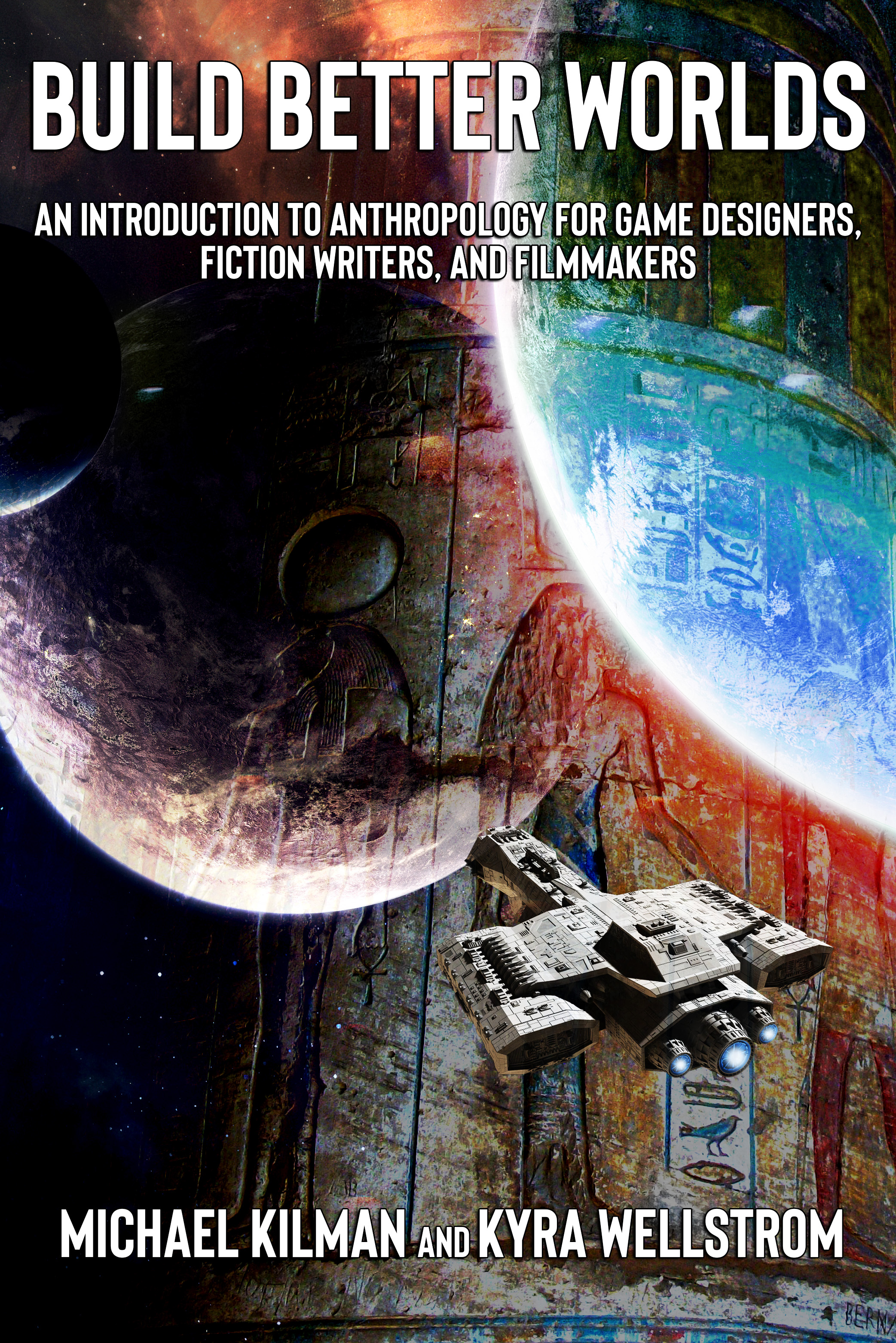
All this above by the way is why me and my colleague Kyra Wellstrom decided to sit down and work on a book, just for gamers, fiction writers, and filmmakers that teaches core concepts in Anthropology. The book is called, Build Better Worlds: An Introduction to Anthropology for Game Designers, Fiction Writers, and Filmmakers. We wanted to create a quick and easy guide for those who may not be able to hire an anthropologist for consulting on their projects and something that wouldn’t require you to dig through a bunch of textbooks to find answers. The book covers so many of the crucial elements of cultural systems because well, viewing the world from an anthropological viewpoint is a toolkit to better understand the how and why of culture and identity. With well over a century of anthropological research, we have a lot of answers and unique approaches to questions about culture. A little anthropology goes a long way.

Over the years I’ve been creating free resources for creatives to help them think about important questions in their fictional worlds, like cognitive mapping, notions of purity, the purpose of mythology, and more on my website. These resources include podcast episodes, recorded panels at cons, and a host of other tips and things to consider in your projects. I hope all of this helps you to build a better world.

Want to hire an anthropologist to consult on your game? Visit our webpage for more info.

Recorded Panel from SFAA 2022: Virtual Communities and Imaginary Worlds

This week I had the good fortune of chairing a panel at the Society for Applied Anthropology in Salt Lake City. My Fellow Panelists and I decided to stream it live on YouTube, where it will live for people to rewatch. The title of our panel was Virtual Communities and Imaginary Worlds. The panel was a lot of fun and it was an honor to be on the panel with two brilliant researchers.

You can watch the video here. You will find descriptions of each panelists talk and the timestamps for their presentations on the YouTube page. The last 20 minutes are Q&A.

My First Three Novels are Free till March 25th!


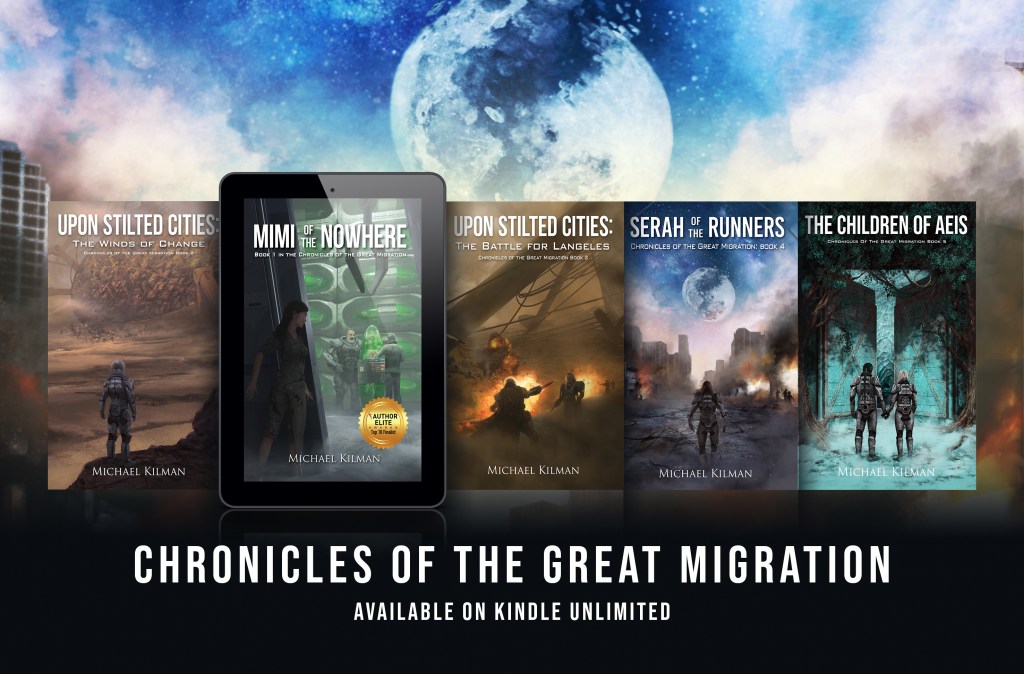
If you’ve read my posts and enjoy my work and haven’t checked out my book series, The Chronicles of the Great Migration, now is your chance to get the first 3 books in the series totally free until Friday March 25th. My books are leaving KU permanently and to celebrate, I thought I would run a free promotion for the series.

Mimi of the Nowhere, Upon Stilted Cities: The Winds of Change, and Upon Stilted Cities: The Battle for Langeles are totally free until this coming Friday.

Feel free to share the link to as many people as you like. And, if you do read the books, all I ask is you leave a honest review.

Terminal Decay: A Short Story in the Chronicles of the Great Migration

Recently I have decided to take some of my unpublished short stories in my sci-fi series, The Chronicles of the Great Migration and begin recording them and uploading them to YouTube. This will be an ongoing series with occasional releases that add to the world in which my story takes place.

The first entry in this series is titled Terminal Decay. In it:

A sentient satellite falls to earth and reflects on it’s life and the state of humanity, who is now relegated to living inside giant walking cities.

I hope you enjoy it!

Guest Spot on Beyond the Pen Podcast

Yesterday I went on the Beyond the Pen Podcast to talk about my co-written book Build Better Worlds: An Introduction to Anthropology for Game Designers, Fiction Writers and Filmmakers. I had fun talking to the two wonderful and dynamic hosts about our worldbuilding model, Orcs, and a little about my own writing process.

A Wintered Heart (Narrative Poem)

A Narrative poem titled A Wintered Heart. The artwork I created goes by the same title.

A Wintered Heart

A heart of winter, a wintered heart,

She lay quiet, the letter torn apart.

Her tears streamed, like rivers to the sea

And she tried to make bargains, and made endless pleas


An age had past, and cold crept in

No smiles, no warmth, and no new life could begin

The fresh dark tears of the next mornings song

Rose up her cheeks and sapped her strength so that she could not go on.


There she lay, no warmth and no light

A mistress of time, without the slightest delight,

Waited, she waited, with her breath deeply bated

But once the cold crept in, her permafrost was fated


An act so unkind had birthed her present dread

And soon, she had sores from her long days in bed

That act of greed, and a lust for glorious stone

Had left her heart broken, now widowed and alone


She sat there all winter, in endless defeat

She lay so still, mice nested at her feet.

And as the spring time came, the sun drew in

And pressed on her face, lighting her skin.


It planted a seed below her dread,

And as the sun shone that morning, she swung out of bed

Her pain, had nested rot in her heart

And she could not bear the thought of no more love

AND no more art


And so that day, she made her demands

At the canvas she threw red paint and smoked contraband

But from her mess, came a new kind of love

A love of life, hard won, from travels above


Her wintered heart still, held great sway,

But she got a little better with each passing day

And new mediums of art caught her attention,

And she found small victories with her creative affections


So she took one step, and then one more

And one day soon she found herself outside her front door

And found a new canvas to shed her grief,

Though when she spray painted her mural, the cops chased her, called her a liar and thief


Though she had not finished and ran and hide

She planted a new seed on the cities west side,

New murals sprung up in tangent with her own,

And she started a club, and though at first people groaned

About the “grafetti” and the murals, it became a place for many to call home.

And though many of the wealthy had made their gripes

Soon the color that flooded the city brought new life


Community gatherings of collaborative art,

Helped her to get a kind of political start

She found that art brought so much relief

To help people shed the weight of their tragedy and grief


She started centers all over her city

And named them Wintered Heart, to make light of her season long self-pity

For she knew that seeing the signs swinging above

She would always remember her long lost love

And She would honor him with every stroke of a brush

Or spray can, or clay, or charcoal or the burning of sagebrush


Her wintered heart had planted a seed of hope

In place where so many felt at the end of their rope

And they loved her, and taught her a new kind of joy

That’s found in friends hearts, without any romantic ploys


Winteredheart… they chanted her name,

With love and respect and begged her to enter the political game,

Soon after elected mayor she made the city her new project,

Used art, music, theater, and poetry to help them remember self-knowledge and respect


Through her acts, she brought great change,

For the city filled with color and it helped her to rearrange,

The divides and the differences that people perceive

And she taught them that it was, in each other they should believe.


Still her wintered heart held great sway,

For she barely forgot about her lost love for more than a day

Her heart still long for his eyes and his lips

Or to run her hand through his hair with her fingertips


But she smiled, and felt, the joy of all she’d done  

Many victories, in her community, she had won

And her heart was frozen but happy at the same time.

For even a Wintered Heart, can find new rhythm and new rhyme.

TuT! TuT! (Poetry)

My first piece of poetry for 2022. The artwork is a photo collage of several images. Enjoy!


TuT! TuT!

There is a theme to be found in the hollow cheeks of children with their wide vacant eyes. Their gaze fixed on concrete with only the occasional stare as you walk past, curious, and ever certain of the sins of the last age.

Their tear ducts are empty from an era of dispossession, obsession.

Tut tut

Their dreams are the broken glass you walk on with bare feet.  


I traverse hulking skeletons along their spine. In hidden highways I stride past the corridors of indifference. Saturated with knowing.

The markets make gamblers of us, casting bones in cups, with aged, choked knuckles, that align our lots with one unblinking eye.

Tut tut

Nerves splice open and raw, and in the light, only exposure


There was failure there in the corner, passing for a human, with arms outstretched in asking, looking for any reason to find two solid feet to stand on.

His teeth were clean but his thoughts were of days when the fix was fresh. When color nourished every pour. He is poorer for it.

Tut tut

I turn my head, not wanting to see a possible future.


You don’t hear the children play anymore between these concrete monsters, it is the commerce, the smell of flat wages, caffeinated mornings, and empty bottles in the evening, that drive us to wanting

And any hope of fresh air rots in our complacent cowardice

Tut tut

My stomach aches, the pill caused a hemorrhage again


There is a trembling in my pocket, and as I slide my hand against it, to quiet it’s nagging, I realized I’ve lost all the silence and stillness, maybe forever.  

I cannot adjourn from this court of chaos. There is no detachment, just desire.

Tut Tut

The engines scream in my ears as the gears grind for another cycle. My anger is but a thumbprint away.


What should you feel as you pace through passageway of the damned? All the sulfur stinging your eyes in between rows of unkind smiles, glaring at you like idiot passengers on a doomed train car.

Drink it in, for the fountain must not overflow and everyone’s stomach must be distended before the sun kisses the earth.

Tut Tut

The screams always die before my throat can catch them.


Grass, fields, pasture lay ahead, the eye of the storm. With shouting, rasping, chuckling fervor, I pass through the gates.

There are ducks lolling just out of the reach of so many unleashed hounds, and people pampered in concrete corners.

Tut Tut

Their grief has no knowledge here.


Sitting, I wait for the fall, for a stall, for anything. But I am left waiting and wasting, sitting in the center of the eye and staring at the hulks on my periphery. Knowing they are watching every minute of rest. Flailing me with their guilt.

They are always looming, day or night, they block out stars and dreams

Tut Tut

They were built with rage in mind, and a coffin around the corner.  


I hear it. A close, friendly conspiracy. Shoulders pressed together and whispers of the young for an honest days work. They stand, run, in search for sign in splashing creeks. They hunger for the chase of minnows between toes, with plastic cup in hand.

Dunking, wishing, smiles, even in the mistakes. In folly they fly past the skeletons, and into the forest to where they always belonged.

Caring not, to Tut Tut.

Yearning to breathe free, I breathe with them.

I stand.

I join them.

My hand will be my cup.

And it will fill with joy.