At MileHiCon This Weekend!

Hey everyone,
MHC50-FB-mo-640x360
If you are a fan of Science Fiction and in the Denver, Colorado area, you should definitely check this event out this weekend.

I have an author table and I will be on four different panels discussing science fiction in the classroom, writing strategies, how to create authentic fictional religions, and reading some of my humorous work. So, if you are in the area, come visit. If not, let me know what cons are in your area and maybe I will visit this next year!

The Battle for Langeles has begun!

The Kindle edition of book 3 in the Chronicles of the Great Migration is here. The Battle for Langeles has begun! 

Final_wip4

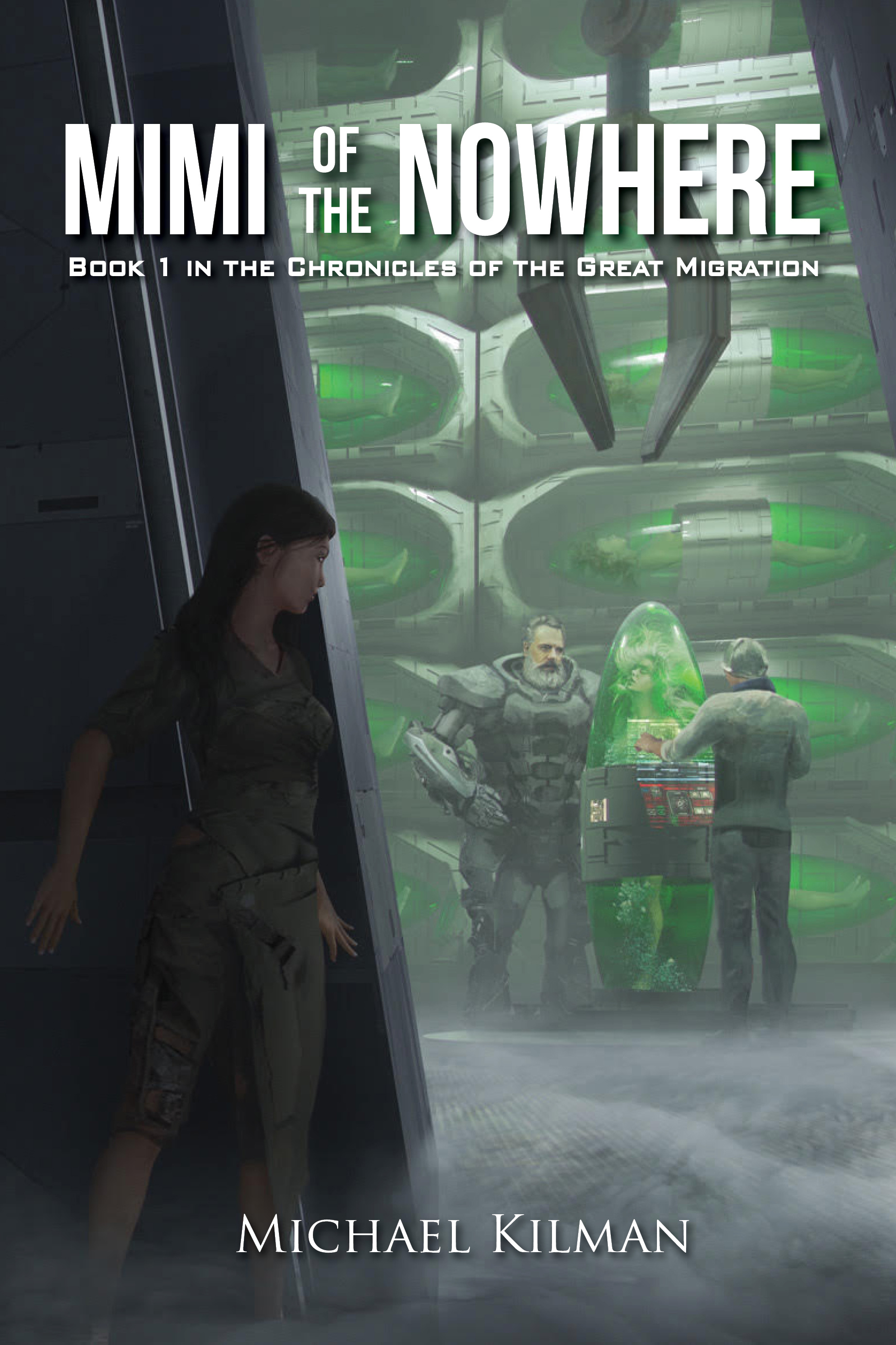
Book 3 in my Science Fiction series has arrived and to celebrate the first two books are on Kindle Countdown. Mimi of the Nowhere is only .99 cents for this week and Upon Stilted Cities: The Winds of Change is 2.99 for the Kindle edition.

A Synopsis for the 3rd book in my series: 

The Ruins of Langeles are up for grabs, and two walking cities stand on the brink of war.

Saud has arrived, Runner 17 is near death, the women of Nowhere are missing, and Roderick’s plot to destroy Manhatsten is underway. Never before has Manhatsten faced such danger. Enemies lurk both inside and outside the city, and there is an assassin in Daniels’s ranks.

It will take all the power of the sisters of the Order of the Eye to protect the city. But Alexa Turon has seen the future, and she knows what’s coming, she knows if they don’t do something, the city will fall. Can she and her new allies change the future or is too late to stop the inevitable?

Sample Chapters from all 3 of the first books are available here 

Read Chapter 2 of Battle for Langeles

USC_BFL_ebookcover (1)

Want to learn the fate of Runner 17 after the events of The Winds of Change? Well, here you go. So, that being said, major major spoilers for Book 1 and 2 here. If you haven’t read the first two novels yet, you probably won’t understand what’s going on here.

Oh, and in case you missed it, here’s Chapter 1: The Queen of Saud

The Battle for Langeles is out October 17th!


Here it is! Warning Major Spoilers Ahead in This Chapter


Chapter 2

Dreams of a Runner


Submission. Like a toy truck pulling a horse trailer, there was no way forward. The wound, open again, gushed. His eyes betrayed him, opening and closing and opening again. He marked the number of breaths, acknowledging that there were only a few more left. The only smell, that of iron and blood.

He released his helmet. It made no difference now, the suit no longer filtered air, was no longer keeping him cool. The fever burned, white-hot pulses through his body. He wanted open air during his death.

A long shadow cast over him. It caught the heat of the air and mingled, swirling and changing. Death was here. It had come in person. Of course, it would. He blinked and tried to focus. It took everything he had. He was deaf to all things, blind to most, and felt the dedication to his idol of persistence wane.

He whispered, “Persist above all…” he laughed and coughed, devolving into a choking, rasping, white-hot pain in his gut. Half of a groan escaped his lips; the other half died in mingled pain.

But, he had to tell Daniels. It was the only thing he was holding on to.

Then a tapping, the shadow pressed a heel against him, jostling his body. He was limp, only able to stare up at the semi-shielded face of the foot’s owner.

A moment of audio pierced the silence, but just barely.

“Are you alive, alive, alive, alive?” The words echoed.

What the Runner said next was garbled liquid. He thought it might be a female voice, but he wasn’t sure. Maybe the bastards were right; maybe it was Gaia. Maybe Gaia was Death, the reaper of all things.

Then the face in the shadow illuminated. A hallucination probably, but a strange one. It was the young girl, the inspector from the docks… Jade. No, not Jade, not this time. Her name was something else this time around.

“Hang on. Help was on the way.” The voice was different.

He blinked, and the face of the young girl was gone, replaced with another female Runner. Her face was weather-worn and aged. He didn’t recognize her but wondered how he could confuse Alexa and this woman.

Another shadow approached. And another. And another. Many stood above him now. They circled like conspirators in the night that held their daggers, ready to plunge him into his ultimate end. Then they were angels greeting him into the gates of heaven or demons into the gates of hell. Runner 17 couldn’t be sure, and it took so much effort to make a decision now, a decision that ultimately wasn’t important. With all of his effort, his eyes closed; they stayed closed for a long time.


His eyes are opening to a thick dark fog. It is a hot evening, and he glances at his alarm clock. It is 4 a.m. He looks at the calendar and recognizes the date: October 17th. The date seems somehow familiar, but he can’t trace it. He rolls up into a sitting position and tries to clear the sleep out of his eyes. It will not leave. He stands up and glances around the room. In the corner, in a makeshift bed, sleeps his son Joseph. He can tell his son is sleeping; his breathing is heavy, and there is no movement.

The only sound around is the rustling of leaves in the wind.

A moment of lucidity strikes him. Had it all been a dream? A nightmare? Had all that running around in that heavy suit in the middle of barren wasteland been a mere construct of his mind? Had he dreamt of a life so many centuries long in just a few hours?

Out of instinct, he reaches down towards his chest where the puncture wound in the dream had been. Relief. Already the images and sounds of the dream are fading.

Joseph is turning over; he is still sleeping, the blankets tangled between his legs. He is attempting to kick them off him but fails. Joseph never did like being covered. His breathing deepens.

The wind’s song is interrupted.

Thud, Thud.

It is a far-off noise, but a potent one. Something urgent, some knowledge of what that noise is stirring in him.

Thud.

There again, something internal is screaming at him, begging him to remember the information from the vault in his mind. He is peering out the window of a shabby old house. He is looking for the source of the noise. There is nothing but empty silence, a silence filled with potential terror and fright. He doesn’t hear any animal noises, and something about that is bothering him. Awareness trickles in. Then like a dam bursting, the flood. All the knowledge of the origin of the noise is consuming him.

Thud, Thud… Thud, Thud, Thud.

It is a whole series of noises, the sound of the air compressing and releasing from somewhere high up, from somewhere above the atmosphere. But the noises are still far off. He knows that for certain; if those noises are up close, you can hear the sound of metal and glass and concrete blasting into a billion pieces.

He knows what he must do. He needs to get Joseph to the underground shelter. A sense of purpose fills him, makes him whole again, despite the loss of his wife. They must get to shelter. It was what she would have wanted.

The shelter is only a few blocks away, but he knows that a few blocks might as well be a thousand miles when the High Altitude Drones (or the H.A.D.) rain death down on your city. For a brief moment, he is wondering how the people of China feel when the American H.A.D.s are demolishing their city. Do they feel the same sense of paralyzing fear, the same utter terror as the thudding and the sound of small explosions creep ever closer? Do they look to the sky and when they see a bird, do they feel a wave of terror? It must be so, for pain raining from the sky invokes a universal agony.

“Joseph, the H.A.D., we have to go now.” He tries to keep his voice steady, but like his body, it was shaking.

He is waking his son violently. Louder now, “Wake up. Wake up. We have to get out of here.”

Joseph’s eyes are opening to the sound of his panicking father’s voice, and then he hears the thuds. Every kid in the world knows this noise now, they hear recordings of it, see footage on the internet, and it is the stuff of every child’s nightmares. It is the subject of all great 6-year-olds’ crayoned masterpieces. Joseph is only 6, but he has the comprehension of a battle-hardened veteran and the same post-traumatic stress. Childhood and play are a thing long in the past, to a time before climate refugees, before world war, before the billions of tiny mistakes that were coalescing into one source of ultimate destruction of every human being on the planet.

He jumps up. “Dad, where are we going?” His voice is ragged and tired. The child-like whine is still audible. “The shelter is several blocks away.”

“It’s okay Joseph, as long as we move quickly, we’ll be okay. The drones are still far off.”

Joseph doesn’t argue, but he sees his father’s terror frozen on his face. Joseph has already lost his mother to the H.A.D., and instinctively his father knows that Joseph thinks he may lose his dad as well.

“It will be alright Joey, let’s go, the shelters are shielded, they’ll keep us safe.”

The shelters aren’t really shielded, but they are hundreds of feet below the ground, where the space drones cannot reach. Once you enter the shelters, already a dozen meters below the surface, you climb into one of a series of elevators that take you a hundred meters lower. Once you exit the elevator, you walk or run for nearly a kilometer before coming to the shelter entrance. The shelters are a few hundred meters in size and have several dozen rooms. Each shelter can accommodate a few thousand people for as long as a month. Every city has a few shelters, but the need for them is gradually decreasing as the populations across the planet fall under the weight of the H.A.D. and the endless wave of natural disasters.

Thud, Smash, Thud, Smash, Slam, Crash.

A cacophony of noise takes hold of the father and his son. The noises are intermixed with screams, shouts, and hard slaps of sneakers on concrete.

Joseph’s eyes widen with fear, and his father picks him up, grabs only a picture of his mother and runs out the door. He is holding the boy close and silently vows that nothing will make him let his child go. He will not lose Joey, too.

He has come so far since he quit his stockbroker position, and Joseph has changed his life in the blink of an eye. When he learned that Jade was pregnant, he was angry at first, but once he saw the ultrasound, he wept healing tears. This child was his medicine; he was what is saving his soul from monstrous greed and the pain of his mistakes. He is grateful for the change, but now he is in danger of losing everything.

Others are running toward the shelter. The sound of their footfalls are masked by the onslaught of thudding and the sound of breaking steel and glass as the devastation migrates across the city.

Some have children, some have companions, but so many are alone now. Loss is a trend. Humanity is crumbling under the weight of the Third World War. A billion are dead already.

The H.A.D. hits the building behind them and to the left. An energy pulse flattens a building, and the force of the explosion knocks everyone within a few hundred meters to the ground; they are scrambling to stand. Dogs on ice. Fresh scrapes and bruises mark their body and blood is trickling down 17’s left cheek.

17 is in his EnViro suit again. He picks himself up off the hard cement and then lifts Joseph and continues running for the shelter. Joseph doesn’t seem to notice the change in his father’s attire. Terror is with him. A fresh streak of urine is making its way down the front of the boy’s pants and the front of 17’s EnViro suit. They are twins in this way, variations on a theme. Divided only by time.

They run hard, and they make it to the entrance to the shelter. The metal door swings open and the pair enters one of the elevators. The door closes. There is safety for a single breath. At that moment, the thud echoes directly overhead, even through the metal and earth. Time freezes and 17 knows exactly what is happening. He is staring long and hard at little Joey. He wants to tell the boy so much; he wants to trade places with him. 17 knows how this will end. He will wake up several days from now in the hospital, but Joseph will not wake. He will live a little longer in a coma, but one night he will simply fade.

In slow motion, the pressure from the energy blast pushes the elevator down. 17 can hear the cables snapping, the sharp metallic clicking of each one giving way; he hears the metal above bending to the will of the H.A.D. He feels his body descending faster from the force of the blast. He is reaching, grasping ever so slowly out to Joseph, grabbing his son and pulling him close. This time he will change it, this time it will be different, this time the little boy will live, and the father will die. But it is futile. It is a memory. Unchangeable.

17 rages. He is screaming at the top of his lungs in his EnViro Suit, but no one hears him, not even Joseph. His screams cannot penetrate the protective insulation of the helmet. The world tinges red, red like his rage, red like a garment, red like a veil.

His suit is a prison, a curse, a crucifixion, like the lashes felt by his African ancestors in an age of slavery. But his bondage is eternal; he cannot die. Only the unending persists. This is his punishment for participating in the greed that brought the world to its knees.

Tears of red stream down the dark skin of his cheeks.

He must break the cycle. One day soon, he will give his life to try and do so. He must do his part.


3.

17 woke in a medical alcove. The fluid drained. If he had been able to, he would scream, but still, the stem-cell-based fluid was in his lungs, and he choked and coughed. It had been a long time since his semi-dream state returned him to that part of his history. Perhaps it was the bodies outside Langeles that reminded him of his own terrible loss.

The doctor pressed a button that lifted the alcove to a 45-degree angle. His lab coat was a novelty these days. Doctors were all but extinct with the Alcove, but a few still studied the medical sciences. The doctor had a well-manicured beard of brown and red and large, owl-like eyes.

“So you return to the land of the living, do you? Daniels is right; you are unkillable.”

17 grunted. He found the words distasteful. His long life felt like a curse. What was his purpose? Why the hell was he still alive after all this time? He had changed his life, given up the ways of greed and lust. He had donated most of his many millions to the Climate Refugee Alliance, and his reward? His reward was losing both his wife and son. What purpose could he possibly have now? The 1300-year-old wound was open again for the first time in centuries. It throbbed with every beat of his heart.

He pushed it all back down. All of it was for another day, another time, he couldn’t dwell on the pain; dwelling on the pain is how he had ended up a Runner in the first place. His choices in the first days of migration were born in grief. Addiction consumed him in those days, and he had hurt so many who stood between him and his private narcotic oblivion.

17 glanced around the room. The other alcoves were empty. It was a good sign he wasn’t too late to do something. He thought of Langeles, of that crazy female runner, of her mention of the trap and the Children of Gaia, and suddenly he had one burning need.

“I have to speak with Daniels immediately.”

“Runner 17, do you know how rare it is for anyone to survive with a ruptured EnViro suit out in the Barrens in the middle of the day? Not to mention your open wound and significant blood loss? Do you know how many toxins are flowing through your blood right now? It’s going to take days in the alcove to restore your body properly. You cannot get out of this alcove.”

“Then why did you revive me?”

“To monitor your brainwave activity and nerve responses. They were functionating in a way I have never seen before, not even with you. Something is going on with that chip in the base of your skull, and I was concerned that I would not be able to bring you back to full consciousness. But you will be returning to the alcove shortly now that I see you are your usual difficult self.”

“Dammit Doc, none of that matters. I need to see Daniels, now. The entire city is in danger. If I can’t get out, bring him down here.”

The doctor sighed. “Daniels is very busy, what with Saud so close and those Langeles ruins.”

“This is about that, it’s important. I need to see him right now.”

“I will bring someone down from security to relay your message.”

“NO!,” 17 shouted. It caused the doctor to jump. “I’ll only speak with Daniels.”

The memory of the female Runner screwing up and slipping info about the spies hidden in the city was fresh in his mind. Daniels was the only one he could trust. He didn’t like the grumpy prick, but there was no way in hell the cranky bastard would ever betray the city. In that fleeting moment, it occurred to him, that despite everything else, he and Daniels had that much in common. Perhaps Daniels had his own curse, his own debt to pay. The AI had told him he too had a lifelong assignment.

“Very well, I’ll request Daniels’ presence, but I have to say I doubt he would come down here. He doesn’t like you very much, you know.”

17 laughed a little, “What, you don’t think I know that? You think I’m stupid? Daniels doesn’t like anyone. Just get him down here, tell him the safety of the city depends on the information I have, and it’s for his ears only.”

The doctor, standing tall over 17’s medical-grade alcove, eyed him carefully. 17 could tell that he was trying to gauge the seriousness of his request, trying to determine if 17 was playing a game. 17 locked eyes with the man and did not break his gaze. Then he saw the doctor’s face relax, it was only slight, but it was enough. After only a few more moments of hesitation, he went to the other room to send the transmission up to security.

17 shivered, why had the memory resurfaced now? He had always tried to keep himself from thinking about that awful night with his son, but every once in a while, it crept up on him. The H.A.D. had wiped out an entire section of the city that night, and only a few hundred had survived. It was an echo of the American bombing of Dresden during the Second World War, a repeat of history. There were no nukes used during the Third World War, at least not on Earth, but except for radiation damage, the H.A.D. were just as terrible.

Jade, his loving wife, had met him when he was in the midst of his wild nightly orgies. He had purchased an alcove with his extensive wealth and used it to lure women up to his large apartment. Their courtship was long, and despite her disgust at the way he had treated women, she befriended him. For months they spoke as friends, all the while eyeing one another, feeling their closeness grow. Then, one night, they found themselves in each other’s arms. 17 had vowed to love her then, and when they found out soon after that she was pregnant, he decided to give up everything and retire from his life to spend his days raising Joseph and trying to put right what he had helped make wrong.

Then the Third World War began. The Larger cities had prepared. Some even had anti-H.A.D. shielding. The island of Manhatten was already elevated and employed an early form of the EnViro shield to protect it from the massive floods that had taken over most of the coast. 17 had left Manhatten, though he never did sell his apartment, for the suburbs. Time and again he had told himself if he had only stayed in the city with Jade and Joseph, they may have all made it to Migration and 17 may have never become a Runner. But they had chosen to head west, toward one of the smaller towns in upstate New York. They wanted a fresh start. If only he had been able to bring Joseph or Jade to an alcove, but the military had confiscated all of them for use for their soldiers, and only military hospitals had access.

His injuries from that night were absolute. He didn’t know what the doctors had done to him to keep him alive, but the elevator incident was the first time he had survived death. Since then, he had survived countless close shaves, always managing to survive where others didn’t. But why? It wasn’t just that he was lucky, he seemed to be able to survive wounds most others wouldn’t.

He reached for the back of his neck and touched the chip for a moment. The AI was in there, and he wished, not for the first time, that he could query it outside of the suit. In truth, the AI was his only consistent companion for the long centuries.

Something in his memory flashed for a moment; the face of Dr. Solidsworth, the crazy old architect. He was in the hospital in Manhattan when he recovered from the H.A.D. attack. Why was his face standing out all of a sudden? Dozens of doctors had seen him during that time. There was something about a form, about permission, about an experiment. Something about the fact that 17 wasn’t going to make it. They had done something to him, what was it?


4.


A gruff voice echoed just outside of the hallway. Daniels and the Doctor entered.

“What the hell happened to him?” Daniels asked.

“He was hanging on to the edge of life. Parts of his EnViro suit had melted and fused with his flesh. There was no way to remove the suit without repairing the tissue damage first. Once again, and as I say all too often, Runner 17 is lucky to be alive.”

Daniel’s expression didn’t change, but his gaze drifted to 17. The alcove was filling with its healing solution. 17 would be under in a few minutes, unless they paused the procedure.

“I hear you are refusing to talk to anyone but me. What the hell do you want?”

17 was direct and blunt, “Ask everyone else to leave. We can’t trust anyone here.”

Daniels considered. What could 17 have to say to him that would require privacy? He recalled Patton’s corpse and the attempt on his life. Perhaps 17 wasn’t full of shit; maybe he had another piece of the puzzle.

Without turning his head, without breaking his gaze with 17, Daniels said. “You heard him. Get out.”

The Doctor didn’t argue and left the room quickly, latching a few cupboards on his way out. The door shut behind him with an audible click, indicating the lock was secure.

“AI, secure privacy in this space.”

“This room is now secure.”

“Now what the hell do you want?” Daniels hoped he had something to contribute. Otherwise, he might be tempted to shock his ass for a good long minute.

17’s voice was a bit hoarse. “It’s about a group that calls themselves the Children of Gaia. They are the ones responsible for Langeles, and they are probably planning an attack now.”

Daniels ground his jaw. “Where did this information come from?” Daniels found himself a chair and rested his tired body. He’d been on the clock for 29 straight hours. If he didn’t get some rest soon, he’d start making mistakes. A few hours in an alcove would probably do the trick, the body revitalized nearly twice as fast inside one.

17 told Daniels everything about his outing. He started with the piles of bodies in the ruins of Langeles. He told Daniels of the encounter with ‘Akif of the Rih and how he apparently was on some kind of hit list. He detailed his encounter with the Runner from the Children of Gaia, the bits and pieces he remembered from their adventure on that storm sail and about her claim that the ruins of Langeles were nothing more than a trap. Daniels kept his expression flat the entire time.

“You’re not lying to me, are you, Runner?” Daniels demanded.

“What possible motivation do I have to lie?”

“Spite, bitterness, a general dislike for me and the city, the usual shit.”

“If that were the case, I wouldn’t tell you shit; I would let it all burn. But Daniels… the children in the ruins,” 17 swallowed hard, and his voice shook. Daniels could see the anguish in the man’s face. “I can’t let that happen to the children in this city. I’ve… it’s… Fuck, they are monsters, Daniels. All those people, just… all those people.”

Daniels unclenched his jaw, and for the first time, he saw something almost… human, about 17.

“Listen… I…”

17’s voice lost all weakness. Rage replaced it. “Let me back out there. Let me track them down. I can do it. I can put a stop to this insanity. Arm me and let me out there. With a combat suit, I promise I will kill that bitch and every other member of those cultists.”

The anger was wild in 17, and Daniels felt a hint of nervousness. He had seen 17 in combat a few times, he was fierce and powerful, but he wasn’t sure he had ever seen his eyes flare with white-hot rage before. Daniels saw a deep passion in him and recognized that passion in himself. He was certain at that moment that 17 had lost something or someone, that the ruins had reminded him of. 17 wanted vengeance, he was sure of it.

“We both know you need to heal before we can even consider something like that. Besides, sending you out blind into the Barrens is no way to stop these assholes. I… have… some information as well…”

Daniels looked into 17’s eyes for a moment. He searched for a reason to trust 17. His guts told him that this was a man he could trust, but his years in security and dealing with the Runnercore and 17, in particular, suggested that he revoke that trust. 17 deserved the truth, he deserved to know what was happening. If his information proved correct, 17 might have just saved the entire city from a terrible trap. The real question, of course, was convincing the Senate. For that, they needed more information, and for that, he needed 17. He might even have the Runner testify to the Senate.

Only two Runners had ever testified before the Senate in the past, and they didn’t believe either. The Senate knew that many Runners were their enemies, and some of them held personal vendettas against either themselves or the government that had sentenced them to a life in a Runnercore. But if there was a trap, if there was a serious danger to the city, and Daniels was convinced there was, then they needed some other evidence.

Daniels stood, went to the control panel for the alcove and paused 17’s submersion. Then he sat back down.

“There have been some unusual events around here as well,” said Daniels.

Daniels told 17 of the murder and the strange ritualistic paraphernalia surrounding the body. He told him of his testimony to the Senate and the heightened state of security. He mentioned that Senator Lightfoot had some knowledge of the Children of Gaia in history and so they did appear to be a real organization.

When Daniels finished, neither of them spoke for a long few minutes.

“You see, Daniels, the Children of Gaia are already here. They’re setting the trap. We have to stop them.”

“We need more intel, the Senate won’t buy any of this based on the word of a Runner, and you know that.”

“Then let me go get some.”

“Not yet. Other things are happening. We just received a request for a vid screen meeting with Saud. It’s only a few hours away. After that meeting, I’ll know a lot more.”

“There’s something else. I forgot to mention it before, but somehow it seems important too. The AI in my suit, it’s… well, it’s sentient,” said 17.

Daniels shot a glance upward and stared deep into the lines and scars of 17’s face. “Something strange is happening with the city AI as well. None of the engineers have been able to figure out what’s going on.”

“It’s alive, that’s what’s going on.”

“It’s a machine; it can’t be alive. I’m sure it’s the Children of Gaia. They are messing with our computers.”

Daniels ground his jaw again. This wasn’t some science fiction novel about machines; this was the real world. In the real world, AI could have intelligence to a great degree, but being self-aware is something else entirely; centuries of experiments had suggested that self-awareness was not possible in machines.

“My AI saved my life, it helped me to combat that female Runner. Why in the world would the Children of Gaia want that?”

“Maybe they want you to go back to the city. Maybe they want you to convince us there is some trap. Maybe they have something else in mind.”

“You don’t spend much time out there, so you don’t know what it’s like. As much as that damn AI irritates the shit out of me, I respect it. It has saved me countless times. I don’t think this is something the Children of Gaia would want or expect. In so many ways, they are against technology. Their only desire to use it is to find ways to destroy us. Creating a fully aware Artificial Intelligence doesn’t seem in their best interest.”

“You’re assuming that the AI has become truly aware and it’s not some trick.”

“I don’t know how you fake something like true awareness. Do you?”

Daniels was silent. He thought back on his recent interactions with the AI. The only thing he knew for sure is that he didn’t trust the damn thing now. He had hated it before, but now there was a tinge of… what? Was it fear? No, it was just a damn machine. It couldn’t hurt anyone, but he knew that was a lie. The AI controlled an enormous portion of the city systems. Sure, people could do a lot manually, but that was assuming there were enough human beings trained in every single little task, and Daniel’s wasn’t sure that was the case anymore.

Daniels stood and walked to the control panel.

“I have some people monitoring everything the AI does. For now, we should only be concerned with the Children of Gaia. Look… I’ll come back and let you know what happens with the Senate. For now, get some rest and heal up. I have a feeling we’ll need you soon.”

Daniels didn’t give 17 the chance to respond. He simply pressed the button to close the medical alcove, and 17’s body submerged in the fluid.

First Chapter of Book 3 Battle for Langeles

Final_wip4I am very happy to share the very first chapter from Book 3 of the Chronicles of the Great Migration. Upon Stilted Cities: The Battle for Langeles picks up right where The Winds of Change left off. There are some minor spoilers in here but nothing major. Still, I would recommend having read the first two books of the series before you dive in.

The Battle for Langeles is out October 17th!

Here it is! Minor Spoilers Ahead!

Chapter 1

The Queen of Saud


Dust swirled with each impact. The impressions of twelve massive feet left lingering reminders of a migration, at least until a sandstorm refreshed the path. Microtremors webbed outward along the route. Long ago, cities left cracks and unstable earth in their wake. Many of the great caves below the surface had collapsed under the weight of the cities. But now, after twelve hundred years, most of the Earth’s soil was compressed. The hardpan spread deep into the Earth, a virus of time and pressure.

The giant hulking ark–more mountain than moving city–hesitated in its movement, and the shimmer of the angry sun reflected off the surface of the EnViro shield that protected it. The shield’s ripple of energy cast brief reflections of blinding light, like the surface of a lake in the summer sun.

The legs of the city of Saud slowed their pace. Often, stopping was a long process. From a distance, it was hypnotic. The precisely calculated trajectory of the legs moved in a kind of rhythmic orgy of twelve mingling lovers. Minutes passed. The legs slowed until they moved like molasses. A changing of tides. Then, it became difficult to tell if they were moving at all. They were. At last, the city groaned like a dying giant as the bedrock upon the legs froze with one stabilizing halt. The final foot struck the earth with one last puff of dust.

Two cities stood in opposition. A clear day marked the event. To the west, Manhatsten. To the east, Saud. Nestled between them lay the ruins of the once great Langeles, the victim of the Children of Gaia. Only thirty-four kilometers marked the space between the great moving mountains.


2.


A holographic map projected from the center of the table. It displayed the two cities and outlines of the larger portions of fallen Langeles. Red dots marked the surface of the map, indicating known enemy positions.  Around the edge of the table, many fingers clenched with knuckles white. All eyes were watchful now that Saud had halted migration.

“You are sure, Saud, that this is the best defensive position?” The Queen asked the city AI.

“Yes, Your Majesty. The city of Manhatsten must reposition 6 kilometers to the northeast before it has the most optimal conditions for an attack.”

Queen Sa’dah Karim nodded slowly. She reached up, pushing her hair behind her ears, and adjusted her silver hijab. Half-moon crescents shimmered on her head covering and reflected in her gray-green eyes. Her face was hard with sharp angles, and a thin scar ran from her left ear to her left cheek. She was short but wide, her width all muscle.

“Saud, how many Runners has Manhatsten deployed?” The queen’s voice was deep and commanding.

“Your Majesty, based on both long-range sensors and reports by your Rih, I estimate that the city has deployed 53 Runners. According to past patterns, it is likely that Manhatsten will deploy several dozen more in the next few hours.”

“So this map is up to date?”

“Yes, Your Majesty,” replied the AI

Sa’dah turned her face up toward her council. “So, you see, it appears that as I had suggested yesterday morning, Manhatsten will attempt to claim Langeles for themselves.”

“Have you contacted their Senate?” asked Abdul Aziz.

Aziz was her most trusted advisor; he was one of the few amongst the city’s Uppers that supported her during the coup, once briefly Rih himself, he was a decent warrior. After a failed experiment with democracy, some of the elite in Saud had wanted a return to traditional Bedouin values, they had thought that the old conservative ways were necessary for stability, but Sa’dah had come to power, and with the support of the Rih, she was able to hold it. It was only because the queen had been first amongst the Rih, considered the greatest warrior, undefeated in all challenges.

“No Aziz, I have not yet contacted the leaders of Manhatsten, I prefer to watch my opponents for some time before I act. In patience comes wisdom.”

“And yet while you wait, Your Majesty, Manhatsten’s Runners are gathering intelligence and data that would allow them to have the upper hand,” said Councilman Rabah Nejem.

Other monarchs may not have appreciated Nejem’s tone or comment, but Sa’dah believed in advisors that were much more than just yes-men. She wanted men and women who would argue with all her actions, challenge her leadership and call her decisions into question. Nejem was one such council member. Nejem, like her, was well-known among the Rih. Both had proven excellent warriors, but it was Sa’dah who had turned out to be the better leader and thus became the leader of the Rih and the new monarch of Saud.

“There is a time to act, Nejem. You know as well as I do that we must wait for the conditions to be correct. We should not display the same arrogance of those in Manhatsten. The storms could turn and descend on this place at any moment.”

“But Sa’dah, why are you waiting so long to see if Manhatsten contacts us first? Nejem is right, the longer we wait, the more intelligence Manhatsten will have on the situation,” said Fatima.

Fatima was the only female member of her council. She was a tall, thin woman who controlled the majority of commerce in the city. Most of the Uppers had lost their power in the coup. Fatima had survived because she had provided financial support to Sa’dah and the Rih during their rebellion. She dressed in a full burka, as the Upper women of the city sometimes did. Only her brown eyes were visible.

“Saud.” Sa’dah called the city’s AI, “Please display the satellite image taken at noon of April 3rd.” The AI pulled an image, and Sa’dah continued. “We were lucky enough to have one of our three remaining satellites over that region during the fall of Langeles.”

The fuzzy image showed Langeles, still intact, but stationary. The billowing cloud of smoke issuing from its underbelly suggested that it had deployed its drill. On several sides of the city were small, barely recognizable dots. Sa’dah zoomed in closer on the dots for the rest of her council members to see.

“Are those Duggers outside of Langeles?” asked Walif Saab.

Sa’dah didn’t respond, “Saud, display the image from 12:20 p.m. of that same day.”

The dots had moved closer to Langeles in this image; it was clear now they were surrounding the city in a semi-circle. There was one large, gaping hole in the semi-circle, and as Sa’dah zoomed in on the empty region, something specific, something that looked like combat filled the empty space. It looked like Runners engaged in hand-to-hand combat, but even zoomed in, the images were tiny and indistinct.

“Saud, skip ahead to 2:30 p.m.”

The image was of Langeles, now lying broken on the earth. Part of the city was tipped up towards the sky, like a Frisbee lying awkwardly against a sand castle on a beach. Smoke billowed towards the satellite, obscuring some of the view. Several of the dots that Walif had thought were Duggers were moving further away from the city, some lay stationary with the tiniest hint of a wisp of smoke.

“Saud, will you please tell the council how far Manhatsten is from Langeles at this particular time?”

“Your Majesty, Council members, at the moment that this image was taken, Manhatsten was approximately 200 kilometers away from Langeles.”

“So, what are you suggesting, Sa’dah? That Manhatsten destroyed Langeles?” asked Nejem.

“Saud. Tell the council what you had told me when I asked this question.”

“Of course, Your Majesty. Council members, please consider the following image taken during the attack.”

The satellite image revealed a massive sandstorm between Manhatsten and Langeles. The dark blot between the cities was confirmation for the council that it would have been nearly impossible for Manhatsten to launch a coordinated attack from that distance with the massive amounts of interference in communications.

“So what caused Langeles to fall, then?” asked Aziz.

“The AI and I have consulted a great deal on this matter. I am concerned that we may be dealing with the Children of Gaia.”

“Impossible,” Nejem scoffed. “The Children of Gaia are not capable of such a large-scale attack. The city’s defense alone would have been more than a match for a handful of those wretched heathens. I think the important question is why Manhatsten was so close to Langeles? How often are cities in that close of a proximity?”

Sa’dah said, “Based on the position of the storm, our AI doesn’t think Manhatsten even knew Langeles was there. But, there is more, Nejem. There is a radioactive signature that suggests that several atomic weapons were detonated.”

“But no one has seen or used nukes in a thousand years,” said Walif.

“And that, that is why we have not yet made contact. Though it seems much more likely that it was, in fact, the Children of Gaia, if there is even the slightest chance that Manhatsten has nuclear weapons, we must be patient. I have dispatched a dozen Rih. They will bring back as much intelligence and information as possible, without arousing Manhatsten’s suspicions. ‘Akif and his team were already briefed on this intelligence and are prepared to fight the Children of Gaia, if necessary.”

“When, then, should we make contact?” asked Fatima.

“I am waiting on one final report from ‘Akif. Then we will make our move. Do any of you have any additional input or insights into this information?”

The four council members looked at one another. The fall of a city was such a rare event that there was no simple formula for proper conduct. When Mex had fallen, Saud had been in the middle of the Haj, across the Atlantic, and had only heard of its fate through a rare trade deal with Lundon.

“It is clear that your rule is one of wisdom, Your Majesty. I apologize for my earlier comments,” said Nejem.

“Nejem, my brother, your comments are always welcome here, whether I like them or not. If I had not wanted your strong will on this council, I would not have appointed you to this seat. You always served me faithfully when I led the Rih, as you do now.”

“Your Majesty,” said Aziz. “Have you considered the possibility that Langeles is a trap? That perhaps the Children of Gaia are out there waiting with a plan to destroy both Manhatsten and Saud? That they have nukes and are more than capable of crippling both of us?”

Sa’dah was silent. She reached up and traced the edge of her scar. A gift from one of the Children of Gaia in their attempt to destroy Saud decades earlier.

In truth, she had not considered that. It was true that in the past, the Children of Gaia had displayed a great deal of treachery, they were notorious for using cowardly techniques to attack and ambush their enemies, and there was nothing less honorable and more cowardly than using nuclear weapons. Even during the third world war, nukes had been avoided for fear of total environmental collapse.

Sa’dah said, “Aziz, what would I do without you? This thought had not occurred to me. It is vital that the city remain alert.”

“Your Majesty, I suggest we put the entirety of the Rih on standby,” said Nejem.

“I agree, Nejem, please see to that. Oh, and the moment that ‘Akif has returned, please have him report in. I wish to speak with him about what he saw out there. Not a word of any of this to anyone outside this council chamber. We have found spies of the Children of Gaia in Saud before, and we should remain cautious in case this is a trap.”

“Your Majesty,” Aziz began, “I feel strongly that we should contact Manhatsten immediately, that we should share with them our satellite images and other information. We do not know what kind of information Manhatsten has on the Children of Gaia; perhaps they uncovered something we’ve missed.”

“And if it is Manhatsten’s treachery that destroyed Langeles?” asked Fatima.

“The satellite evidence and Manhatsten’s behavior seems to indicate that they are just as cautious as we are,” replied Aziz.

“They are deploying their Runners in large numbers; doesn’t that suggest preparation for battle?” asked Nejem.

The queen traced her scar for a moment. She felt its sharp ridges, and the memory of the smell of the air seeping in through her cracked helmet where the blade had entered awoke in her nostrils. She remembered the taste of blood and the rage that kept her alive that day.

All watched her.
“While it is true that Manhatsten could be in preparation for battle, I am sure that our Rih and our defenses could easily handle a straightforward attack. It is this trap that Aziz speaks of that concerns me. If Manhatsten falls and we survive, other cities may see us as a threat. You are all aware that several other city-nations would still like to see Saud wiped off the face of the Earth. While it would be possible for the Rih and Saud to hold off against any one city, if several cities decided that we were a threat it is unlikely that we would survive. We must consider the long-term implications of these events, and not just what problem sits before us.”

“Your Majesty, I know the resource cost is high, but might I suggest deploying several Duggers at key points surrounding Langeles? We can use them as communication beacons and track any movement within the city as well as monitor Manhatsten,” said Nejem.

“An excellent suggestion, Nejem. Walif, will you see it done?”

“Of course, Your Majesty, I live to serve.”

“Council members. I agree with Aziz. After I speak with ‘Akif, I will contact Manhatsten. If all goes well, I may consider sending a small delegation to their city to discuss the situation at hand. It is my hope that we can negotiate over the salvage and that we can prepare ourselves in the event of an attack from the Children of Gaia. Do I have any volunteers for such a delegation?”

Abdul Aziz was the first to stand and volunteer. Soon after, Raba Nejem and Fatima Norba stood.

“Excellent. Our meeting is adjourned.”

The council members rose from their seats and left the room. Their long robes dragged against the floor in hissing echoes, fluttering through the room as if a thousand butterflies were flapping their wings at once.

Sa’dah turned and glanced out the window across the landscape. There looming in the distance was Manhatsten, a mountain on legs looming over Langeles. She wondered if her Rih could stand against them. After all, Manhatsten was home to the fabled Runner 17, who, it was rumored, had single-handedly entered Mex and somehow managed to deactivate their EnViro shield. ‘Akif had orders if he encountered that man. She would sleep better at night knowing he was out of the picture. Perhaps, if she weren’t queen, she would seek him out herself.

She frowned. Was 17 the problem, though? Or did Manhatsten have a weapon for deactivating shields? Perhaps Nejem was correct; perhaps it was Manhatsten that destroyed Langeles. They would have to be careful, but it was Sa’dah’s experience that sometimes reaching out to someone you perceive as a rival can yield great benefits. It has been so with Fatima; without her, the Senate would not have fallen.

“AI, would you please gather all the records on Saud’s previous communications with Manhatsten. And if possible, construct a profile of any members of their Senate that we can confirm are still in power?”

“Of course, Your Majesty, I will assemble that information for your vidscreen immediately.”

Sa’dah would spend the remainder of the time studying her opponents, trying to understand their wants and desires but ultimately trying to find a way to compromise over the salvage. There was no reason that the two cities could not share. Perhaps a show of goodwill in a compromise would change the relationship that Saud had with other cities. Her predecessors would have never agreed to any concessions. They had spent a thousand years damaging trade relations and negotiation with other cities. She would not repeat their mistakes. They were, as Fatima would put it, under new management.

It occurred to her that a mutual agreement on the salvage was unlikely, but perhaps with the threat of the Children of Gaia, they could at least prevent all-out war. Sa’dah was a warrior at heart. If it were a choice between the City of Saud and the City of Manhatsten, she would do everything in her power to assure that it was Saud that was still standing at the end of the conflict. In the end, it was her city that must survive, at all costs.

The Cover Art for the Battle of Langeles is Complete!


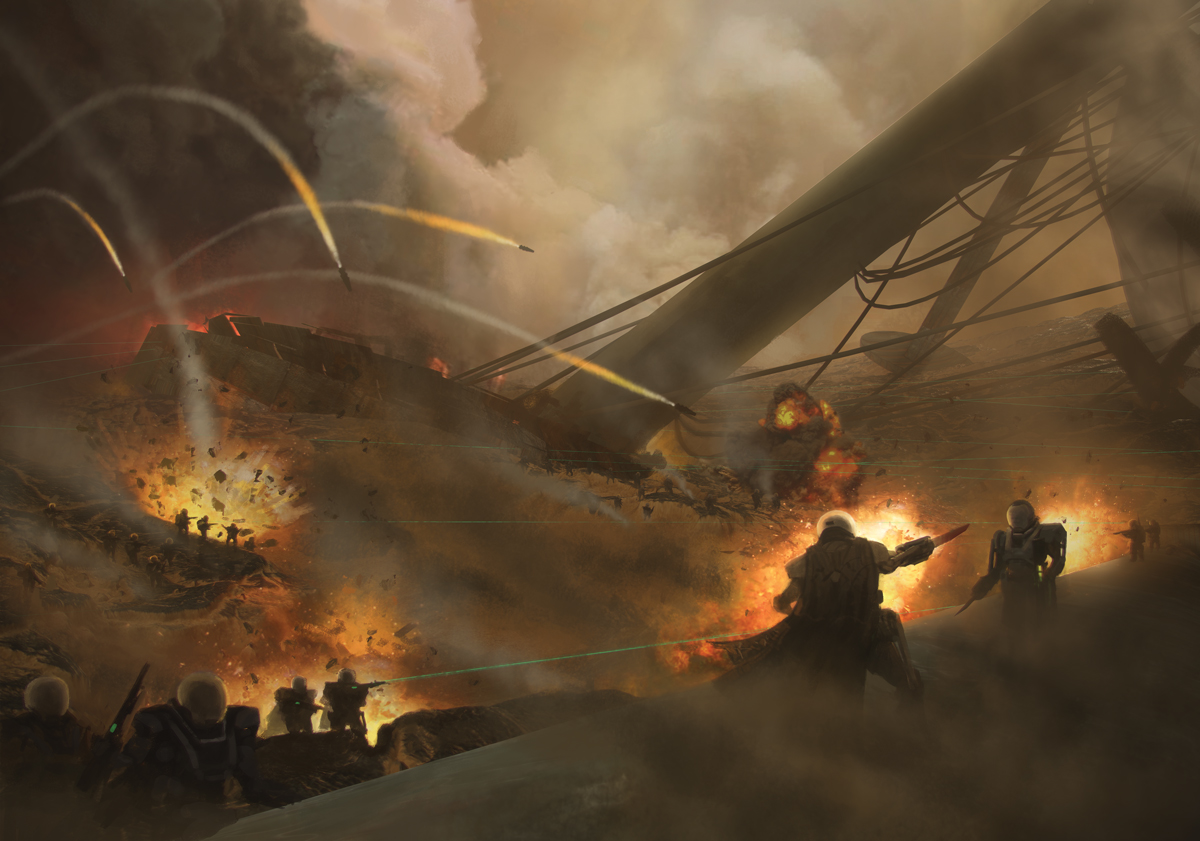
This afternoon my cover artist Gabriel Perez sent over the final copy of the cover art for the Cover of Upon Stilted Cities: The Battle for Langeles. To me, the cover is absolutely amazing but then, I blew it up on a bigger screen and saw the level of detail he put into this thing. Looking closely you can see Runners battling all over the place. Small skirmishes are everywhere and the details are just insane. If you have not visited this guy’s website you need to check him out. He is, hands down one of the best sci-fi artists around.

Book 3 in the Chronicles of the Great Migration

Upon Stilted Cities: The Battle for Langeles is out October 17th!

Final_wip4

World Building Part 2: Anthropology and Key Elements of Cultures

astronomy-3188563_960_720

Want a much expanded book on worldbuilding and anthropology? Check out Build Better Worlds: An Introduction to Anthropology for Game Designers, Fiction Writers, and Filmmakers, now available on Kindle!

Worldbuilding is a big thing, I mean, you are building a world right? There is a lot to a world, and in this second entry on Anthropology and Worldbuilding, we are going to look at 10 core elements of a world. If you take an introductory anthropology course, one of the things you’ll encounter is a survey of what makes up a culture. Now, this won’t be a complete list of things to consider, but it will go over some of the major interconnected parts of culture you may want to think about as you craft your world.

Those categories are as follows: Language, Environment, Political Systems, Economics, Gender, Class, Race, Religion, Kinship, and Change 

There are other important elements too to consider, like education, media/art, health, sanitation, fashion, etc. but in this entry, we are going to focus on the ones above (It’s gonna be long enough as it is).

In reality, you could spend years crafting a world, as Tolkien did, mapping out every little piece down to what kind of grass is present in the village your character grew up in. But unless that’s a key plot point, who cares?!?! Often times, when you are writing, knowing these things as the writer, is useful, but it may not really advance the story, so keep notes. Sketch things out when you need but don’t take the time to insert everything.

****A quick disclaimer **** here before I get into the categories. I have a saying in my college courses, you don’t have to like this stuff, but you do have to understand it. Some of the following may challenge your ideas about the world, or maybe you already know this stuff. Either way, this stuff is well studied and researched. There is data/evidence behind all of this. If you want more sources ask in the comment and I am happy to share. But I will not tolerate trolls. They belong under a bridge and out of site. 

1. Language is Culture and Culture is Language 

Warning, I am about to get crazy philosophical on you here, but that’s for a reason. There is no culture without language and no language without culture. If you want to go far down this rabbit hole check out this episode of radiolab called words

There is a lot of debate on just how much your language impacts your culture and the way you perceive things, but perception and language have at least some connection. I also did a YouTube episode on this and the Sapir-Whorf Hypothesis 

So how does this apply to your fiction? Well, Different languages are going to have different ways of experiencing the world. If you have multiple languages you need to think about how those languages are structured in terms of Race, Class, Gender, Emotion, Religion, etc. So each language is going to participate in the world a little differently. Is it a fishing culture? You are going to have a lot of words and phrases and idioms surrounding fishing. Is it a warrior culture with a unique form of martial arts? How does that ripple in the way they communicate? Language can act as a lens of experience. The focus of the culture is going to change based on their economic structure, their family organization and so on. So the language should reflect that.

What if it’s our world, but in the future? Try tweaking a few words or phrases that might have changed as the result of new technology or experiences. You could also come up with a specific saying that many characters use for your specific universe. Think of the term muggles for example, in Harry Potter or Long Days and Pleasant Nights in the Dark Tower series. A few words and phrases can give your world a little more color.

2. Environmental Interaction and Knowledge

There is this complete bullshit notion out there that indigenous people are just dumb passive individuals who never manage their land. The reality is quite different. Every human being in history has managed and altered their environment. In fact, we know that agriculture wouldn’t have been possible without centuries of human-directed alteration to the plants and animals in their region. Buffalo herds didn’t magically grow to their massive size on the North American continent. The indigenous tribes of the great plains spent generations doing things like controlled burns and both direct and indirect land management to increase the size of the herds. If you want to get academic on this topic check out this article on something anthropologists sometimes call Traditional Ecological Knowledge

So, how does this apply to your story? Well, different cultures in your worlds will have different kinds of environmental knowledge and solutions to problems that come with that environment. If for example they live underground, and there are a luminescent species of mole with fur lit up like a Christmas tree, perhaps your characters will integrate that into their clothing so they don’t always have to carry a light around. Or perhaps, they like the Kayapo tribe of the Amazon, set up informal stations (Anthropologist Daryl Posey called these mobile grocery stores) where certain kinds of fruits, berries, and nuts grow along a several thousand mile trail so they don’t have to worry about food on long journies. If you have a jungle culture, what things in the jungle do they take advantage of? Avoid? How is their particular kind of knowledge relevant to your character? Is that character from one of these locations? Are they passing through? Consider all this as you craft a world.

3. Economic Systems

No, not all economic systems are about money and not all of it has to do with capitalism, communism, or socialism. Those are only modern western economic systems. If you want to build a strange world that operates in ways we can’t imagine, you might want to ditch your economics textbook and consider the following section.

Also, money is not inevitable and barter doesn’t lead to money. That is completely inaccurate. Check out this Crash Course episode on debt and the origins of money. 

At its core, economics is about survival. If you don’t have food, you starve and die. If you starve and die there is no worldbuilding, no culture.

Economics in Anthropology terms has three main components: Production, Distribution, and Consumption. These are three major areas that anthropologists investigate in exploring another culture.

1. Production: The means of taking raw material and transforming it for human use. This can be as simple as hunting and killing an animal and then cook the meat or as complex as the production of the device you are reading this on now.

Production comes in different flavors: 

Foraging: This is use what you find. You go out into the woods/desert/tundra/wherever and hunt or gather the resources you need. This allows (and sometimes requires) nomadic societies. Populations must be low or resources will run out quickly

Horticulture: This is small-scale informal planting. People start to settle down a bit in these societies or at least begin to control specific regions. Think of gardens in your backyard

Pastoralism: This is animal husbandry. You raise animals and use their products. This could be things like milk or meat. Pastoralists are either nomadic or travel across large pieces of land to make sure their animals are fed.

Agriculture: This is large-scale farming. It includes tools and technology that allow for mass production of food. The key to agriculture is that it provides the surplus required for the establishment of cities. You cannot have cities without agriculture.

Market Economies/Industrialization: (Capitalism, Socialism, and Communism are basically different philosophies in this category) Agriculture is still a part of this but this is also where you get mass production of other goods and services. Often you have things like markets or trade outposts set up to exchange of goods

These different kinds of systems may overlap. Pastoralists sometimes forage and Agriculturalists sometimes raise animals. These aren’t mutually exclusive categories. People use whatever strategy they can to adapt and survive in their environments.

2. Distribution: The handing out of the results of the production cycle. This is as simple as passing out meat around a campfire or as complex as distributing smartphones all around the world for purchase.

Distribution comes in a few flavors as well

Reciprocity: This is like buying your friend coffee at Starbucks. You know that later (hopefully) that will reciprocate and buy you coffee. This sets up systems of obligations and informal debt. In a foraging society, I may kill a deer this week and then share it with you, with the expectation that if I don’t kill one next week but you do, you will share with me. Friendship and social bonds are formed through reciprocity as well as ensuring social and physical survival.

Redistribution: Put stuff in the community pot and everyone gets someone back. Potlucks are a form of redistribution. Everyone brings a dish to share and everyone gets a variety of tasty food. Taxes are also an example of redistribution. You pay taxes to maintain roads, bridges, government, police, courts, fire crews and so on. In a Native American example in some tribes of the Pacific Northwest, they had something called a Potlatch, where wealth was marked by who could give the most away.

Market Exchange: This is things like grocery stores and the stock market. Once a society has sufficient surpluss an exchange of goods is set up.

3. Consumption: This is the consumption of the product. Again, this could be as simple as eating food or as complex as purchasing a gadget and then using it. Purchasing is a point of consumption but consumption doesn’t end until the object is gone or considered waste and disposed of.

In the study of consumption anthropologists often consider a few important things:

  • Who Acquires what goods and services?
  • Who creates the items for consumption
  • How and why are products presented (marketing)
  • How are goods consumed in ritual contexts (like holidays or special events)
  • Are different products used by different groups in society and what are the limitations to this consumption?
  • Who is allowed to consume together and who is not (think segregation but also how does wealth divide people?)
  • How is consumption a reflection of wider social relationships?

How does this apply to your story? Well, different economic systems are going to have different impacts on your world. If you are talking about an entire planet different groups are going to behave in different economic ways. For example, indigenous people are technically part of many countries, yet some of them, in particularly remote regions for example, still live as foragers while still occasionally participating in market economies. Often you will find that some indigenous people adopt some pieces of technology/economy and disregard what they don’t think is useful.

If your world has elves that specialize in the production of a specific kind of bow, what kind of implications does that economic practice have on the rest of the world? If you have a plant-based alien species that need only the sun and water to survive, how do the deal with traveling through the vacuum of space? Remember Economics is about survival. 

4. Class

Okay, now that you have your economic systems down, what about Class? How are people organized based on the economic principles? Are there groups of hunters? Warriors? Religious Specialists? Merchants? What kinds of social organization/specialization exists in your world and how rigid are those assignments? 

In books like Brave New World, genetic engineering allowed for certain groups to be placed at birth into a rigid class system. So, one thing you want to consider with your worldbuilding is social mobility. Basically, can someone move out of the station they were born into?

In anthropology, we examine things like the Hindu Caste System, which, traditionally at least, kept people who were born in their station, in their station. The Caste System included (in order of the most powerful in their society) Priests, Warriors, Merchants, Servants and then below them were the Untouchables who were considered so poor and unclean that they didn’t have a caste. We consider how these systems allow people to move in their culture and their lives, how this impacts language, kinship, gender and so on.

Does one particular class require a lifetime of training? Can anyone enter the priesthood? Does access to technology or weapons matter? Are there gender restrictions on certain classes? 

In my particular series, The Chronicles of the Great Migration, humans live in walking cities because climate change has ravaged the earth. In the city of Manhatsten, there are five major classes of people. On top you have the Uppers, who live in the tops of the skyscrapers and have unlimited access to life extension technology and wealth. Below them, you have the Mids, who live in the middle level of the sky scrappers (floors 10-40) and have some access to life extension and some education and wealth. Then you have the lowers who live on the ground level to the 10th floor of buildings. They are the majority of the population and have minimal access to life extension (but even they live to be around 200 years of age). Below them are two groups, the homeless, who live on the street and Runners. Runners are convincted criminals who are required to go on dangerous missions outside of the city to ensure that the walking cities have the resources they need to persist.

So how does this apply to your story? Well in mine, different characters come from different class backgrounds. Thus they will have different experiences, story arcs and dilemmas they must face. For example, one of my main characters is homeless and another is a Runner. Their backstory based on their class and their upbringing significantly impacts how they react to the things that happen to them during the course of the series.

Consider how the class of your character (including job skills) impact their interaction with the world.

5. Political Systems and Governance

All cultures have to keep track of stuff and manage people. Even a small hippy commune of twenty people still have to work together and govern in some way to survive.

All Political systems do the following at least minimally: 

  • Decision Making (Who makes the rules?)
  • Norm/rule/law creation (Not all laws are written)
  • Dispute Resolution
  • Norm/rule/law enforcement
  • Deviance punishment
  • Social integration
  • Defense of the community and society
  • Aggression/offense against other communities and societies

Political systems come in four major flavors (Though a closer examination shows it’s a lot more complex than four simple categories). Those are Band, Tribe, Chiefdom, and State. Here is a quick summary on this at YouTube 

One last important piece on political systems is the level of political integration. The Size of the society means you need a much larger government entity controlling the infrastructure.

Consider, for example, a small band with 40 people. In this example food is mostly shared, the economic system is foraging, they build mud huts that require low maintenance and for sanitation, they simply wander off in the woods. Now contrast that with a state and more specifically a city. It is a capitalistic based economy with several million people. Their infrastructure requires public transit, roads, bridges, power, a sewer system (after food sanitation is one of the most important components to prevent disease) grocery stores, and so on. Whereas those 40 people could mostly live by consensus, the city dwellers of several million require a large scale government to ensure that all those things are running on a daily basis.

So how does this apply to your world? Well, first off, what kind of social organization does your world use? Then, how does the political structure function in the categories above? How are people punished? How is the community defended (from both internal and external threats) and so on.

Social control is what a political entity does. It can be as simple as public shaming and gossip (gossip is a form of social control that seeks to enforce norms and values and regulate individual and group behavior) or as complex as the state apparatus in the famed dystopian novel 1984. Surveillance and social control also has a lot of academic theory behind it, check out this video on one of the more famous philosophies, Panopticism

6. Gender vs Sex

Oh boy, here it comes, I can feel some of you cringing already. Even the mere mention of gender makes some people retreat in terror these days. But, take a moment and hear me out, because, in your world, you might not even be dealing with humans. But, even if you are, it might be useful to consider all this stuff for the sake of your characters.

Sex:  The physical traits/characteristics of reproduction you are born with. 

Gender: The cultural interpretation of the physical apparatus

Need more on this? Watch this short YouTube Video 

Here’s where it get’s complicated, even on a physical, biological level there are not simply two sexes. Intersex is a biological phenomenon that has at least 36 different forms (as of this writing). Meaning that biologically it is not simply male vs female. More on this at this video

Okay, well what about gender? Well, I often tell my students that gender is kind of cultural performance. Think about it this way, every day you wake up and if you are male in American society, you shave and groom (performance) you put on masculine clothes (performance) you walk out the door and carry your physical body in a way that displays your gender (performance) and you engage in gender appropriate activities and roles throughout the day (performance). Almost everything you do with your gender identity is a big game, a serious game, but a game none the less. This applies to any gender. Think of all the performing women or trans individuals must do throughout the day and how much money we all spend on these performances.

Further, this performance has changed over time. High heels, the color pink, and other elements we would now consider feminine were once signs of masculinity. 

Then, it get’s really interesting when we look outside of European/Western based culture. Native Americans have had up to 5 genders for thousands of years. (Check out this link for more. ) 

We also have the Guevedoces out of the Dominican Republic, who have a genetic difference and appear to be girls until age 12, when suddenly they grow a penis. They are a concentration of intersex which also have their own gender identity (More here)

So why does this all matter for your characters and your world? Well for example in Ursula K. LeGuin’s classic sci-fi novel ‘The Left Hand of Darkness’ The aliens can be either sex/gender but most of the time they are neither. More on that from a Tor article here Another example of this Anne Leckie’s new book Provenance where gender uses only one pronoun for all the characters. (An interview with Anne Leckie here).

Basically, exploring gender and sex in your world can have no bounds. You could have an alien species with 17 genders, each with different occupations and pronouns if you wanted to. It’s your world, you can imagine it how you want and if you want it to be gender binary only, that’s cool too. But just make sure your gender norms are connected to the rest of your world and consider that language and gender have a strong relationship. We don’t usually call a woman handsome and a man beautiful in our culture, consider how that ripples around the rest of society.

7. Race and Ethnicity

You still here? Oh good, time for another controversial topic, Race.

First of all, Race isn’t real. It is a social construct used to disenfranchize one group of people for the benefit of another. See this article White People Didn’t exist until 1681

We also need to make a quick distinction between Race and Ethnicity

Race: Difference marked based solely on physical appearance

Ethnicity: Sometimes marks difference based on physical appearance but also includes things like language, history, religion, social status and other elements. Basically, ethnicity is much more complex and you can also sometimes become a member of an ethnicity during your lifetime.

I have actually created several YouTube Videos on this topic already so I am going to defer you there for the anthropological knowledge behind all this stuff so I can jump right into how this relates to storytelling.

I recommend the following videos

Where does Skin Color Come From?

What is the Origin of the Concept of Race?

So what about your world? Well, Race isn’t real, but it does have real consequences. People with different external appearances can often experience discrimination. What if, for example, like in the Dragon Age Video Game Series, elves encountered discrimination because they were considered an inferior race? Race and Ethnicity have real consequences and will impact your character’s experiences.

Also, if you write a world where there is no difference in ethnicity… well sorry, but that’s just lazy writing. The only way you could get away with this is if your world had just a small village of a few hundred people and that was it. But if you are talking large scale fantasy worlds, interstellar travel or even whole planets, if you don’t include ethnicity and consider the different points of views, it’s lazy and unrealistic. Difference is good, it is what makes the world so wonderful. We should celebrate our differences rather than shrink away from them. Different points of view means that we have different answers to different problems.

Also, if you want to avoid problems and a lot of grief, be wary of representing another culture inaccurately. Everyone has bias and blind spots in their knowledge. That doesn’t make you less than anyone else, we are all ignorant in some way. So, accept that, suck it up and when at all possible consult someone from the background you are writing about, or at the very least read fiction from their point of view. There are things like Afrofuturism (Black Panther being a key example) and Indigenous Science Fiction. 

One important thing to consider in ethnicity and race in your worlds is that there will inevitably be power dynamics between groups. Which ethnicities have power? Which ones don’t? Why? How does that impact the characters?

8. Religion and Spiritual Traditions

I hate to be the bearer of bad news, but no, not all religions are the same. This idea that all religions are the same is some weird concept that came out of the 60s. But it’s not true. That doesn’t mean that one religion is inherently better or worse than some other, but as a friend of mine once said to me, just because something has wheels doesn’t automatically make it a car. Some things that have wheels include roller skates, bicycles, horse-drawn carriages, skateboards, shopping carts and so on. But those things are definitely not cars and serve different functions. Religions, like things with wheels, have particular functions for particular cultures. Like I wrote before, difference is good. There is nothing wrong with different kinds of religion or the lack thereof.

For more on how Anthropologists try to understand religions check out this YouTube Video, I made on the topic. Which includes a description of important things that all religions do, that you might want to consider in your world building.

Things not all religions have: 

  • Gods
  • Spirits
  • Heaven/Hell/Afterlives
  • Belief/Faith (Yes not all religions require belief or Faith)
  • Reincarnation
  • Meditation
  • Reincarnation

There are many more things that not all religions share and there are something like 6000 religions out in the world. Probably when you think of religion you think of world religions, but those are only a fraction of the possibilities.

Here’s the thing about world religions, they don’t exist before we have empire and agriculture. World religions also require writing to preserve and pass on their teachings. Ever play the game telephone as a kid? Imagine trying to spread your religion without a text to another culture with another language, how badly would that game of telephone go. Translation from one language to another is already tough enough and you always lose something in the translation (and not all world religions are truly universal and applicable to every language in culture) so if you don’t have a written text at all, you won’t really be able to spread very far and keep the teachings somewhat accurate.

So how does this stuff apply to your worldbuilding?

If you are writing about war and invasion, you may consider how the different religious ideologies of the groups clash. One thing empires do is bring their ideology with them, forcing it on the locals. Those ideologies include religion but aren’t limited to them. We certainly force capitalism and money on people just as readily as we do Christianity when we colonize.

Different cultures have different spiritual systems. The goal is not always the improvement or betterment of individuals. In fact, sometimes, spiritual practice is about things like spellcasting or affliction (spiritual attack). Further, consider how your alien species with seventeen genders from earlier might create myths about their origins.

Gender/Religion/Myth are heavily tied together as Anthropologist Walter Williams talks about in this famous article on the Berdache Tradition. If you read this, note how mythology restructures the way society is organized.

A quick note, before you get all Joseph Campbell on me about myth. Not all cultures have a hero’s journey or the same myths, Yes, some do, but not all. Not every story, is a story of transformation, in fact, some stories are so good because despite everything the character stays the same. Unique worldbuilding would have different values tied up in different mythology. Relying entirely on the heroes journey limits your ability to explore different kinds of worldbuilding.

9. Kinship/Families

How families organize varies across cultures and thus could vary across your fictional worlds. It seems to me that most fiction I have read is obsessed with monogamy and western styles of family organization. I myself am a serial monogamist so I understand the appeal, but that doesn’t mean that your fictional world has to follow that pattern.

But here I am going to shed a little light on a few kinds of kinship for you to consider in your worldbuilding. 

First, blood relatives aren’t always what is designated as a family. Kinship really just means strong bonds and cooperative ties.

I am willing to bet that most of you have heard the following idiom somewhere.

“Blood is Thicker than Water”. 

And probably you think, oh yes, it means family ties are stronger than friendship. If that is what you think, you would be wrong. The actual idiom is

“The Blood of the Covenant is thicker than the water of the womb.” 

Basically, it means the exact opposite of what you have been told. It means that the covenants that we create in life are much stronger than the ones that we are given at birth. And that is, largely true if you look around at families in cultures across the world. People don’t necessarily define family as who came from who. In fact, in some culture the idiom ‘it takes a village’ is literally true. Just because a woman gives birth to a child, doesn’t mean she is the only mother. In small-scale cultures, it is often the case that everyone acts as that child’s parents and many of these individuals are considered relatives. Hell, in some cultures in societies certain plants, animals, or inanimate objects are considered relatives and very much a part of the family.

Some types of family organization: 

Monogamy: Two people in a relationship. This often yields a small family but Monogamy can include just the children of the union or the larger extended family so you can have big families in Monogamy but not nearly as large as Polygyny.

Polygyny: One man with numerous wives. This could be two wives or ten. These wives are sometimes known as sister wives and the children are often, but not always raised in a collective fashion. This is really good way to increase your population quickly if that is of interest to your 17 gendered alien culture.

Polyandry: One woman many men. There aren’t many cases of this around anymore but in some places in the Himlayas, you find examples of this. Family organizations are that the men all pitch in and raise the few children. Polyandry sometimes acts as a form of birth control and population control and is used in instances where population explosions would be devastating.

Walking Marriage? You also have cases like in the Mosou in China where marriage isn’t considered more than a temporary thing. Women rule in this particular culture.

Marriage doesn’t exist in all cultures. One of the main purposes of marriage is to establish who has rights of inheritance and who owns what land. If you live in a small-scale communal society there may be no need for marriage. Marriage is a social institution like anything else, and is used for very specific purposes. Marriage is very useful in large-scale societies that require a clear lineage and has a strong concept of ownership.

Other things to consider in family in world building: 

  • Incest Taboo: Every Culture has one, how that is defined differs
  • Rights of inheritance/
  • Are families large or small, is there extended family
  • How often do people have children? Or can they (maybe that’s a plot point)
  • How many children can be born at once? Perhaps in an alien species, they have liters instead of one or two at a time.
  • How does the family structure persist over time?
  • How do families form alliances?
  • How do the families provide for emotional and social needs (or maybe they don’t and that’s part of it)
  • How does child rearing happen? Are parents hands-on in your world? Hands off? Is a child born and then left to their own devices or do they spend eighteen years learning the culture before becoming an adult?
  • How is adulthood marked? Is there a ceremony or ritual? Or is a number of years?
  • Speaking of which, do they care about years? Not all human cultures mark age or have birthdays

10. Change

If you want anyone to actually give a damn about your world, then you need to show how it’s changing. In the real world all the above elements we discussed changed every single day. Some of those things change quickly, and other’s change slowly. A good story, one that sucks you in and keeps you reading until 4am when you have to be at work at 6, is about a world that is either undergoing massive change or is on the verge of it.

In a good story, something in the culture has been disrupted or is at threat of being disrupted. Of course, there are also stories where a character is discovering a new world, but, even in those stories change is coming, sometimes brought on by the characters themselves.

A few examples:

  • In American Gods, The Old Gods are Disappearing to be replaced by new ones
  • In Harry Potter, The Dark Lord is trying to come back
  • In Lord of the Rings, Sauron is returning
  • In Ready Player One, A corporation is trying to take over the OASIS
  • In the Dark Tower, The world has moved on, and the universe is coming to an end
  • In Game of Thornes, well, everything is constantly changing for all of the characters
  • In my series, the Chronicles of the Great Migration, resources are running out and the cities won’t be able to migrate for much longer and a terrorist organization wants to destroy the cities (I doubled up on the change).

Change is compelling but I want you to think about this for a moment like an anthropologist. I mentioned in the last article on Worldbuilding that cultures are holistic and that when you change one thing it changes everything.

So think about that. What kind of impact does each change in these stories (or your favorites) have? How does the change ripple around your fictional universe?

Here is an example from anthropological literature. In an article titled ‘The Production of Possession Spirits and the Multinational Corporation in Malaysia, Anthropologist Aiwa Ong looked at what happened when women found themselves working in a factory for the first time. These women faced long hours, stressful working condition, a radical change of their gender roles and everyday experiences. The result? Several of the factories had to be shut down as the result of spirit possession. These women appeared to be possessed by spirits and behaved in strange ways sometimes damaging equipment in the factory. The change in the cultural experience caused massive psycho-social stress. Whether they were actually possessed or not, isn’t the question, but an example of stress and change. In bringing in a local medicine man and changing some of the working conditions they were able to calm the women down but this is an example of how a massive change can disrupt everything. Another example is from an episode of RadioLab on an epidemic of laughter 

Stress makes people do crazy things and can even make people physically ill. So if there is a massive change going on in your fictional world, you are going to have to account for how this will impact every one of the major areas of society we have talked about. On a character level, maybe it causes one of your characters to lose their mind or behave in a way they otherwise wouldn’t.

Change is your friend in worldbuilding, and maybe the most important one. 

Alright, that’s enough. If you made it this far through the article good for you. If you didn’t well, maybe you will get to the end one day. I know this was kind of long, but that’s because examining culture and creating a world is a big undertaking. I hope that some of this was helpful to your writing process and as always, if you are interested, check out my series, the Chronicles of the Great Migration. 

Strange Reflections a new serial on Patreon


Strange Reflections Cover

I just launched a new serial story on my Patreon page.  For those of you who don’t know already, some of my stories are either exclusive to Patreon or early access for Patreon Subscribers.

My new serial, titled Strange Reflections, departs a bit from science fiction and delves into a world of horror and mystery.

A short blurb:

A reoccurring nightmare, a library full of occult books, and a strange underground passage, for Amanda it’s only the beginning.

Check out my Patreon Page where you can find this story and one other from the world of the Chronicles of the Great Migration! 

World Building Part 1: Using Anthropology to consider important elements of ‘Worlds’

fantasy-2925250_960_720Want a much expanded book on worldbuilding and anthropology? Check out Build Better Worlds: An Introduction to Anthropology for Game Designers, Fiction Writers, and Filmmakers, now available on Kindle!

There are many blogs and books out there on world building. I thought maybe injecting a little anthropology in this process might help you with some of your writing process. After all, anthropology is about studying culture. But if you really want to know more about anthropology I have a page for that. I also sometimes answer questions on a variety of topics on Quora on anthropology and culture.

In particular, though, check out the episodes from Anthropology in 10 minutes or Less on ‘What the F*** is Anthropology’ and Understanding Culture. in order to get a picture of some of the basic elements of understanding cultures and how we study it.

Before I get into anything though, It is definitely possible to overthink things when you are writing. This is not stuff for your first draft, but rather it’s stuff for you to have stewing in the back of your brain while you are writing and for that second draft… or seventeenth draft… You might be useful to think a little about how worlds actually hang together.

Personally, I don’t plan anything. I am a pantser. Once in a while, a note occurs to me, but I can’t even be bothered to write stuff in order. Right now, in fact, I am writing parts of the 5th book of my series before book 4 is even done.

That being said, if you are one of those writers who wants to outline a world, this blog, and some future ones I have planned, might be helpful for you. Even if you don’t write science fiction or fantasy, it might be helpful to understand how cultures function for your writing process.

1. Worlds/Cultures are Integrated, Holistic and Ever Changing. 

We hear that term Holistic thrown around all the time. But when it comes to understanding how a culture is structured, it means this: Everything about a culture is connected. That means, Politics, History, Art, Language, Economics, Religion, Family, Technology, Gender, Education and every other element interacts with one another constantly. No one single part of culture isolated.

It’s like the butterfly effect. You change one thing, you change everything.

Look around you. You can see examples everywhere. One right now is the thing you are reading this on. It could be a tablet, or a phone or a computer. It doesn’t matter which. How much has this technology changed the world? Consider how it’s influenced family relationships. Social media, for example, allows us to annoy the crap out of relatives with our political posts all the time right? Businesses, elections, religious organizations and so much more all use these technologies and are impacted by them.

If you are world-building, and something in that world changes, remember that everything is going to change. If for example, some kind of new magic is introduced, or some new technology comes around, you have to account for how that impacts the entire culture, not just one part of it.

Further, if your story takes place on a trade outpost in deep space, recognize that multiple cultures are going to influence other and cause culture change. Language and terminology will also change. Things like Pigeon Languages Appear.  Religious practices change. Catholicism in Central America is different than Catholicism in Australia. Why? Because the local cultures influence even the most powerful of institutions and cause change.

2. Cultures/Worlds are not Monolithic 

Think about your neighbor. How alike are you? How different are you? Now think about your siblings, your friends, your parents, your coworkers, or whoever is around you. Do you all have the same ideas? Do you all share the same political views? Religion? Sexual Preferences? Are they a cat person? Dog Person? Do they eat Sushi?

No culture/religion/political group/gender/race/class of people are all the same. People are variable.  That’s because people have different experiences and preferences. So if your universe has a group of cultist nutjobs who want to blow everything up, remember that amongst that group there will be people who have different opinions and ideas. Some of those followers might question what the leadership is doing. Some might be more devout than others. Hell, maybe this causes a major rift in the organization, opening the way for your hero to swoop in and pit two sides against one another or gain some valuable intelligence.

Trust me when I say this, with a history of doing research with people in the field, I know that getting people to agree on any one topic is difficult. Getting people to collaborate on a project, even when they actually do agree is difficult. There’s infighting, different political agendas, different expectations and perceptions as well as different communication styles. And that’s just within a single unified group. Throw in some diversity and you get lots of misunderstandings.

At the same time, people can only know and understand what they experience. So, even though individuals aren’t monolithic, neither are they free from cultural context. People are influenced by the history they are taught growing up, their religion, ideas of gender norms, class expectations, and so much more. I grew up Catholic and then left the Catholic church as an adult. That doesn’t mean that some of my thinking and experiences weren’t heavily influenced by the upbringing but it also doesn’t entirely limit my ability to make choices. It does, however, provide a frame of reference for how I understand the world. Certain characters of yours may have the ability to be critical of their past and their cultural context and enact changes, but not all of them will be able to do that.

Lastly, there is no such thing a monolithic evil group of people. Even within the Nazi regime, people tried to assassinate Hitler. Some worked to hide Jews or spied for the Allies. In the death camps, some of the administrators smuggled people out and resisted in other ways, Think Schindler’s List.

Which leads me to my next point…

3. Power and Resistance are really important 

When we think of power, we have a tendency to think big. But power and resistance operate every single moment of every day.  Yes, this can happen in big, overarching, world-shattering ways. Or it can be as simple as an argument over who pays for a check at the end of a date.

In fact, in the classroom when we discuss power relationships, I ask the students to brainstorm the power dynamics involved on a first date. At first, students might have a tough time understanding what I mean, but the moment they realize that there are power dynamics in just about everything you do during that date, (Who pays? Who drives? Who orders? Who decides where you are going? Will there be a second date? ect.) hilarity ensues and the students inevitably bring up funny personal examples.

Within a culture, two things are constantly happening. People and systems are trying to either keep things as they are, or change them. An overly simplistic way of looking at this is Conservatives vs Progressives (I say overly simplistic because no one is 100% conservative or 100% progressive and people have complicated views on a variety of issues). At the very least, you should have forces in your world that are trying to maintain the established way of doing things, and forces that are trying to change them. So, in building your world, what are those things? And remember our lesson from #2, those forces are not monolithic.

But the forces of conservation vs change brings up another really important point…

4. Cultures spend a lot of time concerning themselves with ‘Purity’. 

If you think about it, you’ll realize that most things you do are wrapped up in some kind of concept of purity. Take off your shoes before you go into the house? Purity. Wash your hands after using the bathroom? Purity.  Resisting eating that donut I found in the dumpster? Purity. On a more serious note, things like Immigration, Crime, Religion, Traditions and so much more are all debates about purity.

In fact, Law is a form of purity. It is the idea that in order to maintain society, we must have certain laws in place to protect ourselves. Anthropologist Mary Douglas wrote a book on this back in the 1960s called Purity and Danger. It looked at just how cultures construct and maintain these ideas. She analyzed the Book of Leviticus and the Hindu Vedas for her insights. You don’t have to read the entire book, in fact, the core concepts are in this nice brief video Summary of Anthropologist Mary Douglas Danger and Purity

5. Pacing your World 

Be wary the info dumping. It’s really easy to do. Introduce your concepts and ideas slowly throughout your dialogue and through your character’s experiences.  Take your time in introducing your world. A field researcher doesn’t see the entire country in one go, they travel across the landscape trying to make sense of how things are connected and why people do the things they do. If you overload your reader, they will, like a field researcher, go into culture shock and run away screaming.

One key thing I have noticed in worlds that are built well is that they start small and work their way out. For example, in Harry Potter, you are first introduced to Diagon Alley and Hogwarts. Each subsequent book introduces you to more of the Wizarding World so that by the time you get to the final book you know there is an entire planet full of Wizards, political organizations protecting Wizard Identity, Schools in other Countries and so on. If you’re writing a series, consider starting small, in one or two locations and then working your way out. This allows you to build slowly focusing on character and plot development rather than getting bogged down by World Building.

Alright, for now, this is enough but one last thing. Study worlds that work! (Read Read Read) I cannot stress this enough. Why does the world of Harry Potter work so well? Think of the concepts above. How about the World of the Dark Tower? The Hyperion Cantos? Hunger Games? Dune? (Can you tell my genre yet?) All of these worlds incorporate these particular kinds of ideas. Go back and really think about how these things are implemented in some of those famous stories. Then take a critical look at your draft version #566 and see how each of the four above concepts function.

I am going to write a bit more on Worldbuilding in the coming weeks but for now, here are a few links to some videos and articles on Worldbuilding that I have found helpful.

Common Worldbuilding Mistakes

Worldbuilding Basics

The Seven Deadly Sins of Worldbuilding

The Perils of World Building

Also, if you like this blog, maybe, just possibly, check out my own unique world, about Giant Walking Cities. 

Upon Stilted Cities is here!

My second book in the Chronicles of the Great Migration has arrived! This book has been a long time coming for me. In 2011 I woke from a strange dream about a man overlooking a giant walking city, and another imprisoned in some kind of green pod. Through those scribbled notes, the very first chapters of this novel were born.

At the time I was a graduate student and had to put the story aside, but as I wrapped up my thesis the story became a thorn in my brain. I couldn’t stop thinking of it. Some nights I would even toss and turn until I got up and wrote some of it down.

I hope you enjoy reading it as much as I did writing it!

You can get your ebook here! Paperbacks will be up in a few days!

USC Front Cover Graphic