It’s been a minute, so I have a few pieces of news and they kind of involve most areas of my creative work, as well as a book chapter I wrote in an Anthropology book.
First up is that for the second year in a row, I will be teaching a session at the Creative Colorado Writer’s Retreat run by the incredible small press, Twenty Bellows. I have to say, I think this year has some of the most talented teachers of both poetry and prose in their line up. You can find out more about it here.
For my part, I’ll be teaching a session titled: Worldbuilding Without Info Dumping: How to Master Reader Immersion in Your Writing. My session will be on Saturday September 20th starting at 2:40 Pm.
The goal of the workshop will be to explore worldbuilding without exposition and instead looking how to build through dialogue and action so that your reader connects more deeply to your characters in the middle of the flow of the story.
But wait! There’s more!
At 11am on the second day of the writer retreat, we’re having a book fair. The book fair runs 11 am to 1 pm. I’ll have a table there if you want me to sign your books or pick up a copy of one of my 7 books. Again, there are many very talented authors at the book fair and It’s gonna be a ton of fun!
In other news, Resistances Reads Episode 8 goes live Monday September 15th at 7pm over on YouTube. And if you haven’t seen yet, we’re now on all the major podcast services. Episode 8 will cover the book, Black Empire by George S. Schuyler originally serialized in the 1930s, and is an early example of Afrofuturism. Literatura Obscura will air it’s 3rd episode this week as we discuss the book Ishamel by Daniel Quinn. It’s a novel about a telepathic gorilla who teaches a man the secrets to saving the world.
In terms of book updates, I have something to admit… I’ve been working on a secret project and it’s been distracting me from other things. But, I’m not quite ready to discuss that 8th and decidedly stand alone novel just yet. I am also working at building some of the lore right now for Shades & Shapes in the Dark universe. For those of you who read the first book that came out last may, you might suspect that it’s not really just a horror novel, but also edging into something more. In Through and Endless Darkness Dreaming (Book 2) Clarissa will discover that there’s more creatures out there, than just her own tormenter, Demon and that the world of magic is so much bigger than she realizes.
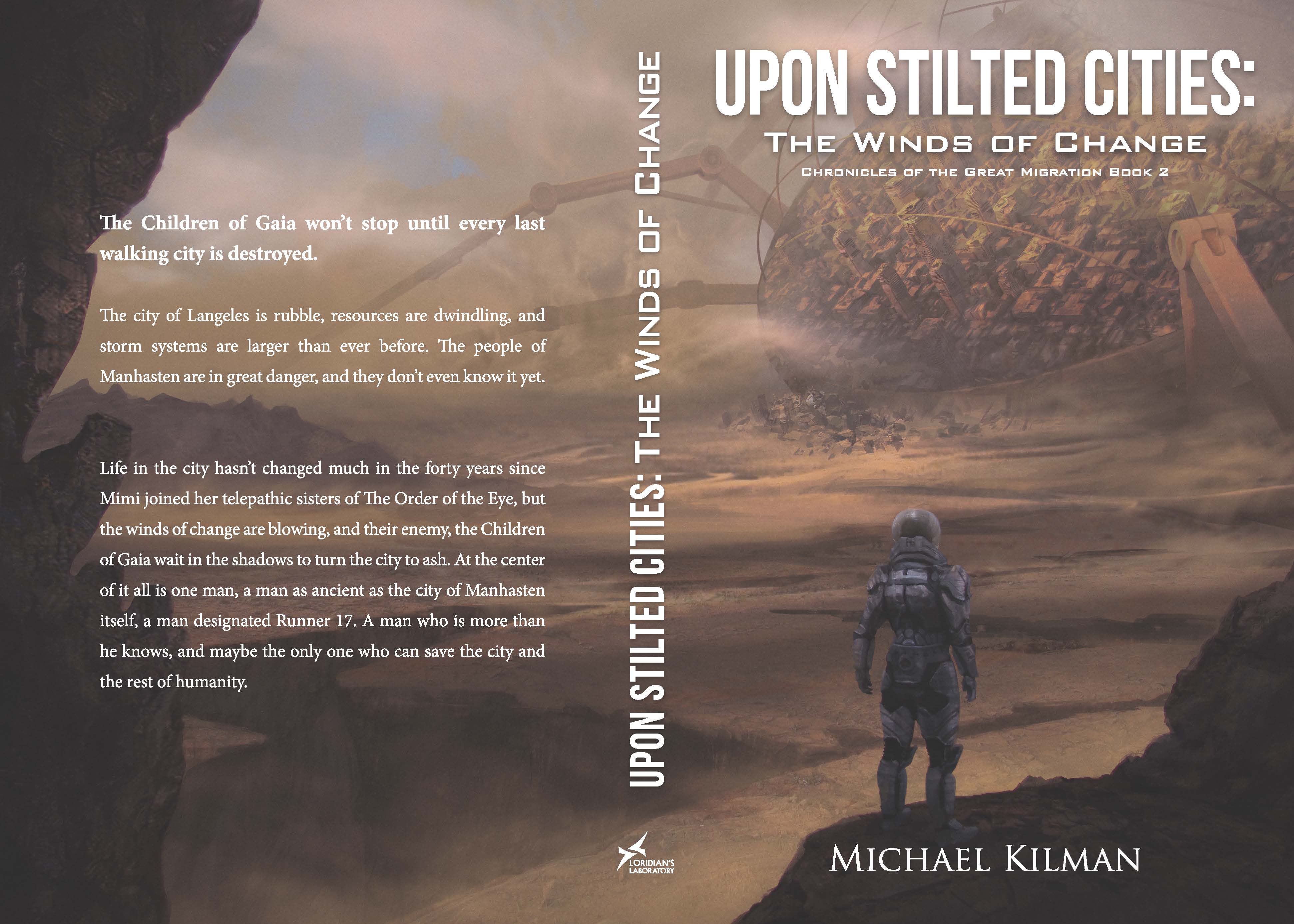
I am, also, slowly spending time in the world of The Chronicles of the Great Migration. I promise, I am still working on The Children of AEIS, and the final two other books of the series. They will get done.
One final announcement. This one is in the world of Anthropology. I recently published a chapter in the book, Exploring Digital Ethnography: From Principles to Practice. My chapter is titled: Worldbuilding as Pedagogy: Teaching Anthropology and Diversity in Contentious Classrooms. Now this is an academic volume, so while it’s not cheap, you absolutely can purchase it here. There are some great chapters in this book covering a variety of digital and interactive approaches to anthropology.
But if you just want to read my chapter… well… if you contact me, we might be able to find a way…
Last week I entered a contest over at Reedsy for a short story. The prompt I chose was, choose a perspective from a Zombie, Mutant, or Infected Creature. The result? A comedic piece about a Zombie suddenly remembering himself.
It appears that my entry didn’t win, but I had so much fun writing it I thought I would share it with all of you. If you like my other comedic sci-fi stories than this one is right up your alley. Enjoy!
Mishmash
Stumbling forward and dragging one dislocated leg behind him, the creature woke from its viral-infused fugue. Its first thoughts upon waking were, where… how… what… and also, where’s dinner?
It looked around. Gray concrete lined every surface. In front of it, a gray wall rose far above. The creature’s eyes traced the wall up twenty feet or so, and saw dozens of people standing there behind a black railing under an awning. Then, it looked down and saw a moat between them and it. It tried hard to think of where it had seen something like that before, until finally, the image of a zoo popped into its head. He, and yes, it now remembered it was a he, couldn’t fathom why he would be in a zoo. Especially since he seemed to be inside of a pen.
He leaned down and dunked his hand in the water, testing the temperature, but felt no change. It occurred to him; that he felt nothing at all. Looking up, he opened his mouth to ask the people above where he was, but all that came out was a long low moan of “Misssssshhhhhhmassshhh.”
“Wow! It talks, Daddy?” asked a little girl in the pink dress with twin pigtails standing above Mishmash with the crowd.
“Well, zombies can’t talk. Not anymore. They’re too stupid. All they want to do is eat,” said the man, whose long beard hung over his bib overalls.
“Oh.” she paused for a moment and then said, “But it said Mishmash. Isn’t that a word?” asked the daughter. “It sounds like a word.”
“Well, maybe that’s its name. Maybe that’s all it remembers of being human,” replied the father.
“But if it remembers its name, then doesn’t that mean it’s not stupid?”
Changing the subject, the father said, “I don’t know. Do you want to feed it, princess?”
“Yeah!” shouted the little girl.
Mishmash searched the crowd above for the father and the little girl. As he did, he saw motion above him. Something was falling from the sky. He tried to focus his eyes, but they didn’t work quite the way they used to. Then he saw it, a severed arm twirling through the air, and the moment he identified it, the arm smacked him right in the center of his face before it fell limp to the ground before him. He stumbled backward, his dislocated leg twisting, and he fell on his ass.
The girl squealed with laughter. “Bullseye Daddy!”
The man chuckled and pulled up on the straps of his overalls. “You sure got him good, princess.”
She clapped her hands. “Oh, I can’t wait to watch him eat it! It’s so gross when they eat. I love it!”
Her father laughed again. “Well, remember, if you’re too grossed out, we can leave. You don’t have to watch.”
“Don’t worry, I won’t be! I told you I watched the zoo livestream feeding the zombies on YouTube all the time!” She giggled and continued, “I like it when they eat heads. It’s so weird to watch them try to bite it like an apple.” The little girl sighed and then pouted. “I wish I could get two hundred million views on my YouTube videos.”
“Me too, princess, me too. Too bad they won’t let us have our phones here or we could have recorded your bullseye. I bet a lot of people would have laughed at that.”
Confused and listening, Mishmash looked down at the arm. Then he looked up at the little girl who had thrown it. She stood at the top of a rail, a good twenty feet above, standing in the middle of the crowd. Her pink dress flapped in the gentle breeze. He scanned the crowd looking past the father in overalls and at the other spectators. Other people in the crowd wore everything from yoga pants to their Sunday best. It was a whole general mishmash of people from all walks of life.
Mishmash picked himself up, stumbling to his feet. Angry, he shook his fist and shouted at the little girl and said, “Mishhhhhhmassshhhh” He thought to himself that people really let their kids get away with anything these days. He wasn’t wrong. Imagine, reader, how you would feel in Mishmash’s situation.
Many members of the crowd standing behind the railing above held severed limbs and assorted body parts of their own. Mishmash thought he saw one young boy holding what had to be a coiled ball of intestines. Before Mishmash could say or do anything, a shower of body parts rained down around him. He dove to the ground, covering his head as organs and limbs made squishing and splatting noises on the concrete of the enclosure.
Puzzled at the assault, Mishmash stood up again and dusted himself off. He turned and saw that, to his surprise, zombies were all around him. Terrified, he stepped back to the edge of the moat, feeling his panic rise. They ignored him.
Each creature headed toward the closest body part. He looked back down at the arm lying there in front of him. Then he looked back up at the crowd, and then, back at the Zombies. They didn’t seem very interested in him, and certainly, if they were zombies, wouldn’t they want to eat him?
With a sinking feeling, Mishmash looked down at his hands. He turned them over back and forth. They were a strange grayish color, though there were splotches of normal skin here and there. He thought, Oh no. Oh no no no no no. How had this happened? He couldn’t be a Zombie, could he? Zombies weren’t supposed to think. Something was wrong here, but he couldn’t quite remember what.
Hunger pain rose in his belly and his eyes drew to the severed arm sitting there just before him. Without thinking, he kneeled on the ground with his good leg, picked up the arm, and drew it toward his mouth. It was cold as if recently stored in a meat locker or a morgue. But that didn’t matter. He was so hungry he could barely stand it.
Mishmash opened his jaw wide so that he could bite off the biggest chunk possible, then stopped. He remembered himself, paused, and dropped the arm. It occurred to him that he really shouldn’t be doing this. It was a human arm, and he was… what? Well, obviously, not exactly human. Were zombies human? What did it mean to be human?
For a moment, dear reader, he felt tempted to go down a philosophical rabbit hole about that question, but opted instead, to examine his circumstances. He was after all a scientist. That’s right! He remembered now, he, Mishmash, was a scientist, at least in the before times.
He abandoned the arm, walking around the pen and observing the others eating their fill. Despite his desperate hunger, he felt a wave of revulsion. It was a noisy business, their hungry mouths munching and tearing at flesh and tendon. Nor did it smell much better. Zombies, he decided, smelled terrible. He sniffed himself and wondered if the moat was available for bathing. Did they provide zombies with soap here? He doubted it.
Mishmash looked back down at his hands again and something, some fragment of memory, stirred in him. He remembered the bite. He looked down at his right hand and noticed, under the graying skin, teeth marks.
Stumbling, he fell and remembered his dislocated leg. There was no pain. He looked down at his knee, bent at an odd angle, reached down, and straightened it with a pop. Apparently, the only discomfort he could feel was hunger. He stood, with his leg adjusted, but far from perfect, he walked back to the moat where the abandoned limb lay. It was then more memories flooded back.
“What’s it doing? What didn’t it eat the arm?” said the little girl.
“I don’t know. Maybe it’s full?” said the father.
Another person, who Mishmash couldn’t see, said, “Zombies don’t get full, you idiot. They eat and eat and eat.”
The father said, “Then you explain what it’s doing.”
Mishmash lost the tenor of the conversation to his own thoughts.
Everything was so clear now. His name wasn’t Mishmash, it was Dr.… Dr.… well, he couldn’t remember his name, but he remembered the viral outbreak. Because the virus took a long time to transform you, the military contained the disease in a few cities. With the worst possible outcome avoided, Mishmash and his lab assistant had begun research on a vaccine to prevent future outbreaks.
He looked around again, and his heart sank. This was the pen he used to conduct his research. This was where they kept the handful of Zombies they hadn’t torched. He was in the Bronx Zoo. The body parts were from cadavers because it turned out that Zombies were picky eaters. They only liked human flesh, and you couldn’t very well have your test subjects starve to death. Funny enough, they had discovered Zombies could starve to death. However, the only other way they could die was by destroying the brain. Somehow the virus kept the rest of the flesh up and running regardless of its condition.
The virus had something to do with… immortality research? Yes, that was it. Well, here it was, basic immortality, as long as you ate people and gave up your mind. But then, why did he have a mind? There was a reason, but he couldn’t quite remember. But first things first, Mishmash had to get out of here. He clearly didn’t belong anymore.
He prepared a plea, a cry for help. And reader, I promise you he was trying his absolute best. It was just that, well, his mouth didn’t quite work the same anymore. He moaned, “Miiissssshhhhhhmassssshhhh.”
Someone above said, “Is it trying to talk to us?”
Hope filled Mishmash. They were listening. He was so damn hungry… but someone was listening! He could get out of here. Maybe they would let him go back into his lab and find a full cure. Then he could eat. Perhaps they could provide him with a snack on the way?
Something else flashed in his memory… the exposure… it wasn’t an accident. Someone had undone the restraints on the Zombies bed, just as he was injecting it with the test vaccine. He had been so close. There was something about… the zoo… ticket prices… money? The memory was incomplete. But he remembered that just before the disease spread to his brain, he had given himself a dose of the vaccine. Apparently, it hadn’t entirely worked, but now, here he was, and he was back… well, his mind anyway.
He tried to think of anything else but the arm and ignore the ravenous hunger, and yes, his eyes kept drawing back to that arm. He didn’t want to eat it, but also, he really did. Could anyone blame him? The cadavers came from bodies donated to science. So it wasn’t like anyone was getting hurt. Dr. Mishmash, as he now thought of himself, had a disease, a virus that made you ravenous. He must have eaten human flesh before or else he wouldn’t have survived this long. He licked his lips and reached for the arm.
He stopped. No, there was no time for eating now. Mishmash focused and knew what he needed to do. He needed to escape. In order to do that, he needed to be as eloquent as possible. Yes, if he could only express himself properly, then he could escape and perhaps continue his research… and eat. He would definitely eat.
Mishmash raised one finger as if to make a pronouncement and win his freedom from the enclosure. He would tell them that his body had fought off the disease, and that he could think clearly again. He would say that, now that I’ve been through the gauntlet and out the other side, a cure was inevitable. They must trust the science.
He opened his mouth and said. “Missssssssssshhhmash. Mishmash. Mish. Mish. Mash. MMMMMMMish. Mish mash mash mash mash mish. MISH MASH!
Then he sat, exhausted. Hopefully, they understood. There were a lot of mishes and mashes there, but he was certain that he had belabored the point.
He looked up, expectant of his liberty. Knowing that any minute now, surely someone would come down and get him out of here. It would be tricky, because the other zombies were around and he certainly wouldn’t anyone to get… bitten…. He licked his lips. Unless… well, maybe he could have just a nibble. That man in the overalls was plump. Perhaps, just a taste?
No one moved. Nothing happened except for silence. Well, okay, it wasn’t silent, because behind him, he could hear his fellows munching away at their… lunch? Dinner? Did it really matter? It wasn’t like you decided, oh, arms are for breakfast and legs are for dinner. Either would be fine for any meal. His eyes drew back to that arm, still sitting there where he’d left it.
He made himself focus. It was just a matter of time till someone rescued him. Mishmash waited. His stomach rumbled. He waited some more.
Then he stood back up and tried to say something again.
“Miiiiissshh mash mash mash mish.”
Still no response. He knew it was difficult to understand his decaying vocal cords, but his tongue was working just fine. Surely they had understood some of the words he had said?
Another zombie walked up next to him. It was a woman. He looked at her lovely face and recognized his lab assistant, though he couldn’t seem to recall her name. She turned her face toward him, and he saw, with only, light horror, considering what he now understood about himself, that the cheek on her right side was entirely missing. He could see her teeth through her face.
She grabbed him by the hand, and all at once, he realized she, too, had woken from the long slumber of the zombie fugue. The test subject bit them both at the same time and Mishmash had injected her with the vaccine as well, in hopes they would both avoid the exact fate they were currently experiencing. So here it was the proof that his vaccine worked, sort of. With a little refinement, Mishmash was confident they would both find a cure and win a Nobel prize for their efforts. Also, she looked really cute standing there, with part of her face missing. Good enough to eat almost.
She said, “Maaaaagooooorrrr Magor magor…”
He nodded in agreement. The humans above didn’t seem to understand but somehow he did. Were they psychically linked somehow? Another interesting element to research. He asked her, in what he was increasingly certain was their own distinct zombie language, how long she had been… awake.
She replied, a few days, and that another, the one who had bitten them after they had given it the vaccine, had woken up as well. Unfortunately, after an attempt at a hunger strike to try to get the attention of someone, anyone, that she was no longer mindless, Magor had gone mad with hunger and eaten the only other zombie who woke from the fugue.
In Zombie, Mishmash said, “Well, at least there are still two of us, and were cured!”
In the zombie language, which outwardly sounded like Magor Gor Mag Magggggooorr Magor magor, she said, “Well, I wouldn’t say we’re cured just yet would you Dr.? I can’t stop craving human flesh.”
“No, Dr. Magor,” replied Mishmash, “I don’t suppose we are. We will need to get back to the lab and further refine our treatment. But I’m confident we can find the cure.”
From above, the little girl said, “What are they doing, Daddy?”
“I don’t know, princess. Maybe they’re talking to one another.”
The third person, who was still not visible to either Mishmash or Magor, said, “Zombies don’t talk stupid. They just eat. Maybe they’re about to eat each other!”
“Oooo,” said the little girl. “Do they do that, Daddy?”
“I don’t know princess, they might if they’re hungry enough.”
Magor picked up the severed arm that had hit Mishmash in the face and said, “Are you gonna eat this?”
“Yes.” Said Mishmash, “I suppose I should. I must keep my mind clear.”
She handed over the arm. She was only a little hungry since she had just eaten.
Mishmash gave into his hunger.
Don’t be grossed out, reader. You would do the same thing in his situation. Just let Mishmash eat in peace. Then, maybe, he can find a way out of this.
This essay went out to my substack. Considering subscribing for updates on tons of free content. And if you are curious about my work, and want to support me you can become a paid subscriber to read exclusive and early access to fiction, audiobooks and more.
Like music, good writing often has a rhythm and a flow. There are always exceptions of course, but if you want your readers to connect with your content, it can be helpful to consider the four elements below.
This essay will focus mainly on fiction. Non-fiction has a different set of elements, and maybe I will write about that soon (comment below if you’re interested in that).
Before I dive in, It’s important to note, that style is really important here too. Different writers use these elements in different ways, but, finding your way to balance them, can help your writing immensely. Often, thinking about how to balance these elements is better done in your second draft. Why? Well, often the first draft is more about discovery. What’s happening? Why is it happening? Once you have the core basics of what you want the scene to accomplish, then you can go back through and apply these elements. Of course, as you practice, you’ll get better at doing it the first time around too.
As I cover each element, I’m going to write a sample scene using the elements. Each element will build on the previous scene. The first iteration of the scene will only include dialogue. With each element, we will add another layer to the same scene.
Let’s dive in.
Element 1: Dialogue
What makes dialogue compelling? Have you ever stopped and read your favorite scenes of dialogue?
There are a few key ingredients to dialogue. But before we get into that, it’s good to note that dialogue in real life, is not the same as fiction. You can’t listen to real-world conversations to help with fictional dialogue.
When I was in graduate school a huge part of my job was transcribing interviews and roundtable discussions. I spent hundreds of hours typing up conversations. It wasn’t long before I discovered that most people don’t follow the same grammatical rules that we do when we are writing. Good dialogue has to simulate conversation but is cleaner and more to the point. No one wants to read all the ums and pauses and false starts. So a first tip is to consider studying how your favorite novels or films set up quality dialogue.
Beyond the flow of dialogue, it’s vital to consider your characters’ interests. What does your character want out of this conversation? What’s their agenda? Do they just want a cup of coffee or are they trying to persuade someone else to take action?
Every person in the dialogue should have some kind of agenda, even if the agenda is to try and remain neutral or understand what the other character is trying to say. How does that agenda tie into their larger goals? Or does it? Maybe their goal is to relax and their neighbor is pestering them. Maybe the conversation is with a powerful person whose goal is to take over the world.
Dialogues are often games of power, persuasion, and coercion. We use our words to enforce norms in society. We use them to get what we want or prevent something from happening. We use words to connect with people or share our feelings just as often as we use them to compete. Always consider how these conversations drive the plot and character development.
Each of your characters will use different kinds of words and phrases. A ten-year-old, unless they are a prodigy, is unlikely to use big words and scientific jargon. They are also less likely to be self-reflective. However, if the 10-year-old is trying to sound smart (because their agenda is to sound more grown up in a group of grown-ups) it can be fun to have the child use the words incorrectly.
You can also use a conversation between an adult and a child to reveal something about your world. The adult can explain elements of your world or story to your child that might be difficult to do in other ways. Children and newcomers to a world are often useful tool for helping your reader to understand your story more organically through dialogue than a long info dump.
Personally, I am not a huge fan of incorporating a lot of dialects into writing. In the Harry Potter series, for example, I loathe reading the Hagrid Dialogue out loud to my kids. That’s because sometimes it’s hard to understand what the character is saying. You have to read the sentence several times and that kind of dialogue can pull you out of the story and leave you feeling frustrated. Your use of accents or dialects should never pull the reader out of the story. You want to draw people in, not frustrate them and force them to read the same line several times to understand what’s happening. There are always exceptions of course, but generally, I suggest avoiding distracting dialects.
On the other hand, if there are certain words or phrases that a character always uses, it can be a good way to build personality or remind your reader of their quirks. Just don’t overuse this. We have all encountered the annoying person who uses the same phrases over and over. Though, this too can be a tool in writing. Perhaps your main character is exhausted by their neighbor who says the same phrase six times in a single conversation. But remember, a little bit goes a long way.
Avoid adverbs. I’m not one of those writers who says never use them, adverbs have their place. But if you always have to write something like, ‘She spoke softly’ or ‘He said with certainty’ then you aren’t really balancing out the other elements. There are lots of other tools in our writing kits that help us understand tone and emotion. Dialogue can be good for showing the reader things, but avoid telling your reader about the tone or feelings of the character. Let the character share their own thoughts and feelings as much as possible.
There are definitely more things to think about with dialogue but considering these key points can significantly improve your dialogue. If you want to dive deeper into dialogue specifically, I highly recommend the book ‘How to Write Dazzling Dialogue’. It’s a pretty quick read and covers some additional key points about how to improve that particular part of your writing.
Scene Example Part 1: Just Dialogue
Stephanie said, “I’m leaving for a reason.”
Grandma said, “But we need you here on the farm.”
“Bert isn’t going to college. He’ll stay here forever.”
“One person isn’t enough to take care of all the animals.”
“So hire someone.”
“You don’t care about your family?”
“It’s not that grandma. I do care. But this place. It’s just not me. I don’t feel like I fit in here. I want to find where I belong.”
“Stephanie, of course you fit in here. I couldn’t do any of this without you. And besides, Bert isn’t going to marry anyone. He’s not going to have kids. This farm has been in the family for generations and you’re just going to abandon us?”
“It’s not abandoning you. I have to find myself. I’m an artist Grandma. I need inspiration.”
“You can paint here!”
“Paint what? Barns? Trees? Farmers? No. I want to travel the world and paint all the amazing things I see.”
Element 2: Action
Action isn’t necessarily violence. Action is also motion. It’s everyday tasks. It’s moving around in the space and inhabiting it. Action is important because you don’t want your character floating around in a void, you want them to be living breathing beings inhabiting an interesting space.
Is your character cooking dinner while talking to their grandmother?
Are they brewing a magical potion to curse their enemies while discussing their evil master plan with their assistant?
Action and Dialogue work together in beats. The dialogue in the example above is an okay start but when we only have the words, were missing so much more of the lived experience of these two characters. Dialogue and action have beats and melodies just like music.
If you have only dialogue and no action, there’s no room for the reader to pause and consider. Action can give dialogue some breathing room. It can add quirks to each character and deepen the emotions of the dialogue.
Maybe it’s just me, but I struggle to stay interested when there is too much action. A big battle scene, a one-on-one fight, a massive explosion, or a scene where someone is fleeing a monster can be a lot of fun to read and write. But if your characters never stop to catch their breath, if every chapter has a scene where someone is fleeing a monster, if your entire book is a battle… you’re going to bore the hell out of most readers. There are certainly people who will read nonstop action. Hollywood counts on some of those people to consume their endless sequels of Fast and Furious, but even those movies, have downtime.
Action should serve a purpose in the story. Yes, you can absolutely write cool action scenes and they’re definitely fun to write, but why? What does this do to drive the story?
Frank Herbert was notorious for cutting out the vast majority of the big battles in his Dune books, and Dune is hands down the best-selling sci-fi novel of all time. There’s lots of action in the books, but you don’t hear very much about the big interstellar battles as Paul Atredies conquers the galaxy. And while not everyone loves Dune, it’s one of the most important science fiction novels in history. There are lots of ways to approach action.
Why does that bomb need to go off? Why do two rivals have to fight that battle? Or rather, why do you need to show the battle? Is your main character a warrior so the audience needs to see their skills or use of magic? Is important to show them fighting for their life against an evil shapeshifting clown? If your story contains a lot of battles, it’s not necessary to show every element of every battle. Choose important moments in longer moments to highlight important actions. Don’t make the mistake of the Transformers movies and have ninety minutes of a two-hour film dedicated to fight scenes. Those movies make my eyes glaze over because it’s just action, action, action.
Be strategic with your action. Too much and you might have readers putting down your book, too little and they won’t understand the scene the way you want them to.
Scene Example Part 2: Dialogue and Action
Stephanie stirred the marinara and said, “I’m leaving for a reason.”
Grandma kneaded the dough on the adjacent countertop. She pressed her hands much harder in the dough than needed, “But we need you here on the farm.”
Adding in some more garlic, Stephanie stopped and turned facing her grandmother. “Bert isn’t going to college. He’ll stay here forever.”
Grandma sighed shook her head. “One person isn’t enough to take care of all the animals.”
“So hire someone.”
Grandma stopped kneading the dough and put her hands on her hips, scattering flower on the floor. “You don’t care about your family?”
Stephanie turned back to the pot, adding seasoning to the sauce. “It’s not that grandma. I do care. But this place? It’s just not me. I don’t feel like I fit in here. I want to find where I belong.”
Her grandmother leaned into the rolling pin and flattened the dough. “Of course you fit in here! I couldn’t do any of this without you. And besides, Bert isn’t going to marry anyone. He’s not going to have kids. This farm has been in the family for generations and you’re just going to abandon us?”
“It’s not abandoning you. I have to find myself. I’m an artist Grandma. I need inspiration.”
“You can paint here!”
“Paint what? Barns? Trees? Farmers? No. I want to travel the world and paint all the amazing things I see.” She waved her arms around spattering droplets of marinara on the countertops.
Element 3: Worldbuilding
Worldbuilding is the cultural and environmental setting your characters are in. It’s the kinds of cultural elements you’ll see in the seen giving your story more context.
– What time in history does your story take place?
-What is the level of technology?
-Are the characters indoors? Outdoors?
-What kinds of things decorate their walls?
-What kind of furniture or objects fill the room?
-What does the landscape look like? Can people walk in it or do they need a space suit?
We cultivate our spaces based on cultural knowledge and personal experiences. But personal experience is also bound by culture. If you live in a different culture you will naturally have different experiences. Think about the culture and the setting of your scene. In our example, we have a family farm and a young girl dreaming of traveling the world and painting. What kind of cultural details are important to make the world feel real?
Worldbuilding should be realistic. No, I don’t mean you can’t use magic, or spaceships, or supernatural forces, I mean your world must be internally consistent and holistic. What does that mean? It means that there are manyl ways that sentient creatures (like humans) interact and adapt to the world they live in both socially and physically.
-Every culture has limitations and gaps in knowledge. What are your characters?
-What are the power dynamics between the characters? Who tries to assert power? Who tries to resist it? The rebellious teenager who wants to travel the world and paint is trying to both resist the power of the older generation and assert her own.
-Do they fit within the status quo of the culture or is one character challenging the status quo?
-How does their identity fit, or not fit, into the culture?
A few sentences here or there can add a little more context to the world in which the characters inhabit. Everyone always says to avoid info dumping. But what if you have to introduce the reader to a giant walking city, telepathy, and what it’s like to be homeless in this environment in a single scene? How can you avoid info dumping? The balance between these elements (including the next and final one) can help you to draw your readers in and make a scene more compelling, while at the same time introducing interesting concepts or ideas to your story.
If you want a full book chapter that includes worldbuilding through, dialogue, action, and the environment, you might consider listening to audio narration of the first chapter of my novel “Mimi of the Nowhere” for free over on YouTube.
Scene Example 3: Dialogue, Action, and Worldbuilding
Under the warm light of the kitchen, Stephanie stirred the marinara and said, “I’m leaving for a reason.”
Grandma kneaded the dough on the adjacent countertop. She pressed her hands much harder in the dough than needed. “But we need you here on the farm.”
First, adding in some more garlic she had bought that morning from the farmers market, Stephanie stopped and turned facing her grandmother. “Bert isn’t going to college. He’ll stay here forever.”
Grandma sighed shook her head. “One person isn’t enough to take care of all the animals.”
Cornelius the Rooster picked that moment to jump up and peck at the kitchen window.
“So hire someone.”
Grandma stopped kneading the dough and put her hands on her hips, scattering flower on the peeling linoleum floor. “You don’t care about your family?” She grabbed the ancient rolling pin, that had probably been around as long as she was alive. Two white handprints lingered on her apron as she worked the dough.
Stephanie turned back to the pot, adding seasoning to the sauce. “It’s not that grandma. I do care. But this place? It’s just not me. I don’t feel like I fit in here. I want to find where I belong.”
Rain replaced the rooster, drumming on the window.
Her grandmother leaned into the rolling pin and flattened the dough. “Of course you fit in here! I couldn’t do any of this without you. And besides, Bert isn’t going to marry anyone. He’s not going to have kids. This farm has been in the family for generations and you’re just going to abandon us?”
“It’s not abandoning you. I have to find myself. I’m an artist Grandma. I need inspiration.”
“You can paint here. Your family loves you. We’ll miss you.” She nodded toward the family portraits on the wall, taken semi-often over the last hundred years. The older photos were black and white and gradually changed to a printed copy Grandma had reluctantly taken with her cell phone.
“Paint what? Barns? Trees? Farmers? No. I want to travel the world and paint all the amazing things I see.” She waved her arms around spattering droplets of marinara on the countertops. Similar stains speckled the walls from past disagreements, a map of misunderstandings.
Element 4: Internal Life
Internal life is what’s happening in the character’s mind. Not every scene needs a great deal of internal life, and in some situations, it might make sense to cut it entirely. But I think that internal life can be a powerful ally in writing a scene that connects the reader to the character’s emotions. It can also show how a character has changed in a longer story.
One of my favorite fantasy writers, Brent Weeks, does a fantastic job of using the internal life of his characters to show how they reflect on what’s happening to them and how they’ve changed over time. When you read either one of his famous book series, The Lightbringer, or the Night Angel series, that inner life helps you to feel that you’re growing with the character and you feel a deeper connection.
Things to consider about the element of inner life:
-What are the character’s thoughts and feelings?
-How do they think about what the other person just said?
-How do they feel about the place? The weather? The political situation?
-What do they think about themselves?
-What emotions are most potent in the scene?
-What things do they ruminate on? What can’t they stop thinking or worrying about?
-Do they have trauma? What things force them to relive that trauma?
-What motivates them?
-What are they afraid of?
-How does the internal life reflect the outer conditions?
Be careful, too much internal life can slow the scene down to the point where it’s hard for the reader to focus. If you’re always in the character’s head, the scene can feel bloated. Some books focus so much on inner life that nothing happens for most of a chapter. That may or may not be good for your story. Consider carefully.
Scene Example 4: All Four Elements
Under the warm light of the kitchen, Stephanie stirred the marinara and said, “I’m leaving for a reason.”
Grandma kneaded the dough on the adjacent countertop. She pressed her hands much harder in the dough than needed. “But we need you here on the farm.”
What did they need her for? She barely tended the animals anymore. She couldn’t understand why her grandmother was pushing so hard to keep her around.
First adding in some more garlic she had bought that morning from the farmers market, Stephanie stopped and turned facing her grandmother. “Bert isn’t going to college. He’ll stay here forever.”
Her baby brother loved this place. He was up early every single day with the animals, spent hours on the tractor, and loved the work. But Bert was a loner. He only left the farm to go on supply runs.
Grandma sighed shook her head. “One person isn’t enough to take care of all the animals.”
Cornelius the Rooster picked that moment to jump up and peck at the kitchen window. She hated that damn bird. It woke her every morning and pecked at the window all the time. She definitely wouldn’t miss him.
“So hire someone.”
Grandma stopped kneading the dough and put her hands on her hips, scattering flower on the peeling linoleum floor. “You don’t care about your family?” She grabbed the ancient rolling pin, that had probably been around as long as she was alive. Two white handprints lingered on her apron as she worked the dough.
Stephanie turned back to the pot, adding seasoning to the sauce. “It’s not that grandma. I do care. But this place? It’s just not me. I don’t feel like I fit in here. I want to find where I belong.”
The rain replaced the rooster, drumming on the window. She’d almost rather the rooster. Stephanie was so tired of the rain, of the endless months of overcast. She wanted to be somewhere warm and sunny.
Her grandmother leaned into the rolling pin and flattened the dough. “Of course you fit in here! I couldn’t do any of this without you. And besides, Bert isn’t going to marry anyone. He’s not going to have kids. This farm has been in the family for generations and you’re just going to abandon us?”
And there it was. She wanted Stephanie to become the typical barefoot and pregnant farmer’s wife. And who the hell would she stick around for? There weren’t exactly a lot of good options around here. After high school, all the fun people had gone off to college. After her parents had died, she had stayed for three years until Bert graduated. But she dreamed of New York and Paris and London. And she wanted to see those places before she even considered kids.
“It’s not abandoning you. I have to find myself. I’m an artist Grandma. I need inspiration.”
“You can paint here. Your family loves you. We’ll miss you.” She nodded toward the family portraits on the wall, taken semi-often over the last hundred years. The older photos were black and white and gradually changed to a printed copy Grandma had reluctantly taken with her cell phone.
“Paint what? Barns? Trees? Farmers? No. I want to travel the world and paint all the amazing things I see.” She waved her arms around spattering droplets of marinara on the countertops. Similar stains speckled the walls from past disagreements, a map of misunderstandings.
Concluding Thoughts
Take a look at how much more we know about the character’s motivations and the world in which they inhabit in the last example compared to the first one where we only use dialogue. How I use these elements will certainly be different than how you use them, but I hope the scene examples will help illuminate how you might approach and improve your own scenes.
Even if you choose to skip one of these elements, or if you use one far less than the others, it’s important to consider how each of these approaches is used and integrated into the scene to breathe life into your characters. These aren’t rules, these are suggestions. At the end of the day, you decide how to approach your style of writing.
I write essays like this to help readers like you understand the core foundations so that they can truly understand the nature of the art and craft of writing. After all, the world is a better place with better stories. And I believe that stories can save the world.
I hope this was helpful! Best of luck with all of your writing! Feel free to add questions or comments below.
Last week I posted a sample chapter from Build Better Worlds: An Introduction to Anthropology for Game Designers, Fiction Writers, and Filmmakers. The book is due out this fall and will cover a host of issues in worldbuilding from the perspective of Cultural Anthropology, Biological Anthropology, Linguistic Anthropology and Archaeology. By using the science to compare real life cultures and what core elements exist in them, the book talks about how better to create authentic fictional cultures.
Without further ado, here is the cover for the ebook version of Build Better Worlds. More info and the official release date coming soon!
Myths are fascinating and interesting arenas within cultures. Every culture has some kind of myth story (but not all cultures have creation myths i.e. the Piraha) that helps us to understand what in the world we are supposed to be doing as human beings.
But here’s the thing. There are a lot of video games and fiction out there that just throw in cute myth story for no apparent reason. The myth is fascinating but doesn’t have any weight in the character’s lives. The culture gives it a nod here and there and it holds no real consequences in the society. This is a major problem. This is where many fictional worlds go wrong. So here is a list of things about myths that you should consider in order to create better cultures and better worlds.
1. Myths aren’t just about religion. They aren’t all false. They are repositories of knowledgea culture uses to interpret reality.
Every country has a myth about it’s creation. In the United States we tell a story of the Founding Fathers, a group of men who fought for liberty against the tyranny of the King of England and ultimately won out. Upon the granting of our independence, a sacred document was penned to replace the faulty Articles of Confederation that tenuously held the colonies together. This document is called the Constitution.
Every American grows up hearing this. We interpret these stories and this document over and over when new ideas, technologies, court battles, as they come into our culture. That document and it’s amendments structure the values of our society and so, there are endless debates and interpretations of what those men wrote. This is a very active and powerful myth structure.
When you create your myth structure, be it religious or secular in nature, what impact does it have in society? How do people debate the meaning of those myths? Are their other myth structures at odds with the dominant one? For example, how do the Christian myth structures support or conflict with that of the Founding Fathers and the formation of our country? We see constant debates on laws and rights based on these two competing (and sometimes overlapping) myths. This is an arena in fiction that is rife with making authentic and interesting conversations that your characters and cultures have.
2. Myths structure our idea of purity
Mythology also tells us what good and bad things are in society. Not all myths are concerned with simple binaries (regardless of what structuralists might think). But many of them identify what things are good and bad to have in a culture or give prescriptions for the kind of mind, body, or spirit to cultivate.
Returning to the American example, the political myth of our country includes a number of concepts about what kinds of governments are good and bad. Who should have the right to vote (which has changed over time) and with the Bill of Rights, attempts to map out the rights of citizens that are required to keep maintain a working political system.
Myths may or may not include the following
What things are we supposed to eat/avoid
What are good/bad/ideal sexual relationships or practices
Marriage patterns
Clean and dirty parts of the body and when or why you should wash
Important dates
Important people
How we mark or think about time
What kinds of intelligences are there (does nature have a will of it’s own? Is there an all-knowing being in the sky? Does a fox have human intelligence? ect.)
What about disease? Is there germ theory? Is, like in the middle ages in Europe, smell associated with disease?
How about the question of suffering? Is there a being that makes suffering? Is suffering from ignorance? Is suffering a thing at all?
Is there free will?
How many lives do we have?
What words are sacred/dangerous?
Is there a certain style of dress or attire or tattoo or body modification that is considered sacred or taboo?
What is reality? Are we living in a giant theater performance? Do we live in a simulation like in the Matrix? Is there a better place to go when we die? A worse one? How do physics/magic/will structure reality?
You don’t have to include all of the above but you should at least consider them and their ramifications. Lots of tension and conflict in fiction can, like in the real world, arise for competing myth structures or provide interesting limitations that characters have to work with.
3. Myth legitimizes the present social order and system of power
Myth often offers an explanation for why people have the life conditions they do. In Hinduism for example, the Hindu caste system, and the breakdown of wealth and poverty is addressed in numerous Hindu texts. People are born into certain conditions because of consequences of their past lives. In Christian Europe it became popular for Kings to claim that they had a Divine right to be in their throne. In China, an emperor was thought to have a “Mandate of Heaven.” These are a mix of religious and political myth structures that allow those in power to continue to consolidate their power and claim a legitimate right to their station. Similarly in the United States we have the bootstraps myth, the idea that with hard work, you too can one day be wealthy and that often, the poor are lazy and unworthy of success. This myth goes back to Benjamin Franklin. (Check out this podcast “Poverty Myths Busted” on why it’s more complicated than the bootstraps myth suggests and also as an interesting study in myth-making and consequences.)
Your fictional world should include myths that have consequences related to power. Manifest Destiny was the myth structure that justified the Europeans conquerors actions during the 15th – 19th century. It claimed that God wanted Europeans to civilize the world and spend Christianity far and wide. That had some really deep and pretty awful consequences for non-Christians and non-Europeans. Empires always spread their myths. Even the Mongol empire which had freedom of religion and a secular state, still spread it’s myth about the mighty Genghis Khan and the legitimacy of their power.
4. Myths Explain The Nature of Reality
Myths can sometimes act as a kind of proto-science, that provides explanations for the state of reality. In the absence of scientific investigation (and even with it) Myths can provide us with the story of where we came from, why we are here, and where we are going. They can explain why man has two legs, why some creatures have different kinds of tales, what are good morals and values to have and provide limitations on what can/can’t do or can/can’t know. Myths can be flexible and empirical, based on the observation of individuals and experience, but they can also be fanciful and strange or even non-nonsensical to outsiders.
In writing your fiction, remember that even in a secular state, there are many competing myths. We still have creationists in the United States who argue the world is only 6,000 years old, along side scientific evidence that the world is 4.5 billion years old. Which leads me to…
5. Myths mark In Groups vs Out Groups and for the In Group bring Unity
Myths not only structure the way that people see the world and the elements above, but they also make clear cultural distinctions about who is a part of a group and who isn’t. Sometimes this can be as simple as, hey, I subscribe to that belief so I am part of the group. Sometimes, it can something like, in my mythology this particular group of people has different color skin because they are punished by god(s) (yes that’s a real myth story and has some obvious and very dangerous consequences). Myths can tell us, who is allowed to join in the community and who is a pollutant (back to that purity stuff) and a danger to the society. Thus, in your fiction, it can be a source of conflict. Perhaps the origin story of one group states that another group was created by an evil being hell bent on taking over the world. Enter your main character who suddenly finds themselves working with a person who they thought were inherently evil their whole life because of the myth structure they were raised on. Again, myths are a lens from which people see the world and how they order society.
And one final thing…
6. Myths are not monolithic
If you write a world where you have hundreds of thousands or millions of elves and they only have one myth story… you’ve got a serious problem. If you write an alien planet that has only one religion/language/myth/culture… you’ve also got a serious problem. Look around at all the myths in your own culture. How many religions are in the world? How many flavors of each of those religions that use different myth stories to justify their existence? If your cultures only have one myth and everyone agrees on it… that’s lazy and bad writing… unless you do it on purpose. If you do this, you will have to justify why you did it. Maybe there was some event in the past that forced everyone to agree on the same thing? But that has to be one hell of a justification. There are currently 42,000 denominations of Christianity in the world and some of them are very different from the days following the death of Jesus. Over the course of time, myth and politics and religions change. If you are doing one myth as social commentary, or a purposeful reason, make sure you have a good reason for doing it, otherwise it will just come of as lazy and/or bad writing.
If you are going to spend a lot of time creating a myth for your fictional world, make sure it has consequences. Nothing shows poor writing more then an amazingly well built myth structure that doesn’t impact your characters lives or adventures. Myths have weight. They are another arena to build good tension. Use them wisely.
Special thanks to my friend and fellow author Sarah Rosmond for the new image.
Enjoy!
Excerpt from Chapter 5
There was laughter echoing down the maze of mirrors, a slow rumbling movement of a malignant will. There was no source, but it filled her, penetrated her, and she felt a compulsion to stare at the nearest mirror.
Amanda turned and gazed long at the scar that ran up her face. As she looked at her reflection, the glass turned back time. Her wounds unknit and exposed flesh opened. She reached up to touch her face and felt the shock of the same pain she had felt on the day when the explosion had rocked her convoy. She pulled her hand away and looked down in the reflection and saw that there was blood. Then, shocked at the sight she lifted her same hand to her face and saw no blood. Looking again into the mirror she saw the wound gaping, bits of skin hanging from her mangled face. Her leg in the mirror was a shattered wreck. The moment her eyes touched the reflection of her leg, she felt the pain of her wound surge and grow till she crumbled to the floor.
It was the pain that broke her gaze. Later, she would realize it was the pain that protected her, had saved her from the madness of that moment. But Armin was still staring. He was a statue, raptured by the seduction of his reflection. His body tensed. His fingers were flexing and clenching in rhythmic movement.
Armin’s jaw worked. “No.”
Amanda said, “Armin, what do you see? What is it?” He stared into the reflective surface; his eyes fixed his mind focused. Amanda could see sweat gathering on his forehead in the dim light. She thought about what she had seen and wondered if Armin saw that very same thing.
“No it’s not true.” His voice was barely a mask for his rage.
“Armin?” Her voice quivered. Gooseflesh took possession of every pore of her skin.
“Armin.” She stood, moved forward and rested her hand on his shoulder.
But Armin did something he had never done before, something that Amanda had never thought him capable of. Armin, the joker, as he was always known in the squad, had never seemed to have a hateful bone in his body. Armin, the person who was the life of the party, always quick with a joke or a sarcastic reply, did not even turn his head as he raised his left arm and punched Amanda hard in the face.
The blow was so violent and so forceful that Amanda couldn’t understand how he was able to gain the leverage he needed to knock her back. She stumbled and fell, a shot of pain crawling up her leg for her ancient wound, like tiny spiders nibbling on her nerves.
“Armin? Why?”
Armin screamed. He drew his pistol and fired, his finger worked and moved and gushed out lead into glass. The sound of the air changed quality as the ringing took possession of her ears. The mirror cracked and shattered and bits of glass fell to the ground and tinkled with an almost lyrical quality despite her muted ears. Armin fired till he was empty and then threw his sidearm at what remained.
Some of the scraps hung in malformed triangles and Armin screamed again, pounding his fists on the glass to knock out every tiny piece. Blood leaked on his forearms and gathered on the tips of the triangles. Some carried the stain with them as they fell to the ground.
Even as the last pieces fell to the floor, Armin did not stop. Instead, he began his work on the next mirror, and Amanda watched as the glass cut down deep to tendon and bone, though he seemed not to notice.
She had to do something. She forced her body up, her leg crying in agony as she did. She mustered all her strength and charged him. She felt the collision in every nerve, and as they both fell to the floor, bodies mingled from the impact. He moaned like an angry beast.
Armin’s blood flowed freely, and as Amanda lay on top of him, it seeped and stained into her skin and garments.
“Armin. Stop. You have to stop.” She shook him.
His eyes were glassy, and he craned his neck to try and gaze into yet another mirror. But Amanda, realizing that it was the pain that had broken her hypnosis grabbed one of his forearms where the glass had cut deep and squeezed as hard as she could. Armin yelped and looked at her, eyes full of rage.
“Armin snap out of it. Don’t look at the mirrors.”
But his neck stretched and reached for a glimpse like an addict craving a fix.
With her free hand, she smacked his face. It was barely a slap, but it was all she could muster.
He fixed his eyes on her again, the rage focused. He reached up and grabbed her by the throat for a few moments her held tight, and she could feel the blackness swarming behind her eyes. Just before she lost consciousness something softened in his eyes. He let go.
“Amanda?” His voice was rough and muted by the ringing in her ears.
“Armin…” She coughed and sputtered but forced her words through the mucus built up by his stranglehold. “Don’t… look… at… the… mirrors.”
He nodded and stared at her for a moment. “How did you get blood all over you?”
She returned his gaze. “Armin… look at your hands…”
He did. For the rest of her days, she would never forget the look of horror and revulsion on his face.
I just launched a new serial story on my Patreon page. For those of you who don’t know already, some of my stories are either exclusive to Patreon or early access for Patreon Subscribers.
My new serial, titled Strange Reflections, departs a bit from science fiction and delves into a world of horror and mystery.
A short blurb:
A reoccurring nightmare, a library full of occult books, and a strange underground passage, for Amanda it’s only the beginning.
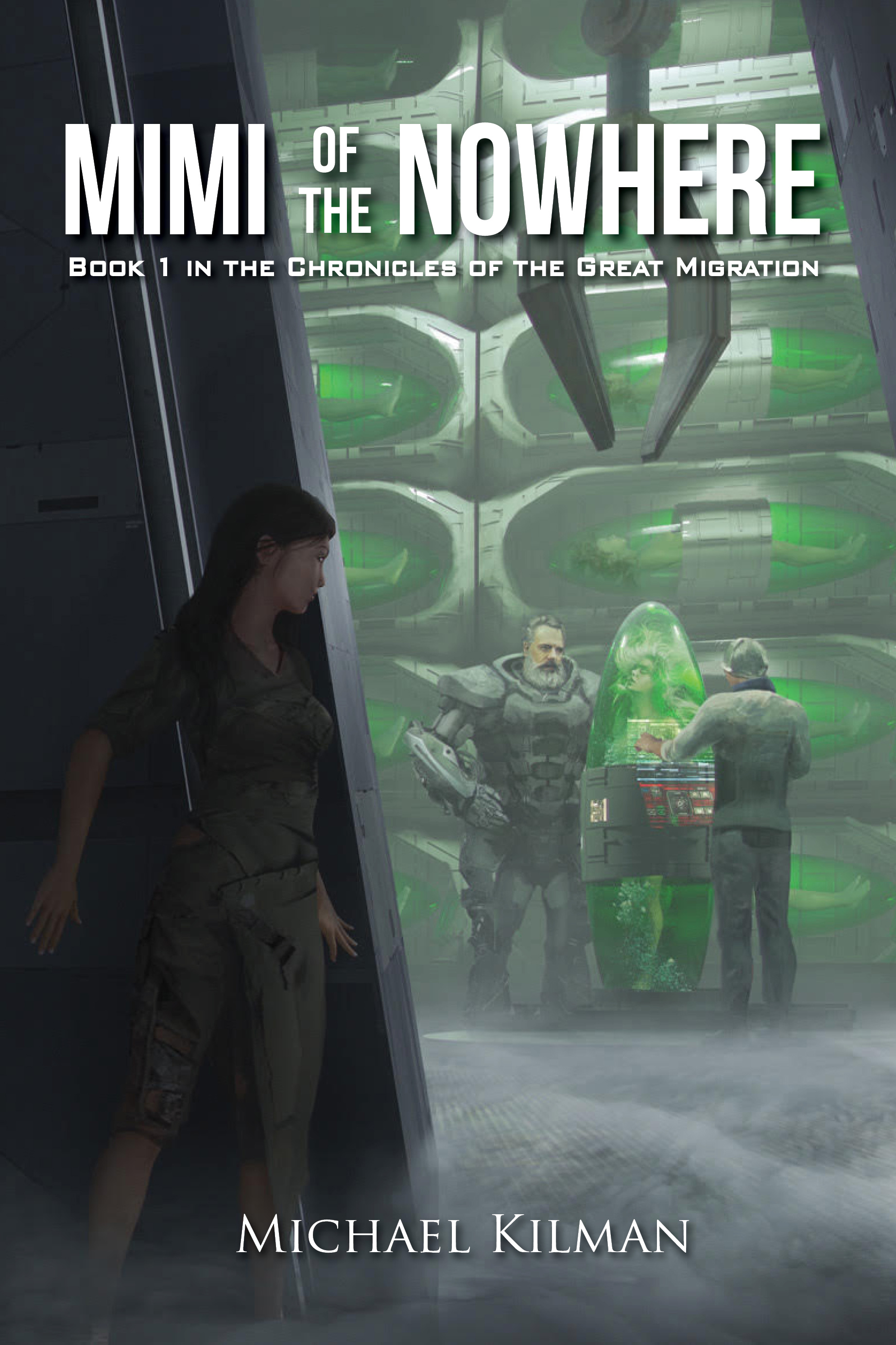
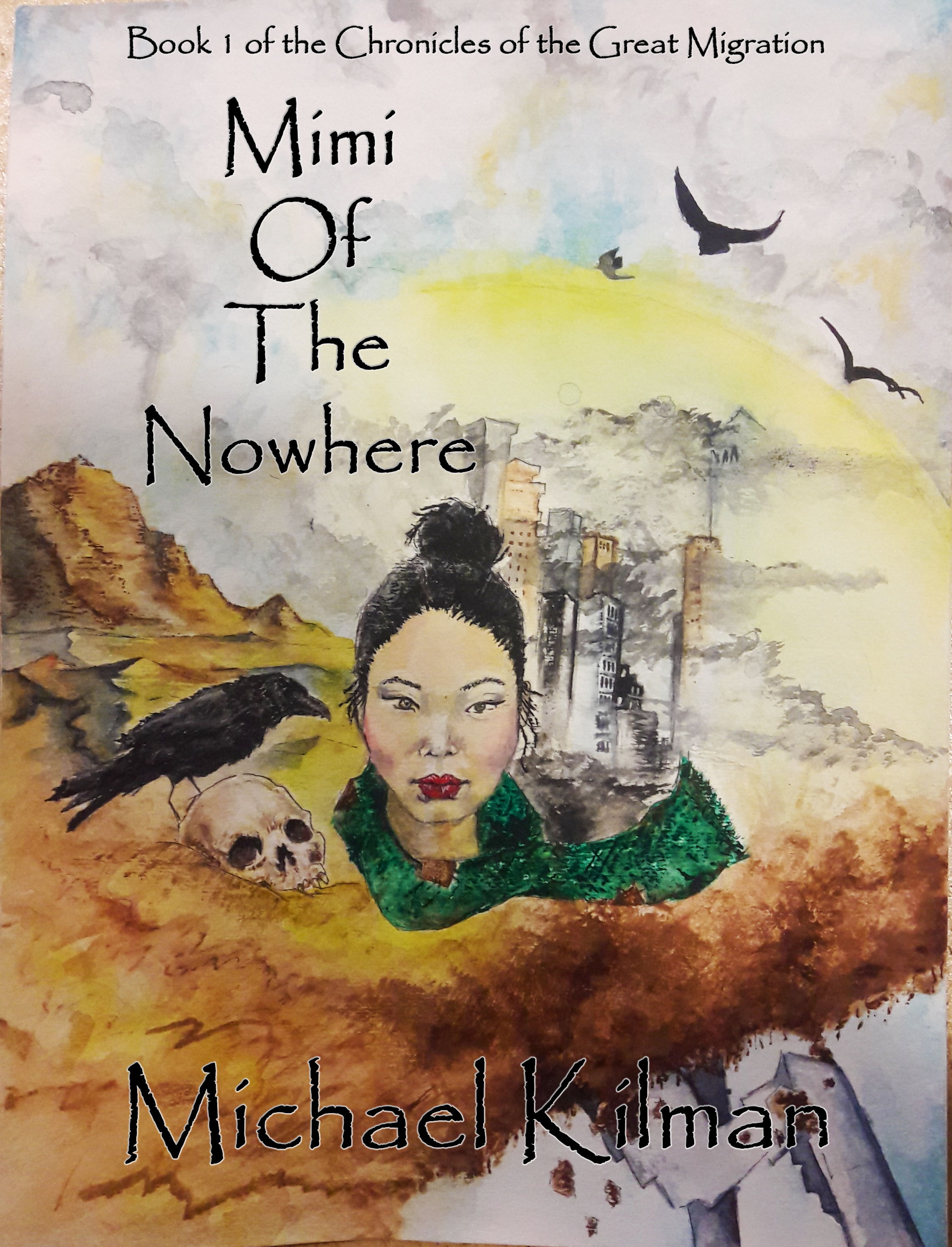
Today I am happy to present the official cover of my very first novel Mimi of the Nowhere. This book is the very first chapter in the Chronicles of the Great Migration. A series about life, death, and war in a Giant Walking Cities in a post-climate change era. Mimi of the Nowhere begins with the story of a Homeless woman living in the Giant Walking City of Manhasten, which was once, long ago the island of Manhattan.
A synopsis:
Life on the street is hard. Drug dealers, thieves, and even the security officers of the giant walking city of Manhatsten are up to no good. But somehow, Mimi’s done it for centuries. Of course, it helps that she is able to peek into other people’s minds and avoid trouble most of the time. Unfortunately, that same talent is about to get her into a whole other world of trouble. One that she never even knew existed.
The cover was created by the very talented Kayla Rose. You can find more of her work at her Instagram page here
Don’t forget you can read the first 6 chapters of the book free at the page for Mimi of the Nowhere
Want to read this book completely free? Sign Up for our Email Newsletter here and get access to this book for free beginning 5/17/18 as well as a number other great perks.







 Loridian's Laboratory