We are, each of us, a little universe. — Neil deGrasse Tyson
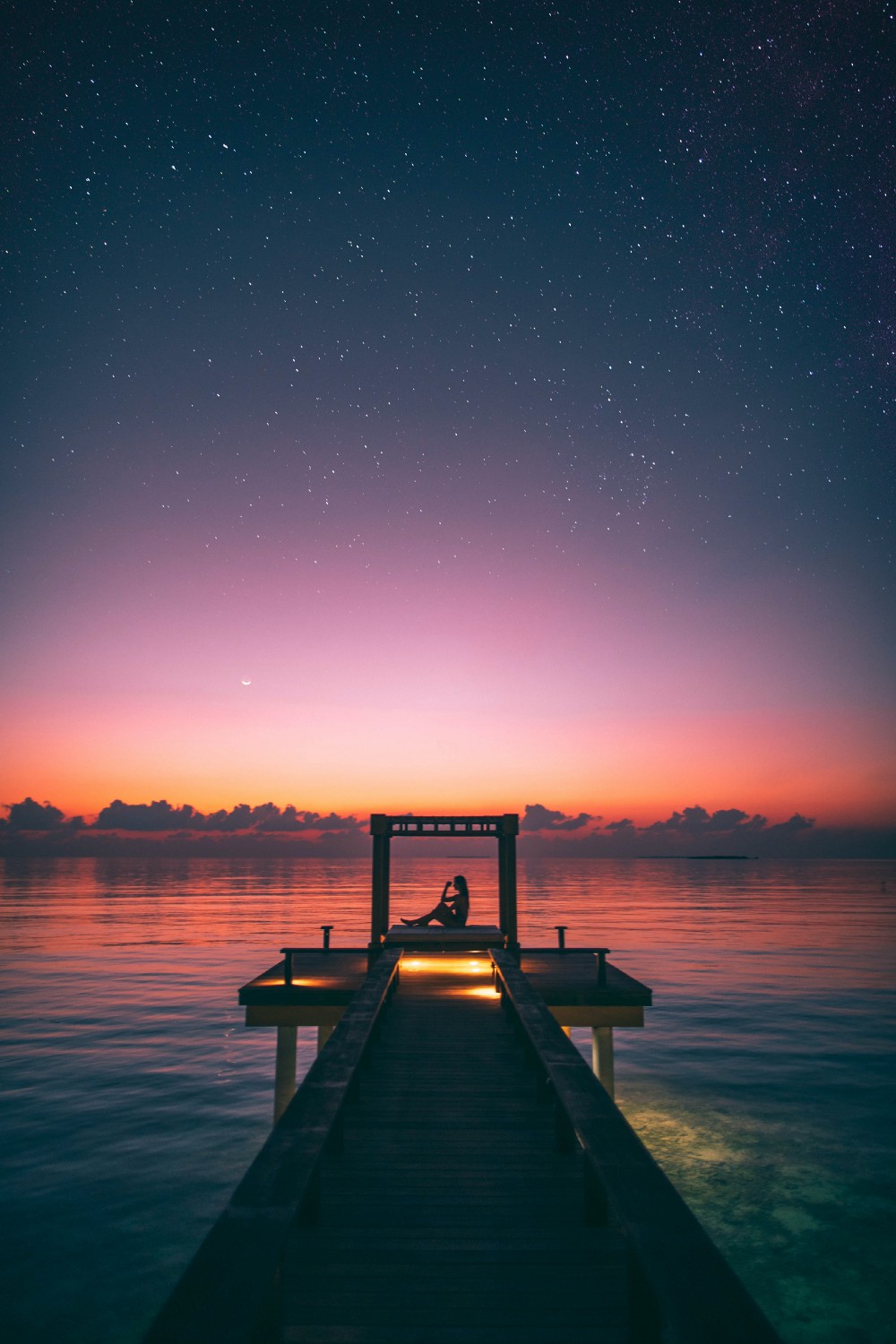
I have always gazed at the stars, longing with the beating of my heart for some greater connection to our cosmos. My childhood was filled with science fiction, astronomy, and glow in the dark stickers of constellations on my bedroom ceiling that I spent hours arranging. Even as an adult, I yearn to see our planet from above.
Space is potential and possibility, a garden of infinity. It is a great treasure of wonder and knowledge. The Universe is mostly space, and yet at our scale, it appears to be so crammed with life, and stuff, and objects that we can often feel claustrophobic, especially in our cities. Everywhere you go, there you are, bumping into things and people. Then, you scale up, and even the distances from here to the next nearest star system, are vast and unimaginable. And what’s in that space between the Stars?
Nothing?
No, not nothing. Potential.
In the last several years, I’ve been asking myself. Why do I desire the stars so desperately? Is it my curiosity of the unknown? Am I hungry to see with my own eyes, the grandeur shown to us by instruments like the Hubble telescope? Maybe it’s just too many hours consuming Star Trek, Star Wars, Stargate, the Expanse and countless other favorite sci-if films, shows, and books.
Is it that final frontier I crave? Is it an escape from the present and difficult state of humanity? Am I running away? Am I a coward?
What is it?
And then, I remember this quote from one of my favorite books, The Tao Te Ching,
“Do you want to improve the world?
I don’t think it can be done.
The world is sacred.
It can’t be improved.
If you tamper with it, you’ll ruin it.
If you treat it like an object, you’ll lose it.”
I always pushed back against that quote, especially during my time as an activist, but what I have come to understand is that quote is about space. It is about potential and possibility, about the desperate need to turn inward and consider the space between thoughts and emotions. We run around trying to fix things in our lives for the wrong reasons. Our rush to change things, is a kind of running away, a distraction from what we really need.
Many of us run our lives ragged. This culture, this American drive for more, tells us that if we work hard, that if we grind and grind and grind, somehow we will come out on top. But it’s not true. Most people will stay in the same position they are born in and in fact, according to the research of American Economist Raj Chetty, social mobility is far more limited in this country than we think.
It is so easy to get lost in the hustle, the desire to improve our space in this place. We are gig workers chasing a way to eek out a living on top of our full time jobs. Though we may do everything right, we still fail. It feels, overwhelming and sometimes pointless. We drown in our desire, filled to the brim with a hunger that can never be satisfied.
Why can’t we just breathe and be?
Why do we chase the American dream? Why do we idolize those who have so much? Why do so many of us play the lottery and fantasize about what we would do with all that money? How do millions of people get sucked into Multi-Level Marketing schemes? Why do books like The Secret or Think and Grow Rich sell so well to those dispossessed in this capitalist system?
The answer is, that what we really crave is freedom and potential.
We feel that if we had the economic resources, the space, and time, we could become our best selves. But we don’t have to go anywhere to be our best selves. If we want to change the world, the best place to begin is within. We only become our best selves by making space in our minds and hearts, by contemplation and learning from our mistakes.
What comes from working on ourselves, from engaging in that final frontier within? If we look at history, at the great periods of science and learning, we see that diversity, contemplation, exploring our humanity, and questioning everything, lead to the illumination of the human experience. We made progress when we were allowed to play with knowledge and people who were different than us.
When I read about the International Space Station, and the cooperation between many countries that it requires, all in the name of something bigger, I feel hope for our species. Here, in space, is another place for great human questions and the power of diverse thinking. Space within, and space out there, are both necessary for humanity to grow beyond the shackles of materialism and empty promises in ad campaigns.
What I really want from this world most is the opportunity to explore beyond the bounds of greed and the lust for more. Space to me, represents everything wonderful about what it means to be human. Exploration, discovery, research and the pursuit of knowledge are, in my mind, the greatest of goals.
On our planet, and in particular in the United States, there is so little space for poetry, sculpture, theater, and other wondrous explorations of our inner lives. If it cannot easily be commodified and turn a tidy profit, it’s considered to have little importance. We see the demoralization of artists, writers, poets, and scientists. People who dedicate their lives to trying to understand the big questions, rather than the pursuit of a stock portfolio, are dismissed as idealists at best, and unproductive leaches on society at worst. We have become the dispossessed of our humanity. What happened to the pursuit of knowledge for knowledge’s sake?
Yet, what did you consume during quarantine? What treasures did you find in isolation? All were the spark of space and being, the talent of so many creators and the fruit of the research of scientists.
We, as a civilization have lost ourselves in the pursuit of the temporary high, the cult of happiness, instant gratification, gifted to us by the propaganda on endless commercial breaks and targeted algorithmic ads. Where do we have space to be human? I believe it’s out in the Stars but also within. After all, we are made of star stuff. We are a mirror to the wider universe, a fractal of knowing.
We need room for our imaginations and wonder in order to grow again. We need to value those who help us create the space for curiosity and creativity. There is so much space in the nature of our own existence, so much to the nature of our own magnificent mind. Space is everywhere.
I don’t know if sending more people into space will solve these issues, but I do know that exploration drives human ingenuity. We must however be careful of the mistakes of the past, and remember the horrors and wrongs we committed when exploring our own world, and the endless suffering that we caused to indigenous people. If we let greed be our guide again, we will continue the cycle among the stars.
I believe we can do better. We are worlds, within worlds, within worlds. Not only is our planet full of life, death, growth, and change, so too are our bodies, our minds, our hearts and even our perception. We ourselves are an epic tale of triumph and failure. I believe that we are at a turning point in our species. We can choose to continue down the path of greed and selfishness, or we can turn in, recognize the meaningless that we have created though our missteps, shift our goals, and then explore the final frontier within and without.



 Loridian's Laboratory