This last fall I was a guest on three podcasts. Two of those podcasts have gone live already. The final one just came out yesterday and is live on YouTube. I had a lot of fun on this episode. We talked about a whole host of different topics on life, culture, anthropology, art, AI, change, and the future. Check out our conversation at the link below
Do you feel stressed just thinking about a few of your relatives who will create contentious conversations? Who are difficult to deal with? Are you ready for the holidays to be over before they begin?
The best advice is usually to avoid those thorny conversations, to find common ground, and focus on stuff you agree on. It’s good advice. But that’s not always possible. Sometimes you can’t avoid the tough conversations. So why not find ways to make them easier over time?
Ram Dass famously said, “If you think you are so enlightened, spend a week with your family.” And it’s true. Our families can be the most challenging group for us to deal with. There is so much history there that they can struggle to see the person you are now, as opposed to the person you used to be. It’s easy to forget that people change when you’ve known them for decades, especially from childhood.
I’ve been teaching Anthropology, Cross-Cultural Communication, and Diversity for almost ten years. So, I thought maybe I would offer up a few tips to help you navigate the holidays and how we can start healing the division we’re all experiencing.
Before I dive in, I want to ask you to read the whole thing. Quite frankly, when I am out in the world discussing this stuff, people will often interrupt and dismiss some of these tools for a variety of reasons. I will address most of this below, so even if you don’t agree with something I write, I encourage you to keep reading till the end because your question might be answered.
1. Listen to Understand, Not To Be Right
When I teach classes on diversity or communication, students are assigned reading reflections. In the first portion of these assignments, they must fully summarize an article with the core ideas, and the evidence the author is using to make their claims. They are not allowed to inject their opinion in the summary section. Why? Because before you can critique an argument, you have to fully understand it. So, before they are allowed to share their opinion, in the following section, they must first demonstrate they can summarize someone else’s argument.
This is an important life skill.
When someone has contrasting beliefs with our own, we tend to shut down and stop thinking critically. The walls go up. Then we accuse the other person of a lack of critical thinking or ignorance or dismiss them in some way. Who is right and who is wrong isn’t really the core issue here. Neither side is hearing the other and so no one will see a way across the divide.
Don’t listen to someone to prove something. Don’t listen to someone to be right. That is just an emotional reaction. You have allowed your emotions to take possession of you. This means the other person will also react emotionally and the conflict will escalate, and both parties will walk away miserable.
What to do instead?
Take a breath and listen. Don’t just listen to what they are saying, but try to understand where their concern comes from. What’s at the root of their fear and anxiety? It’s often different than you might think. What are their desires? Their hopes? What does a good future look like to them?
This leads to the next point…
2. Ditch the Devil’s Advocate
After nearly a decade of teaching, I’ve come to believe that the Devil’s Advocate approach is well, a devil. Meaning that it’s rarely a useful approach. The position of the Devil’s advocate masks itself as sincere critique, but most of the time, it ignores the concerns of the other person and seeks only to undercut someone else’s argument. It’s often dishonest, and disingenuous.
There are spaces where it’s possible to use the devil’s advocate well. If you’re in the midst of a debate in some kind of performative setting, where there is a moderator or someone able to continually keep both people in bounds, it can work. But the Devil’s Advocate isn’t a tool to persuade someone to your side, it’s to persuade an audience to your position. That’s a completely different tool. You’re not going to connect with the person you’re arguing with by using the Devil’s advocate approach, at least not usually. Yes, there are some people who can get something from this approach, but again, in my years of teaching on these topics, I’ve found nine times out of ten, it causes more problems than it solves.
What to do instead?
Use a kind of soft Socratic approach. You have to be gentle with this approach because remember, Socrates pissed enough people off that they made him drink poison. The goal is not to make the other party feel stupid or ignorant (which is what got Socrates killed) but to open the door for them to think about their viewpoint. Ask questions motivated to understand what the other person is saying. These questions should be rooted in an earnest curiosity to investigate their true thoughts and desires.
You’d be surprised how many people build a wall with their beliefs to try and prevent themselves from feeling overwhelmed by information. Soft Socrates can help them recognize that wall, to see that they’ve created a blockage between themselves and others.
How do you do this?
Don’t try to argue your beliefs. Don’t try to make appeals that work on you. Everyone has empathy, it’s a matter of who they have empathy for, and what they feel personally connected too. If someone doesn’t like immigrants, talking about women and children suffering, isn’t going to work in a direct approach.
Ask questions that show them you are empathetic to them, that you’re willing to listen and want to understand them. This builds rapport and creates space for them to share their deeper feelings and thoughts over time, and allows you to speak to them in a way they may understand in the future.
Again, you don’t have to agree with their beliefs or ideas (you can disagree with them intensely), but being able to summarize someone else’s argument effectively, is a really powerful tool for a number of reasons. Remember, this is just a conversation. Nothing is lost if they don’t ultimately agree with you, because, well, they already don’t. So ask lots of clarifying questions. If you can understand their point of view, you can learn to speak their language.
Ask questions like:
You keep bringing this up. Why is this issue more important to you the others?
Can you help me understand how and why you came to that conclusion?
If they got their ideas from a media personality consider: Where do you think that this person got their ideas and information? Have you seen this personally?
Was there something that you experienced that made you feel this way?
How might someone else interpret that experience?
It sounds like you’ve spent a lot of time thinking about this. I have too. But do you think you can explain the beliefs of people who disagree with you? Do they all think that way?
How do you think the other side came to their beliefs?
Why do you think their conclusions are as important to them, as your conclusions are important to you?
What do you think is important for other people to know about this topic? Why is that?
Is there another way of thinking about that issue that you can at least partially agree with?
What do you have in common with the people you disagree with?
Wow, it sounds like you care a lot about this issue. How can we solve this issue in a way that benefits everyone involved?
The point with this approach is to establish common ground and to get them thinking that there are other ways of interpreting the same information. You’d be surprised how often someone who believes the opposite things as you, wants very similar things.
In general, people want to know that their basic needs are going to be met. They want to have the peace and freedom to pursue their interests and desires, and that people will care about them when something happens. Yes, even bigots want these things.
Context – The cultural system into which someone was born. This includes all the available cultural knowledge they grew up with, the time in history, and important historical events that will have shaped their thinking. This is the entire system into which they were born, not their personal experience.
Conditions – These are the personal experiences that someone has had in their life. What kind of exposure to different ideas have they had? What challenges have they faced? What are their religious beliefs, language, gender, class identity, and so on. How do these compare to the norms of the culture (does that create conflict or perceived conflict for them?) These are their experiences within the system they were born.
Choices – Once you have taken the time to understand a person’s cultural background and personal life experiences, you can begin to understand many of their choices, their political opinions, their religious beliefs, and so on. This doesn’t mean you agree with them, but this exercise is to help you recognize them not as that ranting irrational person you can barely stand to be around, but as a complex person who has different thoughts, desires, emotions, and needs.
Humanizing someone is important. Dehumanizing someone is the first step to violence. That doesn’t mean you like what they believe (especially if their beliefs are dehumanizing), it doesn’t mean you agree with what they are saying, but understanding is the starting point to a more cohesive coexistence and to find ways to solve problems.
People do not usually change their minds because someone screams facts at them. They have to connect emotionally with the facts. If you connect with them, and you build trust, they are far more likely to listen to you and given enough time, change their mind.
There are no quick fixes here. People don’t come to hate something in a singular moment. It takes time. Either they are born into a way of thinking and they are raised with it, or something happened to them to put them in a vulnerable position where the seeds of hatred could grow. Hate usually grows from outrage, and these days, all of us, across the political spectrum, consume media that purposely makes us feel outraged. That’s how these companies make their money.
That’s actually optimistic because we’ve created these problems. That means we can uncreate many of them.
4. This won’t work every time, and it takes lots of practice
As someone who has not only taught diversity for a decade but has lived and worked among other cultures, I’ve heard every argument for why we should or shouldn’t appeal to the humanity of someone who disagrees with us.
Things like:
“You can’t be tolerant of someone who wants to end your existence.”
“Some people just thrive on chaos.”
“They are a narcissist (or some other reason they will never listen).”
“They are willfully ignorant and will never change their mind.”
“I know better because I’m older and more experienced.”
“They are too old to change their mind.”
“They could never understand what I’ve been through.”
“Their generation has xyz issues.”
Maybe these are true. Maybe you’re right and that person will never listen. Have you tried the above approaches? Have you put down your weapons and tried to talk about these things, not to win, not to be right, but to understand? Maybe you have. Maybe my advice doesn’t work for the person or people you’re thinking about.
But it will for someone. And in a world where so many of us feel the rising conflict, every person who listens counts. Every courageous conversation counts. It’s often the little acts that change the world, that bring communities together.
People doubt their beliefs, especially when there are obvious holes in what they think. People are aware at some level, of their own cognitive dissonance. It’s why they get so angry when presented with a sincere challenge to their worldview. When you attack them, it gives them a reason to put aside their doubt, and build a higher wall.
But if you approach things from a different direction, if you meet their walls with an olive branch, sometimes they will open the gate. Given enough time, they might start to take bricks off that wall, enough that they can start to see over to the other side. Even if they never fully change their mind, softening their view can deescalate potential violence and conflict. Even if becomes, well, we know we can’t approach that topic but we still love and care for each other, that’s a victory. If you have even 10% more peace during your holiday. That’s a victory.
No this won’t work every time. It might not work the first time, or the tenth, but if we care about this person, or ever cared about this person, we must remember their humanity.
I am definitely not perfect. I screw this up all the time. Ten years of teaching, and I can’t always make it work. There are some people, and some things that just get under my skin and I have a hard time seeing past that. But over time, that’s less true. Over time, I can talk about complex issues such as race, gender, or oppression in ways that are more accessible and thought-provoking, less attacking, and more about developing connections.
I’ve been the angry activist on the street, screaming and shouting for tyranny to end. I’ve written no end of essays and articles about injustice. I conducted graduate research on media and representation and saw all the terrible ways our system treats differences. I’ve struggled with elements of my own identity for most of my life. I grew up in a deeply segregated community on the East Coast and didn’t understand anything about diversity. But I learned. I changed. I continue to make mistakes and reflect so that I continue to grow.
It’s know it’s hard to be the bigger person, really hard. But I promise you, the payoff is worth it. We just have to try. Sometimes we will make a connection and change things for the better. Sometimes we won’t. But you never know for sure until you try.
I hope you all have a wonderful holiday and some of this is useful.
Hey readers, Yesterday I went on the Colorado Switchblade Podcast and talked about my work as a media researcher, an anthropologist, storytelling, and the value of community and art. It was a fun conversation with Jason Van Tatenhove, who may have even seen on places like CNN and Dr. Phil. Check it out, and definitely check out the Switchblade, it’s doing some really interesting stuff.
How do we create identities? How do we decide what kinds of things are taboo in society? How do we know what is clean or dirty? Have you ever thought about the fact that sometimes, we reinforce our choices and values through rebellion and/or opposition?
It might be obvious why some things are taboo, or at least there is some sense of rationalism surrounding those ideas. It’s taboo to eat out of the garbage, since the likelihood you will get sick is high and that’s where we put the things we wish to discard. But why are there taboos surrounding colors of clothing or beards, or types of clothing or lack of clothing? Is there a rational reason a man can’t wear a bright pink bikini on a hot summer day in American society? Why does this make us uncomfortable? Is there a reason that it’s not considered manly? Keep in mind, by reason, I mean an objective scientific one. Don’t worry, you’re not going to find a picture of me in a bright pink bikini below, I promise. But when you’re building a fictional world, understanding why a society formulates taboos and norms can be really useful.
In this entry on worldbuilding, we are going to examine a way to think about how people form their identities and cultures using the concept of schismogenesis.
Coined by Anthropologist Gregory Bateson in the 1930s, the term schismogenesis means essentially creation through division. By looking at your identity and behavior, I acknowledge how we are different, and thus solidify who I am. This often manifests as opposition. The most obvious form of schismogenesis is the rebellion of teenagers, who form their identity based on challenging acceptable behavior. Through opposition, they create identity. But this isn’t just a teenager thing, cultures and people do this all the time. It’s why suppressing differences, can actually make them stronger. The identity becomes more legitimate, more solid, because you fight against it.
Let’s return to bikinis.
I (apparently) am the kind of man who wears a bright pink bikini in public, and you, (assuming you’re a male in this example and of the status quo in American society) do not. Thus, I am behaving inappropriately in society, and you are not. You, will try to get me to conform. You will probably mock me for my strange behavior. You may seek to make me feel ashamed of wearing my bright pink bikini out in public. I will do one of two things. Either, I will capitulate, and take off my bikini and switch to the culturally acceptable norm of swimming trunks, or I will continue my rebellion and seek to recruit others who think like me. Thus, I will form my identity through opposition.
These kinds of things happen every moment of every day across every culture. Power and resistance are constantly in play on every level. Think of all the debates going on right now in your culture about what people should and should not do. There are hundreds of topics to choose from.
Let’s look at a more serious example. Take the pork taboo. Lots of people speculate why both Jews and Muslims have a pork taboo. People have puzzled over this idea for centuries. This isn’t just limited to Jews or Muslims either. Why do some cultures say that certain foods are clean, and others are dirty? There are entire lists of foods that people eat in one location in the world, but gag just thinking about them in another.
(Note: If you want to read a whole book on this topic and you are an anthropology nerd, consider Mary Douglas’s award winning 1966 book Purity and Danger: An Analysis of the Concepts of Pollution and Taboo)
But why pork? Well, if you ask a Jew or a Muslim, the answer you’ll likely get is that pigs are filthy animals. They are living garbage disposals and love to live in their own shit and piss and eat whatever you put in front of them. Why, they ask, would you eat such a creature as this?
The reality though, is that pigs are not like this out in the wild. In fact, when I was doing research in a rural village in Mexico in the northern state of Nueve Leon back in 2008, the pigs they had in those villages were far from disgusting or dirty. They grazed in fields alongside the other animals and ate similar things. They didn’t live in mud, they lived alongside all the other animals. So the filthy ‘nature’ of the pig that is the central complaint of the taboo is something artificially created by human action, not nature. Often cultures and people will come up with logical explanations for their taboos to justify their practices.
That doesn’t mean we should disrespect our Jewish or Muslim friends by forcing pork on them. Every culture has things it forbids that defy rationality or reason. We all have superstitions and traditions that aren’t based on evidence. The point here is not to judge, but to understand how this works to better assist you in building fictional worlds.
One possible explanation for the pork taboo is schismogenesis. In the ancient world, there was a period for the Jewish people known as the Babylonian Captivity or the Babylonian Exile. Many Jews were forced to live under the control of the Babylonian empire after the Babylonians conquered the Kingdom of Judah beginning first around 598 BCE. The Babylonians captured and enslaved many of the Jewish people.
There were two large staples of the Babylonian diet that both became taboo under the Kashrut, the dietary restrictions of the Jewish people. The first was pork, and the second was horse. Both foods were common in Babylon at the time. The enslaved Jews did not consume this food previously. Thus, as their enslavement continued, they ate foods similar to that of their homeland, and not of those who enslaved them. This certainly contributed in at least some way to the prohibition, though it may not have been the only cause.
But here we see, at least in part, schismogenesis in action. The Jews, under the yoke of an oppressor, didn’t want to partake in the food of those who had enslaved them, hence, their identity surrounding their food taboo. Several generations lived under these conditions, then, when the Persians conquered the Babylonians and allowed Jews to return to Palestine, many of those ideas circulated into the wider culture. Food is common as an important identity marker in many cultures, this is especially true in populations that have been historically oppressed.
Now again, there are many debates on the pork taboo, and this is only one possible explanation. In fact, most cultural taboos and restrictions can come from several causes at once. But, schismogenesis is useful because it helps clear up confusion in a culture. If the enemy other is doing something, and you don’t want to be like the enemy, then you can avoid doing that thing. This solidifies who you are as a culture and with it, identity. In our case, it helps create more complex fictional characters.
Here are few things to consider if you want to employ the concept of schismogenesis in your fictional world.
1. What are the core values of each of the fictional cultures you are building?
If you’re setting up a world where multiple major cultures will fight for control, then the first place to begin is where their core values lie.
– What kinds of things are important to your culture?
– What taboos do they have?
– What things to they exaggerate or emphasize about their adversaries?
– What qualities do they wish to cultivate in individuals on an ideal level?
If you take these things and sketch out what each culture is doing in these worlds, you will have a good place to see potential conflict between the different ideas of morality and/or taboo in the cultures.
This is especially true if you have a culture that has been conquered by another. Acts of rebellion don’t end at violence or protest. They can manifest in everyday experiences. In fact, when you stress a culture out, there is always a core group of people who will try to preserve important elements of their culture, hence, the rise of fundamentalists. They want to go back to the way things were before the changes came. It doesn’t matter that you can never truly return to the way things were, people want that old sense of safety and security of their cultural norms.
This is why we see groups like the Amish, whose very existence is in opposition to the changes wrought by modern technology. I grew up in part on the east coast, and not far outside of Philadelphia, it was common to see the Amish on the road in their horse and buggy, slowing down traffic. The way they choose to live is a form of schismogenesis. It might not feel subversive to us to live in that way, but to them, it is.
Which brings me to another point. Cultures aren’t homogeneous. There are all kinds of diverse approaches and ways to live within cultures. Be sure to consider that as you highlight the values and taboos of the larger culture above. You will want some wiggle room for resistance, for factionalism, even as larger conflicts between nations are happening. People disagree on pretty much everything, and sometimes that disagreement is a huge part of their identity.
2. The minor differences matter
Yes, your cultures will argue over the big stuff. But the minor differences matter too. Every culture has a different protocol for body language, for dress, for the kinds of sounds and colors they like and dislike, and so on. Every little thing you do comes from making comparisons against others. While we focus on the things we like and enjoy, we often spend even more time on the things we don’t like or find disgusting as ways of acknowledging who we are.
Small things like how a culture eats can mark identity. Much of Europe didn’t adopt forks until the 17th or 18th century (depending on what region) because they were considered either unmanly or excessive. Just imagine, someone, at some point, was complaining about how feminine it was to use a fork. Yes, that really happened. Someone else decided to use a fork anyway, probably a teenager.
Even generations within cultures employ schismogenesis. Think about what different generations say about each other. I’m a millennial and hear constant complaints from older generations about us. I’m almost forty now, so obviously millennials aren’t that young anymore. I’ve noticed that there are a lot of complaints among my fellow millennials about Zoomers already. We make constant comparisons about all the little things we do differently.
You don’t have to pick big things for schismogenesis, in fact, sometimes a lot of little things add up to create stark differences. Remember, as I’ve said repeatedly in these entries, and in my book Build Better Worlds, culture is a performance. It’s a way of enacting practices to mark who you are and what you value. That isn’t just the big stuff, it’s all the little things too.
3. Living within a cultural script
Every culture has a kind of script, a set of rules to live by that are both formal (laws) or informal (norms). Some cultures (like our own) make the concepts of choice and freedom paramount to their core values. But if you step outside the bounds of their norms, there are still all kinds of ways you can be disenfranchised. Think of the debates surrounding the right way to be a man in our own society. Forks and pink bikinis aside, these discussions aren’t about objective truth.
In fact, the irony of this discussion is that if choice and freedom were truly at the center of the debate, there wouldn’t be arguments about what makes a “real man”. Men would just go out and do whatever they wanted and that would be manly. These same scripts that proscribe masculinity limit agency (freedom of movement within a culture). There’s no freedom by living up to the expectations of a cultural script, but there is a sense of unity, an imagined comradery. (Note: See Benedict Anderson’s 1990 book Imagined Communities for the Anthropology Nerds out there) Though we may never meet most other Americans, there are certain behaviors and identity markers that are expected to establish a sense of unity across the culture.
This isn’t about good or bad, this is what cultures do. How a culture maintains itself, or how it changes, is an endless conversation taking form in every arena of every culture. These masculine norms aren’t about freedom, it is about expectations, about clearing up confusion to make identifying what is male and what is female in clear terms. Humans in general like things simple. Unfortunately, very little about humans is simple. We might idealize certain behaviors or how many genders we think we are, but of course, certain behaviors that are beneficial and unifying to one group will naturally be oppressive and divisive for another. This is exactly why, opposition can be a core part of identity.
With all that in mind, take a moment to consider, what kind of cultural scripts are used in your fictional world. There are certainly trends among humans. Male domination, though not universal, is common in the modern world. There are still matriarchies out there, but they are few and far between because of the larger patterns of empire and conquest.
– Different political systems, like the matriarchy mentioned above, would have different scripts
– Different economic systems, like a gift economy, or a system that uses potlatching, would have different scripts about what wealth and power look like
– Different religions, for example, one without deities, are going to focus on different scripts.
– Remember that culture is holistic, that every part of culture connects into every other part of culture, the scripts about behavior and identity will mirror all these elements put together
4. Enforcing identity and Solidifying Resistance
In order for a cultural script to be useful, it has to be enforced. In some societies, there are laws about how people dress. They enforce what activities different groups can participate in, how they should appear in public, and so on. In addition to these formal laws, or in a situation where there isn’t written law, rumors and gossip act as a kind of social surveillance to enforce expected behavior. Gossip is likely the oldest form of surveillance and uses shame and guilt as a weapon against anyone who doesn’t fit neatly into cultural scripts. If that sounds like high school, you’re not wrong. Humans have been doing this to each other since we were… well, humans.
Remember, these scripts are also created in part because a culture doesn’t want to behave like the other. They want to mark themselves as distinct and different. They don’t want to engage in the behaviors of the enemy other, dress like the enemy, eat like the enemy, or even talk like the enemy. Groups that are focused on differences will often advocate for exclusionary rules or policies that limit the kinds of diversity possible. They will shame and embarrass those who don’t fit in the mold. Often, they have a fear that this other, this adversary, will creep in and take their culture away from them by changing things or forcing them to change.
We even do this on a large scale. The 1978 book, Orientalism, by Edwards Said, highlights the perceptions of Europe and its false dichotomy of the Eastern world vs Western world. The book is an attempt to critique our stereotypes of the Eastern world, and how empire, colonialism, and bias played a role in our understanding of world history and cultural analysis.
According to Said, men of the Orient were portrayed as culturally backward, physically weak, and feminine. This reinforced the ideas of Western masculinity. Of course, perceptions of the men of the Orient were just stereotypes. And nothing robs people of their freedom quite like a stereotype. Raj from The Big Bang Theory, and Fez from That 70s Show, are stereotypical examples of Orientalism in action. Both the characters struggle to understand Western culture and are awkward. Both characters spend a lot more time with the women of the group and struggle to relate to the men in the same way. Both characters are mocked for their physical weakness.
Cultures will often create assumed cultural scripts for their enemy. We know these scripts as stereotypes. We expect the enemy to fit only within these boxes, and are often surprised when they don’t. This is not a product of only one culture, all cultures do this. We use our norms and rules to compare ourselves to the cultures we don’t like because they are a direct enemy, or because we consider them less civilized. But it works in a paternal dimension too. Paternalism in this case is the notion that we are more rational or advanced and must help civilize the “savage”.
What are the benefits of using Schismogenesis in fiction?
Employing schismogenesis creates all kinds of fertile ground for storytelling. There will be characters who highlight the differences between each group and hold conservative views about the way things have always been. There will be characters who think that some of these arbitrary things are well… arbitrary. They will accuse the conservatives of living in the past and highlight the ways that the past was ugly. These are the progressives of your society. They often advocate against these kinds of differences. However, they will also employ schismogenesis against those who they disagree with too, often the conservatives of their culture.
Just because you are liberal or progressive doesn’t mean you’re free of bias. No one is free of bias and oversimplistic thinking. We all generalize the people we disagree with. I catch myself doing it all the time. After all, it’s much easier to disagree with someone if you take away the nuance and complexity of their argument and create strawmen that are easy to knock down. We all have things we are bias about and we even know that some of them are arbitrary. Your characters absolutely should too.
There’s a third group in a mix, the ones who stand in the middle. These bicultural individuals (they can certainly have more than two cultural backgrounds) don’t have a specific set of rules or scripts to follow for their identity or they have more than one. Individuals like this are born in the middle of multiple scripts, being forced to discern how to move through the world. They could be mixed ethnicities and thus get culture from each parent, or perhaps they are an immigrant or refugee born in one culture, but now living in another. Every person who stands in the middle will take unique positions on different aspects of their identity and culture. Immigrants should be just as diverse and complex in their approach to the world as characters who are monocultural. Some immigrants may take on the dominant norms as an act of rebellion to their parents. Others may take on the traditions of their homeland to resist assimilation. Schismogenesis in the real world creates all kinds of diverse identities and experiences and in fiction, richer characters, backstories, and worldbuilding.
Consider:
– How do your characters compare themselves to other cultures and individuals?
– Why do they make that comparison? Are they jealous? Are they fascinated? Is the grass greener? Is the other more barbaric?
– Do they see some good things and some bad things about the other?
– What generation are they a part of? Are there changes in technology for that culture or maybe some new cultural practice or experience has arrived?
– Has contact with another culture happened recently?
– Has there been a change in the political or economic structure?
Some Final Thoughts
Norms change. We don’t consider forks unmanly anymore. Though I guess the jury is still out on men in pink bikinis. Every generation gains new ideas, and loses some old ones. Maybe in the era of social media things are changing faster than before, but we need a much longer view, in terms of decades, to really understand what social media is doing to us. Sometimes, changes that appear bad in the beginning create really interesting changes in the long term.
In building your world you could start out with one group of norms and rules for a society and then change the power dynamics of the situation to suddenly force those norms out. Brandon Sanderson does this masterfully in the Stormlight archives. At the beginning of the series, having light-colored eyes automatically means you are a person of rank and privilege. Being a poor light eyes is far better than being a wealthy dark eyes. Light eyes or dark, both groups have their own internal hierarchies as well. But, as the series goes on, and the return of old magic changes the colors of some people’s eyes, the power dynamic of eye color changes, and many of the characters are forced to confront the arbitrary nature of the light eye, dark eye, dichotomy, each in their own way.
The best stories are ones that show truth. The truth about most of what we do as humans is that it’s arbitrary. We have certain standards and taboos that do serve purposes. Some help protect people from harm in both short-term and long-term situations. Eating garbage or marrying your sibling are not wise moves and thus those taboos are useful.
However, many things we hold as important are really just cultural preferences. Loving your culture isn’t wrong. It’s just that these things don’t have any root in objective truth. That doesn’t mean that they don’t have value. There are many beautiful traditions the world over that some consider strange, while others find unity and comfort in them.
It’s all complicated. Wonderfully complicated. I think too often we look at complexity and throw up our arms and say, it’s too much effort to understand. But I think it’s better to be curious. But then, that is why I became an Anthropologist.
Writing honestly means to look at the world and understanding it for what it is. The world you create in fiction, is a reflection of who you are. Sometimes that means to create the best worlds, we have to step outside of what’s comfortable or easy. Good worldbuilding means you need to understand the cultures you’re creating. You need to hold what they see as sacred in your mind. Immerse yourself in their worlds. Live through your characters and embrace the wonderful complexity of the world you’re creating. Maybe try a little schismogenesis on for size.
For a while now I’ve been really focusing on thinking about alternatives to our current, political, economic, and social systems. In that vein, I’ve been reading a lot of books and articles that challenge the apparent inevitability of our current global system. The more I’ve read, the more I realized there are a lot of people in the past and present who are spending time looking at other ways of approaching social organization in this world. There is also a ton of archeological evidence out there now that increasingly demonstrates that the classic story of how humans organized in the early days of our species is nothing more than modern mythology, and that things were, and are, a lot more complicated than historians, economists, political scientists, and others would have us believe.
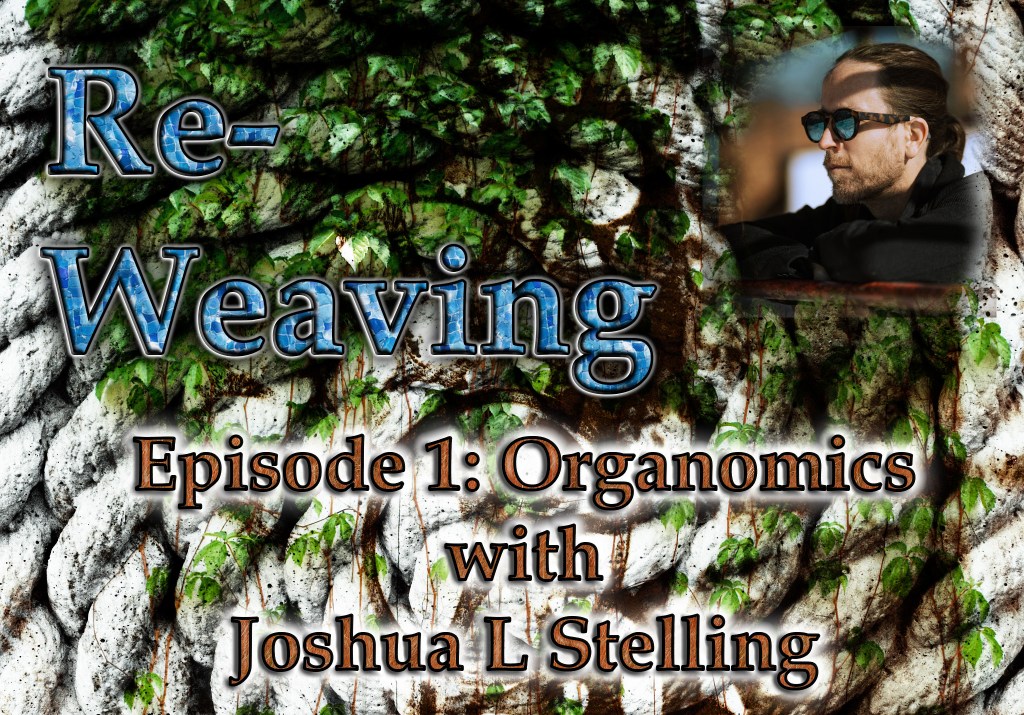
Some of these ideas are radical and game-changing, some of these ideas are experiments of the imagination. But, I wanted to create a space for people to engage with them, that’s accessible and public. Because everything humans do is complex, and what we imagine matters. So, I’ve decided to launch a new podcast. The podcast is called Re-Weaving. I wanted people to think about how this world is woven together, and how, if we choose, we can unravel some of the toxic systems and approaches and, as communities, weave things back together.
For now, it will be a once-a-month thing that starts as a live stream on YouTube and then will be uploaded to other podcast services after we have recorded. This allows for public engagement and questions during the live stream for anyone who is participating.
My first episode will go live this coming Monday, June 26th at 7 pm. I will be speaking with the Author and Game Designer Joshua L. Stelling for his unique book called The Organomic Manifesto and discuss his ideas for a radically different approach to economics. You can join us live, or watch the replay on YouTube or other podcast sites (I am working on getting other sites set up at the moment).
Hello everyone, I decided to launch a Substack to connect with my fans of my work. I will still continue posting here on this website as always, but additional content will available on substack. The content on there will include my artwork, poetry, blogs about writing and worldbuilding, personal growth, anthropology, philsophy, YouTube Videos, Podcasts, and Recorded discussions and more.
The vast majority of my posts on substack will be free to anyone, you need only sign up for a free account. But, I will also have paid subscriber content as well include free access to every short story I publish and sometimes advanced review copies or audiobooks versions of my work. So, if you enjoy my work, consider heading over to my substack and signing up and supporting me and the things I create.
This last weekend I had a great time at Cosine Comic-con. I was on several panels as both participant and moderator and sat in on a number of great discussions. As always, I try to record some of the panels that I think might be helpful for writing or a good resource for people. You can find the recording of, Adding Diversity to your Writing, below. This panel included myself and the following panelists:
Betsy Dornbusch writes epic fantasy, and has dabbled in science fiction, thrillers, and erotica. Her short fiction has appeared in over twenty magazines and anthologies, and she’s the author of three novellas. Her first fantasy novel came out in 2012 and her latest trilogy, Books of the Seven Eyes, wrapped up with Enemy in 2017. The Silver Scar, a standalone future fantasy novel, was called “a spellbinding saga” by Publisher’s Weekly.
Thea Hutcheson explores far away lands full of magic and science with one hand holding hope and the other full of wonder while she burns up pages with lust, leather, and latex, brimming over with juicy bits. She lives in an economically depressed, unscenic, nearly historic small city in Colorado. She is a factotum when she is filling the time between bouts at the computer.
Martha Wells has been an SF/F writer since her first fantasy novel was published in 1993, and her work includes The Books of the Raksura series, The Death of the Necromancer, the Fall of Ile-Rien trilogy, The Murderbot Diaries series, media tie-in fiction for Star Wars, Stargate: Atlantis, and Magic: the Gathering, as well as short fiction, YA novels, and non-fiction. She has won Nebula Awards, Hugo Awards, and Locus Awards, and her work has appeared on the Philip K. Dick Award ballot, the BSFA Award ballot, the USA Today Bestseller List, and the New York Times Bestseller List. She is a member of the Texas Literary Hall of Fame, and her books have been published in twenty-two languages.
Recently, the editor of Anthropology News reached out to me and asked me if I would contribute an article for their fall magazine. The result was How to Build A Complex Character With Anthropology. I was really honored to be a part of AAA news since I’ve been reading and engaging with their content for a number of years.
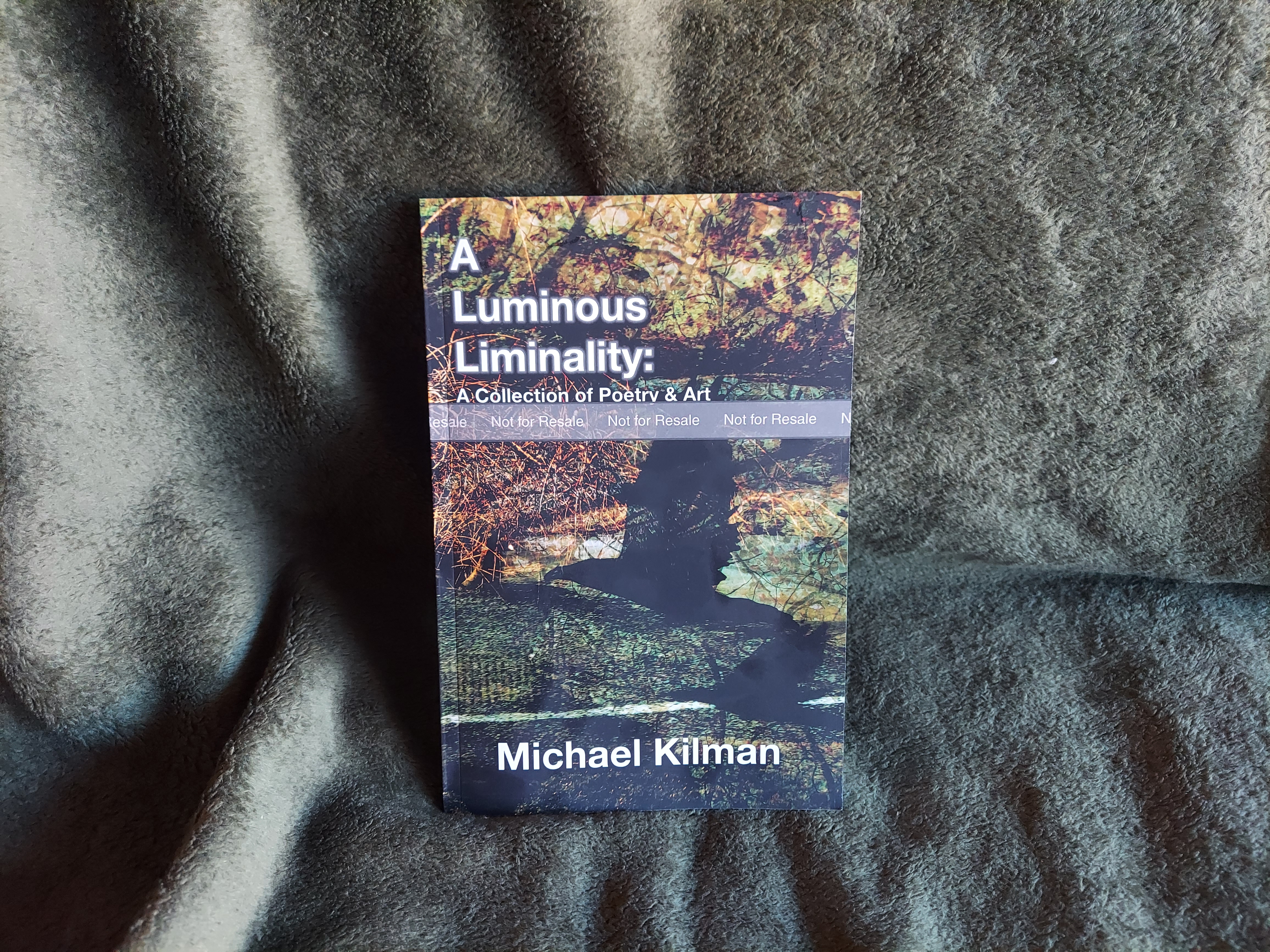
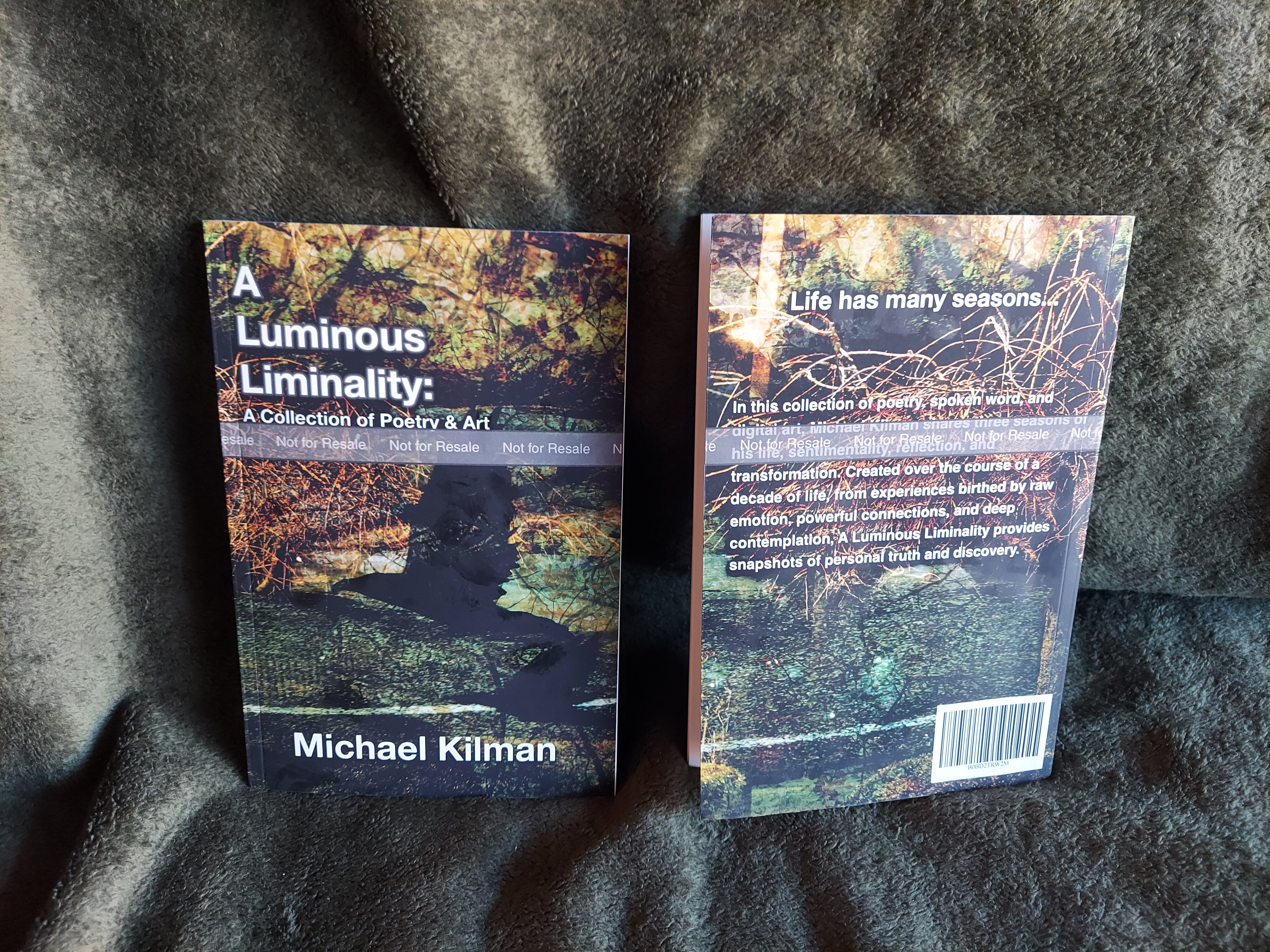
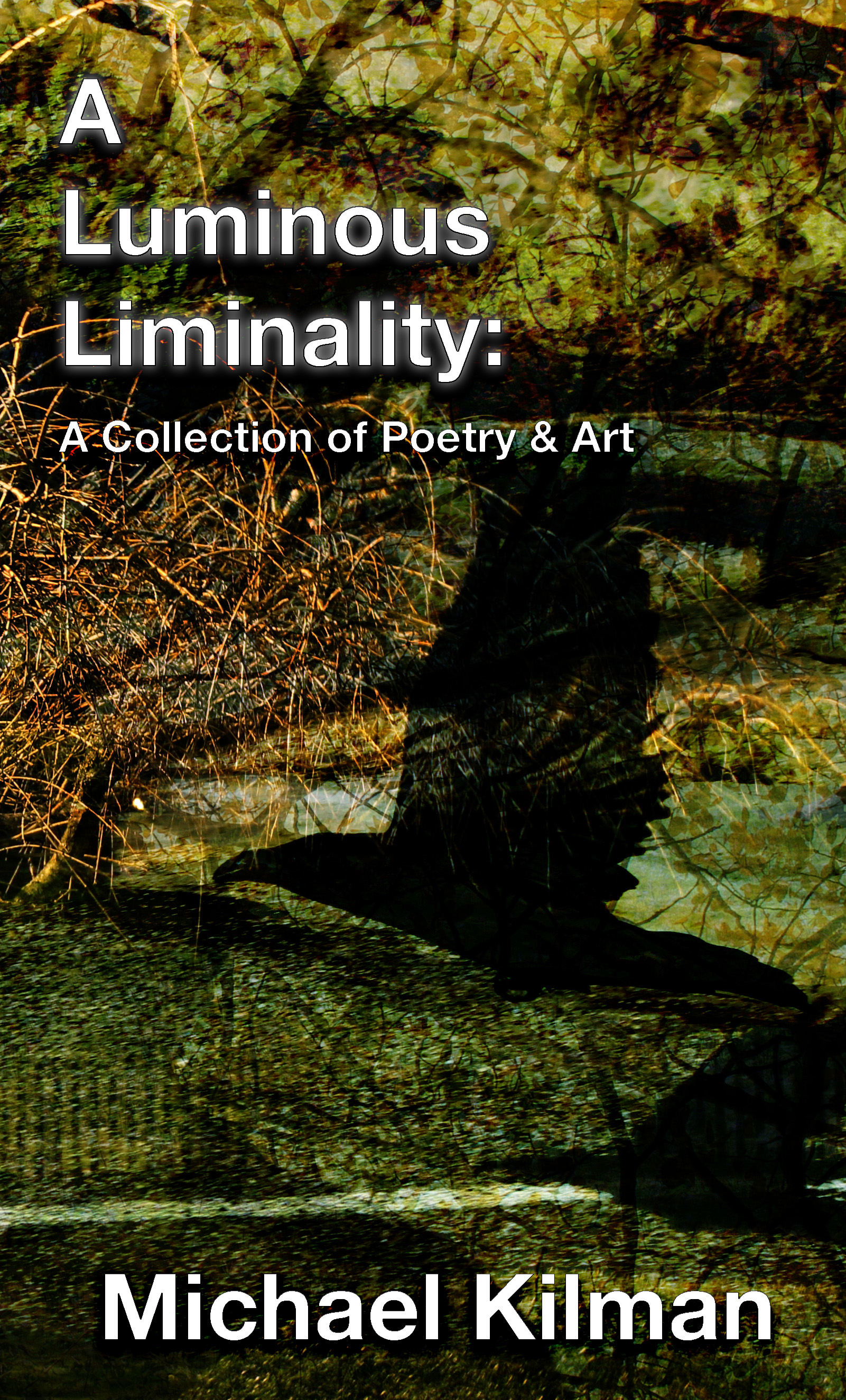
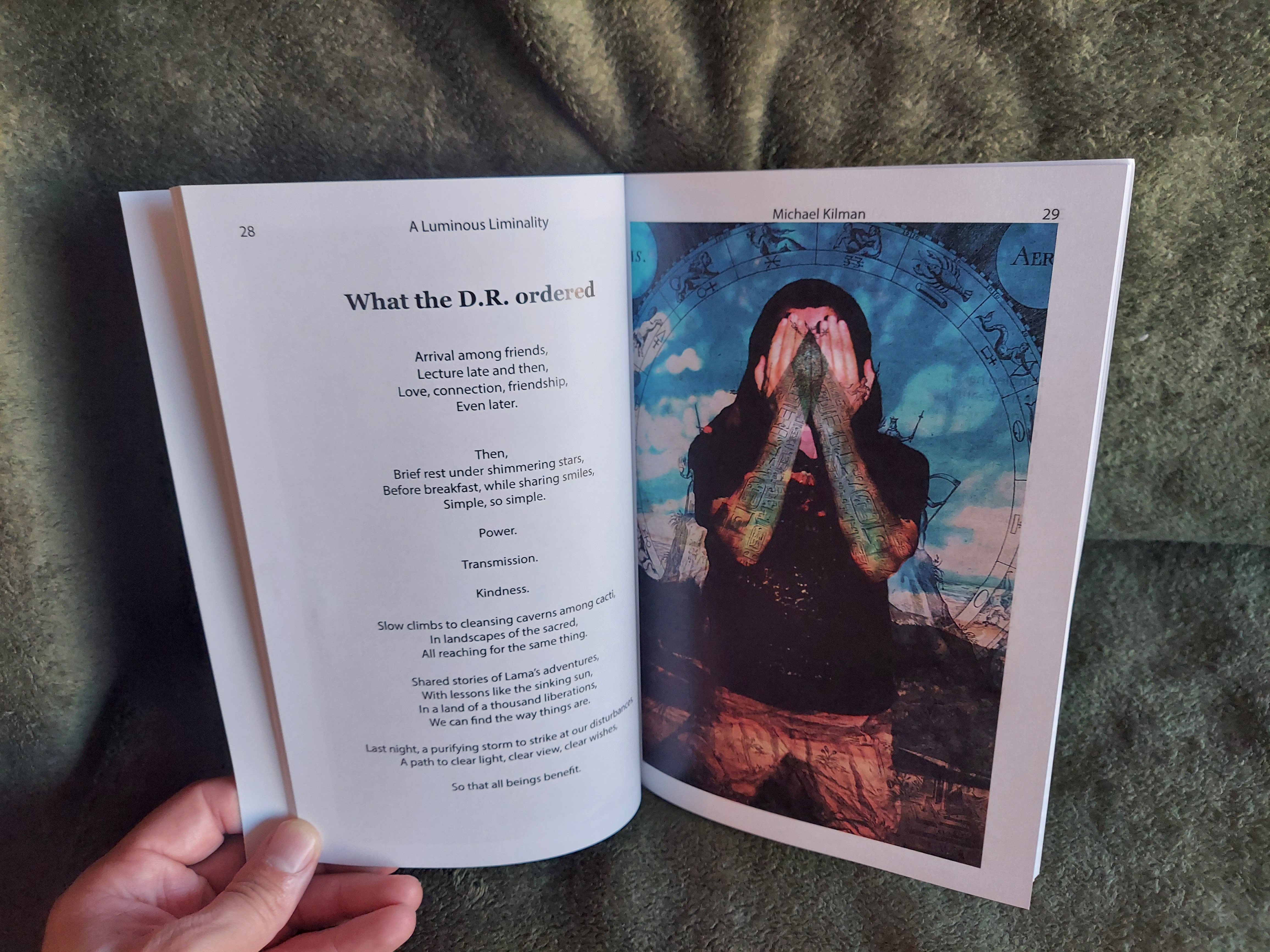
It’s release day for my newest (and sixth) book, A Luminous Liminality: A Collection of Poetry & Art. The book represents 10 years of my artwork and poetry and is my very first collection of poetry and art. This last week I got the first proofs of the book and I’ve included some pictures of the final product. A Luminous Liminality has both an ebook version and a paperback version. I recommend the paperback version to get the full experience of all the color images. Please note that prints are always available for my artwork. You can find my artwork at this page if you’re curious about it.
The book is broken down into three seasons. A season of sentimentality (poems and art about emotional life), A season of reflection (Self reflection and reflection on our culture) and, A season of transformation (realization, personal growth, change). I really wanted to show many sides of my life and experience in this book. There are poems about love, loss, hope, bitterness, frustration, hope, persistence, growth, and meditation. Oh, there’s even a poem on anthropology. The book is really about my journey over the last ten years.
A few weeks ago, my co-author Kyra Wellstrom and I recorded an episode with Indie Book Talk. The podcast episode was a lot of fun. We talked about worldbuilding, anthropology, and writing more generally. The episode is on the shorter side (only 24 minutes) so it’s a great discussion of the lot of the things we do in a quick and interesting episode. The episode came out this morning!









 Loridian's Laboratory