Kurt Vonnegut’s Mother Night follows an American playwright who becomes one of the most effective Nazi propagandists of World War II — while secretly working as an American spy. But here’s the question the book forces you to sit with: does the spying matter if the propaganda worked?
Michael Kilman and Matt Wellstrom explore the psychology of propaganda, the Nuremberg trials, why satire fails against fascism, the relationship between art and political resistance, and what Vonnegut’s darkest novel has to say about the world right now.
You are what you pretend to be. So what does that mean when what you’re pretending to be is a Nazi?
In this episode of Resistance Reads, Michael Kilman and Matt Wellström discuss Percival Everett’s novel James, a powerful retelling of Adventures of Huckleberry Finn from Jim’s perspective. We explore how Everett reimagines one of the most influential works in American literature while confronting the realities of slavery, race, and freedom.
We compare Everett’s novel with the original text, examining character development, historical context, and the journey down the Mississippi River. The conversation focuses on the creation of race, structural violence, and the systems of power that shaped the experience of slavery. We also discuss the psychological dimensions of oppression, including code switching, hierarchy, and survival.
This episode connects literary analysis with anthropology, history, and political theory. We break down how the construction of race during the colonial period shaped American society, including key moments like Bacon’s Rebellion. We also explore the influence of the Civil War, minstrel culture, and the broader legacy of these systems in contemporary discussions of justice and humanity.
If you are interested in literature, history, anthropology, and resistance, this conversation will deepen your understanding of both James and the enduring impact of Mark Twain’s work.
Subscribe for more discussions on power, resistance, and the anthropology of literature.
This episode dives into We by Yevgeny Zamyatin, a pioneering dystopian novel that helped define the genre. We examine the author’s life, the political context of the book, and the inner conflict of D-503 as he grapples with individuality, love, and rebellion inside a tightly controlled society.
Our discussion covers themes of authoritarianism, emotional suppression, regulated relationships, and the illusion of happiness without struggle. We also critique the novel’s writing style and narrative choices, asking how frustration, self-indulgence, and discomfort shape the reader’s understanding of power and control.
The conversation expands into contemporary concerns, including cognitive dissonance, apathy, nihilism, state violence, fascism, masculinity, economic pressure, and family planning. By unpacking We, we explore how literature helps us confront political justifications for cruelty and better understand the social realities we are living through today.
In this episode, we dive deep into Buffalo Hunter Hunter by Stephen Graham Jones, unpacking its powerful exploration of colonialism, genocide, Indigenous history, and reimagined vampire lore. Through a close reading of the novel, we examine how horror becomes a vehicle for confronting historical injustice and moral accountability.
We discuss Stephen Graham Jones’ background as a Blackfeet author, the haunting moral evolution of Goodstab, and how characters like The Cat Man embody the violence and consequences of white colonialism. The novel’s unique take on vampire mythology serves as both transformation and indictment, reflecting the enduring impact of oppression on identity, memory, and culture.
Our conversation expands beyond the book to address broader themes including the colonization of America, the influence of Indigenous governance on American democracy, and the lasting harm of policies like the Dawes Act. We explore how capitalism functions as a modern extension of colonialism, the cultural costs of technological dominance, and why libraries and local journalism remain essential to informed, resilient communities.
This episode highlights how horror forces readers to confront uncomfortable truths about history, race, power, and accountability, making Buffalo Hunter Hunter both a cathartic and deeply unsettling reflection of the past and present.
In this episode of Resistance Reads, we dive deep into Heavenly Tyrant, the highly anticipated sequel to Iron Widow by Xiran Jay Zhao. This is not just a book review. It is a critical conversation about power, resistance, feminism, and the political structures that shape both dystopian fiction and the real world.
We explore the novel’s political themes, pacing, and character dynamics, with particular attention to women-led resistance movements, the costs of revolution, and the myth of the benevolent dictator. Along the way, we connect Heavenly Tyrant to broader conversations in anthropology, intersectional feminism, and cultural critique, questioning popular narratives around power, violence, and social control.
This episode also tackles:
Colonial feminism and Western intervention narratives
Misconceptions in popular anthropology, including critiques of Jared Diamond and Steven Pinker
Police, state violence, and the role of force in maintaining social order
How contemporary science fiction and fantasy reflect real-world political anxieties
Character consistency and ideological tension in modern speculative fiction
If you are interested in political science fiction, feminist literature, dystopian novels, cultural criticism, or leftist media analysis, this conversation goes beyond surface-level fandom and asks harder questions about what resistance really looks like and who pays the price.
In Episode 11 we discuss the powerful themes in R.F. Kuang’s Babel and share our critique of Guillermo del Toro’s adaptation of Frankenstein. We explore Babel’s unique magic system rooted in language and translation, the complex relationships between its characters, and the book’s sharp examination of colonialism, resistance, and identity.
We also reflect on the novel’s portrayal of betrayal, moral dilemmas, and the costs of fighting oppressive systems—considering how privilege, dignity, and collective action shape the story’s impact. Finally, we talk about why Babel resonates so strongly with modern readers and why it has the potential to be remembered as a contemporary classic.
In their 10th epsiodes, Michael and Matt take a fresh look at Mary Shelley’s Frankenstein (the 1818 edition) and why this classic story still matters today. They explore the novel’s powerful themes of creation, ambition, and isolation while connecting them to modern life, the industrial revolution, AI, the Tech industry, and capitalism. They also compare the 1818 edition to the 1831 edition and how Mary Shelly’s life experiences changed some of the themes of freewill and destiny in the later version.
In celebration of the release of Shades and Shapes in the Dark, I’m running a Goodreads giveaway! What does this mean? It means I’m giving away 100 ebook copies of Shades in Shapes in the Dark. And the best part? If you win one of these copies, you get the book a week before it’s release and get to be among the first people to read my new dark fantasy horror novel.
The giveaway will run from April 26th to May 10th and if you win, you will get your copy immediately at the conclusion of the giveaway. All I ask is that if you get a copy, you give me an honest review (yes even if you hate the book).
Head over to this link to sign up for the giveaway. It’s totally free. All you need is a goodreads profile (you can create one pretty easily if you don’t have one) and that’s it. Since it’s an ebook, all you need is a valid email address to sign up.
Good News! I’m almost finished Shades & Shapes in the Dark, the first novel in my dark fantasy/horror series. The first book is getting one final readthrough before it goes to the editor. Expect a release date and preorder launch soon.
But as I am wrapping up that one, I’m already almost finished the first draft of the second book, and I have written a large portion of books 3, and 4.
Sometimes when I’m working on something, the image of the cover is so clear to me, that I just have to sit down and bring it to life. But first, I thought it might be good to tell you a little more about the forthcoming series.
The four book series, Shades and Shapes in the Dark is the story of 9 year old Clarissa Lamont accidently unleashing something sinister from an ancient ritualistic site in the middle of a forest in the suburbs of Philadelphia, and her four decade long struggle to first understand the nature of this shadow monster, and then find ways to fight it.
The first book, Shades & Shapes in the Dark focuses on her first encounter with the shadow monster, she names Demon, and her early attempts to defend herself from it’s relentless hunger.
Book 2, Through An Endless Darkness Gleaming focuses on Clarissa’s teenager years and her attempts to forge a weapon and find new tools and knowledge to combat the shadow.
Book 3, An Illumination of Extraordinary Madness, focuses on Clarissa’s 20’s as she finds new knowledge and skills to protect the people she loves.
Finally, Book 4 titled, The Nature of Twilight At Dawn, deals with Clarissa’ growing into herself in her 30s, and her final confrontation with the monster in her 40s.
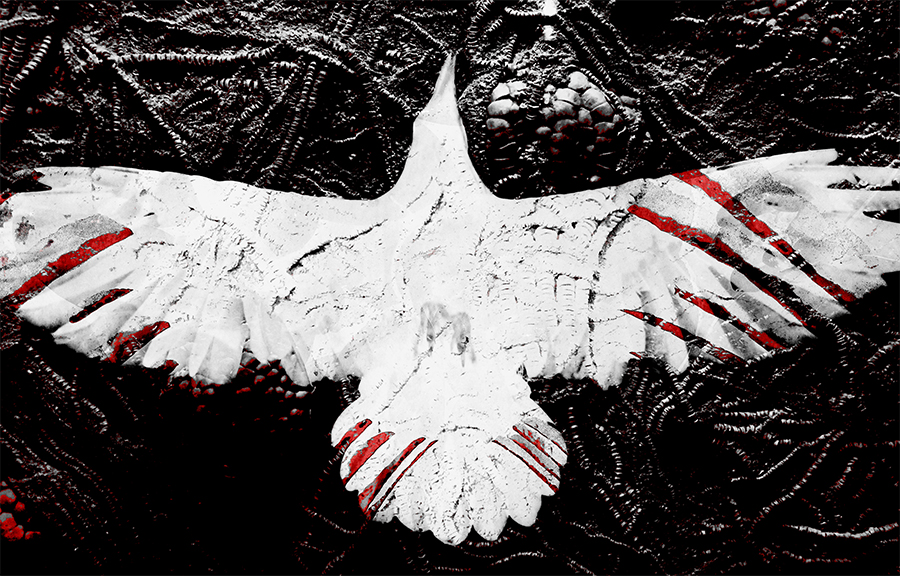
I’ve already released the cover for Shades & Shapes in the Dark, but today, I’m excited to release to you the cover and cover art, for book 2, Through and Endless Darkness Gleaming. Each chapter of each book contains a poem that tells a truth about Clarissa’s world.
Here is the opening poem for Book 2:
Through and endless darkness gleaming, Where time ceases flowing and streaming, And the wicked things are dreaming, In the sea of the infinite more.
The white raven’s feathers flutter, Over a child’s head who has no rudder, Lost in despair so utter, As she walks across the bone strewn shore.
For Whosoever shall borrow a favor, Will forever savor, the flavor Of the first science’s power of darkest, blackest lore.
For that power always has a price, In contracts made with language precise, Made with the devils forged in the fires of the forgotten before
But perhaps a bargain made can be broken, For her power, is only a token, Of the loss she suffered, and the pain she made others endure
Unbound is that magic that came with the pact, Another hidden clause in the contract, For power seeps from the very cracks, The cracks hidden in the earth’s deepest core
Oh friend, Be careful what you say, Or what you give away, Because reader, The danger is greater than before.
The Ebook Cover for Through an Endless Darkness Gleaming
Preorder for my novel, Shades and Shapes in the Dark will begin soon! The book is headed off to the editor next week. The nove is a dark fantasy/horror story set beginning in the 90s and span 40 years. The story is about a dark force, that follows the main character Clarissa through her life, and how she must learn to fight back, ultimately drawing on ancient magic and wisdom. The first book begins when she is only 9 years old, and encounters the shadowlike creature for the first time.
Each chapter in the novel has a poem that opens the piece. Sometimes this poem is something to do with the character, sometimes narrative information for the reader, sometimes foreshadowing, and sometimes it includes a bit of the lore of the world.
Chapter 10 is titled: The Shadow of Samhain. It takes place on Halloween and, of course, since it’s the season, I thought I would share that opening poem.
The Shadow of Samhain
Come all ye, gathering shades, The time of Samhain is at hand, We will rise to rot and scatter, Our blight across the land.
For the first of us comes at witching hour, To seek his contractual prize, Lust for power brings him strength, With every victim’s demise
But a bargain struck will not go unpaid, A boon of power is owed, It matters not who is struck down, Nor the depth and breadth of your woe
More news of the novel, including the release date and more is just around the corner!



 Loridian's Laboratory